July 9, 2026
PetSafe® Expert
PetSafe® Guest
Overheating in Dogs: How to Spot and Prevent Heat Stroke
Key Points
- A dog is overheating when its body temperature climbs above the normal range of 101 to 102.5°F. At 105.8°F and above it is heat stroke, a medical emergency that can cause organ damage within minutes.
- Exercise and hot walks, not just hot cars, are the leading cause of canine heat stroke. In a landmark UK study of 905,543 dogs, exertion triggered 74.2% of cases.
- If you suspect heat stroke, cool first and transport second. Move your dog to shade, apply cool water to the whole body, keep air moving, and call your vet on the way.
Table of Contents
- What overheating in dogs really means
- Normal dog temperature vs. heat stroke: the threshold chart
- How to tell if your dog is overheating: early, moderate, and emergency signs
- Heat exhaustion, heat stroke, and dehydration: how to tell them apart
- What to do if your dog overheats: safe cooling and first aid
- What NOT to do: the cold water myth and other mistakes
- When to call the vet: emergency decision checklist
- Which dogs are most at risk
- Preventing overheating: daily habits that matter
- Hot pavement and the 7-second rule
- Never leave a dog in a parked car
- How cooling gear actually works
- Recovery and long-term effects
- A quick note on cats
- Frequently asked questions
- Citations and sources
Every summer, veterinary emergency rooms fill with dogs whose owners did not see the warning signs in time. Overheating happens faster than most people expect, and it does not require triple-digit temperatures or a locked car. A brisk walk on a humid 80°F morning is enough to put a flat-faced or thick-coated dog in serious trouble.
Dogs cannot sweat the way we do. They release heat mostly through panting and through the pads of their paws, and once that cooling system falls behind, their body temperature climbs quickly. This guide covers what overheating looks like at each stage, what to do in the first few minutes, how to know when it is a true emergency, and the daily choices that keep it from happening in the first place.
What overheating in dogs really means
Overheating in dogs is any rise in body temperature above the normal range of 101 to 102.5°F. Veterinarians describe heat-related illness on a spectrum with three broad stages: heat stress, heat exhaustion, and heat stroke. Each stage has its own signs and its own urgency.
Heat stroke is the most serious. It is defined by clinicians as a body temperature at or above 105.8°F caused by heat rather than infection or inflammation [1]. At that temperature the body's own proteins begin to break down, the gut lining leaks, blood clotting becomes chaotic, and organs start to fail. Dogs can die from heat stroke within minutes if untreated, and even survivors sometimes carry lasting damage to the kidneys, liver, or brain.
The good news is that mild overheating is very treatable when caught early. Recent UK research found that 98% of dogs seen by a vet with mild heat-related illness survived, while the overall fatality rate across all severities was about 1 in 7 [2]. Catching the early signs is what makes the difference.
Normal dog temperature vs. heat stroke: the threshold chart
A dog's temperature is not the same as a human's. Knowing the numbers takes the guesswork out of a stressful moment.
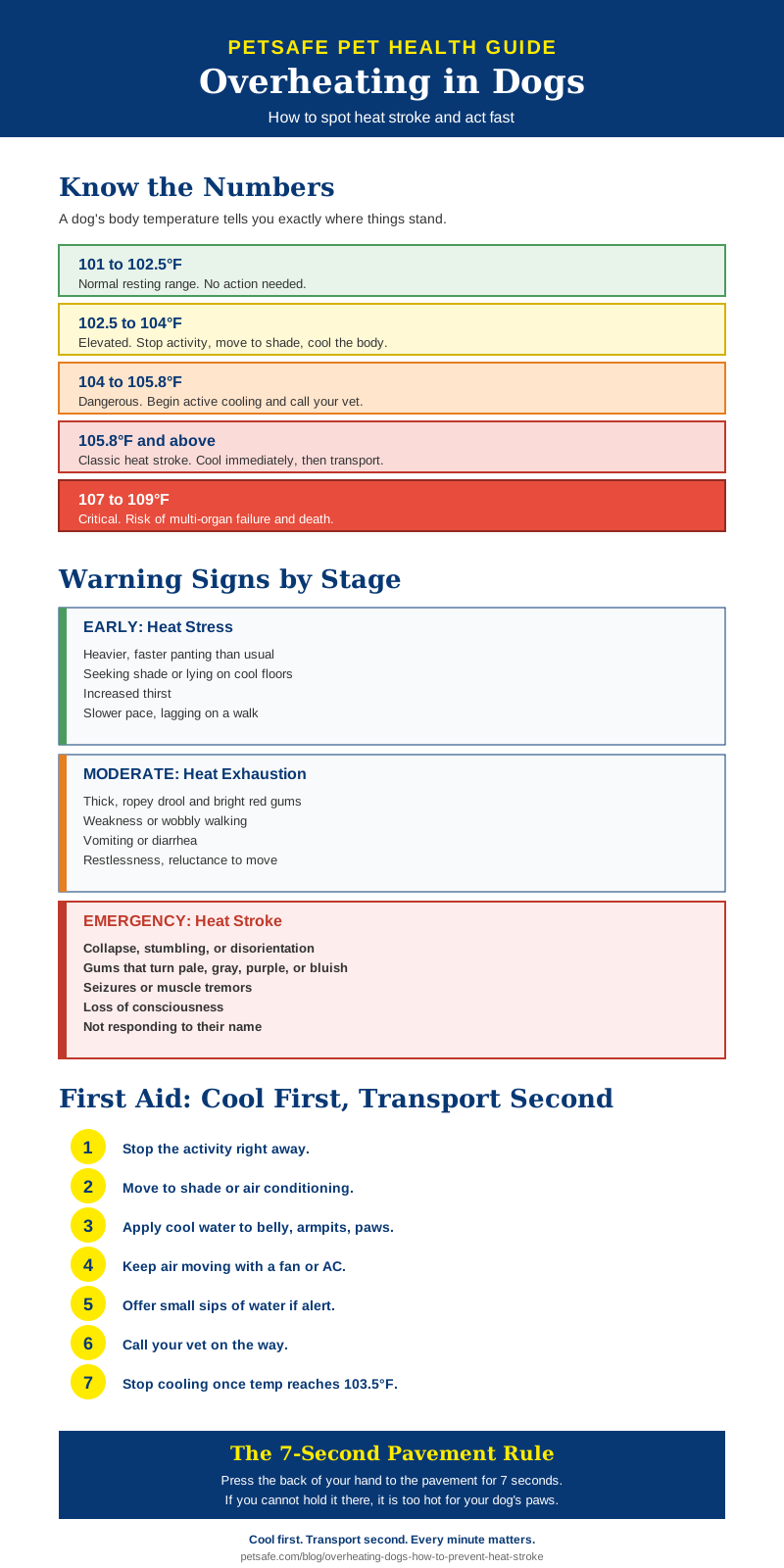
- 101 to 102.5°F: Normal resting range. No action needed.
- 102.5 to 104°F: Elevated, possible heat stress or heat exhaustion. Stop activity, move to shade, offer water, cool the body.
- 104 to 105.8°F: Dangerous, early heat stroke likely. Begin active cooling and call your vet.
- 105.8°F and above: Classic heat stroke, emergency. Cool immediately, then transport to a vet.
- 107 to 109°F: Critical, risk of multi-organ failure and death. Aggressive cooling and immediate emergency care.
You do not need a thermometer to act. If your dog is showing the signs described in the next section, treat it as an emergency and begin cooling right away.
Dogs release heat mainly through panting and through the pads of their paws. Once panting can no longer keep up with the heat their body is producing, temperature rises fast, and every additional minute matters.
How to tell if your dog is overheating: early, moderate, and emergency signs
Signs of overheating in dogs progress in a fairly predictable order. The earlier you notice them, the easier it is to reverse course.
Early signs (heat stress)
- Heavier, faster panting than usual
- Increased thirst and looking for water
- Seeking shade or lying on cool floors
- Slower pace or lagging behind on a walk
- Slightly darker or brighter pink gums
Moderate signs (heat exhaustion)
- Thick, ropey drool
- Bright red gums and tongue
- Weakness or wobbly walking
- Rapid heart rate
- Restlessness or reluctance to move
- Vomiting or diarrhea, sometimes with blood
Emergency signs (heat stroke)
- Disorientation, stumbling, or collapse
- Gums that turn pale, gray, purple, or bluish
- Tremors or seizures
- Loss of consciousness
- Not responding to their name
- Extreme lethargy or inability to stand
Any of the emergency signs above is a 911 moment for your dog. Begin cooling immediately and get to a vet.
Heat exhaustion, heat stroke, and dehydration: how to tell them apart
The three conditions overlap and often occur together, which is why they get confused. Here is how they differ in the moment.
Compare these three conditions side by side using the signs below.
Dehydration
- Body temperature: Usually normal
- Panting: Mild
- Gums: Dry, tacky
- Behavior: Lethargic
- Skin elasticity: Slow snap back when pinched
- Urgency: Address today
Heat exhaustion
- Body temperature: Normal to slightly elevated
- Panting: Heavy and constant
- Gums: Bright red
- Behavior: Weak, restless
- Skin elasticity: May be reduced
- Urgency: Address now
Heat stroke
- Body temperature: 105.8°F and above
- Panting: Frantic, then may slow
- Gums: Bright red, then pale, gray, or purple
- Behavior: Disoriented, collapsed, unresponsive
- Skin elasticity: Reduced
- Urgency: Medical emergencyA dehydrated dog can become an overheated dog quickly, especially in warm weather. Steady water intake is the first line of defense. For a deeper look at daily hydration, see our guide on how to keep your pet hydrated.
What to do if your dog overheats: safe cooling and first aid
The most important principle in canine heat stroke care is simple: cool first, transport second. Cooling your dog before you leave for the vet measurably improves survival [3]. Every minute your dog's body stays above 105.8°F causes more damage.
Here is what to do, in order, if you think your dog is overheating.
- Stop the activity. No more walking, running, playing, or exercise of any kind. Sit your dog down in the coolest, shadiest place you can reach.
- Move to shade or air conditioning. Indoors with the AC on is best. A shaded porch, garage, or shaded car with the AC running is a good second choice.
- Apply cool water over the body. Use a hose, shower, tub, bucket, or wet towels swapped out every few minutes. Focus water on the belly, inner thighs, armpits, neck, and paw pads where blood vessels sit close to the skin. Wet the whole coat if you can.
- Keep air moving. A fan, an open window in a moving car, or the AC vent all help evaporation carry heat away. This is what makes wet fur cool the dog rather than trap heat.
- Offer small amounts of cool water to drink if your dog is alert and able to lap on their own. Do not pour water into the mouth of a collapsed, seizing, or unconscious dog. There is a real risk of aspiration.
- Call your vet or the nearest emergency clinic on the way. Let them know you are coming and describe the signs you are seeing. Even a dog that seems to bounce back needs to be checked; internal damage may not be visible for hours or days.
- Stop active cooling once your dog's temperature reaches about 103.5°F, or as soon as they seem more alert and comfortable. Continued cooling below that point risks the opposite problem, hypothermia [4].
If you are far from home, water bottles, a cooler of ice packs wrapped in towels, or a nearby faucet all work. Do not delay cooling to search for the perfect water temperature. The speed of cooling matters more than the exact temperature of the water you use.
What NOT to do: the cold water myth and other mistakes
Well-meaning advice can cost precious time. A few things to avoid.
- Do not delay cooling because you are worried about using cold water. Older advice warned that cold water causes blood vessels to constrict and trap heat inside the body. Recent peer-reviewed research from the Royal Veterinary College has found this to be largely a myth for healthy dogs, and recommends rapid cooling with whatever water is cooler than the dog [5]. Speed matters most.
- Be careful with full ice-water immersion for fragile dogs. Very young puppies, senior dogs, flat-faced (brachycephalic) breeds, and dogs that are already collapsed or unconscious face a higher risk of aspirating water or losing too much heat too fast. For those dogs, wet the coat thoroughly and use a fan for evaporative cooling instead of dunking them.
- Do not drape a soaking wet towel over the whole dog and leave it there. A stationary wet towel traps heat like a greenhouse. Wet the coat, keep air moving, and swap towels out often if you use them.
- Do not force water into the mouth of a dog that cannot swallow on their own. Aspiration pneumonia is a real and dangerous complication.
- Do not use rubbing alcohol on the paws. Some older home-remedy lists suggest it. Alcohol can be absorbed through the skin and is not a substitute for water.
- Do not "wait and see" after your dog seems to recover. Delayed complications, from kidney failure to bleeding disorders, can appear hours later. A vet check the same day is not optional.
When to call the vet: emergency decision checklist
Call your vet or an emergency animal hospital immediately if your dog shows any of the following:
- Collapse or inability to stand
- Seizures or muscle tremors
- Loss of consciousness or extreme disorientation
- Gums that are pale, gray, purple, or bluish
- Bloody vomit or bloody diarrhea
- Temperature at or above 104°F if you can measure it
- Panting that does not slow after 10 to 15 minutes of active cooling
- Any dog that has stopped panting after prior heavy panting in the heat
Even if the emergency signs are absent, call your vet after any suspected overheating episode. Internal damage is not always visible on the outside.
Which dogs are most at risk
Every dog can overheat, but some are far more vulnerable than others. Research on more than 900,000 UK dogs has quantified the difference by breed [6].
Flat-faced (brachycephalic) breeds
Bulldogs, French bulldogs, pugs, boxers, Boston terriers, Cavalier King Charles spaniels, and other short-nosed breeds have compressed airways that make panting inefficient. Compared with Labrador retrievers, bulldogs are about 14 times more likely to develop heat-related illness, French bulldogs about 6 times, and pugs about 3 times.
Thick-coated and cold-climate breeds
Chow chows, huskies, malamutes, Newfoundlands, and Bernese mountain dogs carry insulation designed for cold weather. Chow chows show the highest breed odds in the data at roughly 17 times a Labrador's risk.
Senior dogs, puppies, and overweight dogs
Older dogs regulate temperature less efficiently. Puppies have less body reserve. Overweight dogs generate more heat and dissipate it less well; obesity has been associated with a substantially higher risk of death from heat stroke.
Dogs with medical conditions
Heart disease, laryngeal paralysis, tracheal collapse, and other airway or cardiovascular conditions all reduce a dog's ability to cool itself. Dogs on certain medications, including some heart medications, may also be more sensitive to heat. Ask your vet if this applies to your dog.
Preventing overheating: daily habits that matter
Most heat stroke is preventable. A few habits protect your dog through summer and beyond.
- Walk in the cool part of the day. Early morning and late evening are safest. If the air is above 80°F, keep walks short and shaded. Above 90°F, or with high humidity, skip the walk entirely and play indoors.
- Use the "temperature plus humidity" rule of thumb. Add the outdoor temperature in Fahrenheit and the humidity percentage. If the total is above 150, conditions are unsafe for most dogs.
- Provide constant access to fresh, cool water. Refill bowls at least twice a day in summer, and bring water on every outing.
- Offer shade whenever your dog is outdoors. Trees, awnings, umbrellas, or shade sails all work. A hot doghouse without airflow is worse than open shade.
- Slow down exercise as it heats up. Your dog is not always the best judge of when to stop, especially working breeds and dogs playing fetch. You decide when the game ends.
- Never leave a dog alone in a car, even for a quick errand and even with the windows cracked.
- Watch the pavement. Blacktop can be dangerously hot when the air still feels comfortable. More on this below.
- Keep indoor spaces cool. AC, fans, cool tile, and shaded windows all help. On very hot days, keep dogs inside during peak sun.
- Groom for the weather. Regular brushing removes loose undercoat and improves airflow to the skin. Do not shave a double-coated breed; the coat provides insulation both ways.
Hot pavement and the 7-second rule
Pavement runs far hotter than the air above it, and dogs walk on it barefoot. When the air is 77°F, asphalt can reach 125°F; at 86°F air temperature, asphalt can climb to 135°F [7]. Skin damage can occur in about a minute on pavement at 125°F.
Before every summer walk, use the 7-second test: press the back of your hand flat against the pavement for seven seconds. If you cannot hold it there, it is too hot for your dog's paws. Walk on grass, dirt, or shaded sidewalks instead, or wait for the surface to cool.
Signs your dog may have burned their paws include limping, licking or chewing at the feet, refusing to walk, blisters or redness on the pads, and pads that darken or peel. Rinse burned pads with cool water and see your vet.
Never leave a dog in a parked car
Cars heat up faster than most people realize. According to the American Veterinary Medical Association, the temperature inside a parked vehicle can rise almost 20°F in just 10 minutes, nearly 30°F in 20 minutes, and more than 40°F above the outside temperature in an hour. On a mild 70°F day, that puts the interior at about 110°F. Cracking the windows makes almost no difference [8].
This is not just a summer problem. Cars parked in the sun on a 60°F spring afternoon can reach dangerous temperatures within half an hour. If your dog cannot come inside with you, leave them at home.
How cooling gear actually works
Cooling gear can help a dog stay comfortable, but it is not a treatment for a dog that is already overheating. Understanding how each type works helps you use it well.
- Evaporative vests are soaked in water and cool the dog as the water evaporates. They work best in dry heat and lose most of their effect in high humidity.
- Phase-change or gel cooling vests use inserts that stay cool for a set time regardless of humidity. They add weight but are more consistent.
- Reflective coats reduce radiant heat gain from direct sun. They slow warming rather than actively cool.
- Cooling mats and pads give a dog a cool surface to lie on indoors or in shade. Gel and pressure-activated versions do not need to be refrigerated.
- Portable water bottles and travel bowls keep water accessible on walks and in the car.
None of this replaces the basics: shade, water, cooler times of day, and knowing your dog's limits.
Recovery and long-term effects
A dog that survives heat stroke needs careful follow-up. Kidney function, liver enzymes, and blood clotting can take days to normalize, and complications sometimes appear after the dog seems back to normal. Follow your vet's instructions on rest, hydration, and recheck appointments.
Dogs that have had one heat stroke episode are more sensitive to heat afterward. That means shorter walks, cooler times of day, and closer supervision going forward. For most dogs, life returns to normal with reasonable adjustments. For a small number, permanent damage to the kidneys, gut, or nervous system means ongoing care.
A quick note on cats
Cats overheat too, though less often than dogs because they tend to seek out cool spots on their own. Watch for open-mouth breathing (unusual for a healthy cat), lethargy, drooling, and unsteady walking. Move an overheating cat to a cool room, offer water, and call your vet. Persian, Himalayan, and other flat-faced cats face higher risk, as do senior cats and cats with heart disease.
Frequently asked questions
How can I tell if my dog is overheating?
Early signs include heavy, rapid panting, thick or excessive drool, bright red gums, and seeking shade or water. Moderate signs include weakness, restlessness, and vomiting. Emergency signs include collapse, disorientation, seizures, and gums turning pale, gray, or purple.
What temperature is heat stroke in dogs?
A dog's normal body temperature is 101 to 102.5°F. Above 103°F is abnormal. At 105.8°F and above it is classic heat stroke. Between 107 and 109°F, dogs are at high risk of multi-organ failure and death.
What should I do immediately if my dog overheats?
Stop the activity, move your dog to shade or air conditioning, apply cool water over the body with a focus on belly, armpits, and inner thighs, keep air moving with a fan or AC, and call your vet on the way. Cool first, transport second.
Should I use ice or cold water on an overheating dog?
Speed of cooling matters more than the exact temperature of the water. Recent research supports rapid cooling with cool-to-cold water for healthy dogs. For very young, senior, flat-faced, or collapsed dogs, avoid full ice-water immersion and instead wet the coat thoroughly and use a fan. Always contact a vet.
How hot is too hot to walk a dog?
Take extra care once the air reaches the mid-70s°F. Above 80°F, keep walks short and shaded. Above 90°F, or when temperature in Fahrenheit plus humidity percentage totals more than 150, skip walks and play indoors.
How quickly can a dog die from heat stroke?
Heat stroke can become fatal within minutes once body temperature rises to critical levels. Damage escalates the longer the temperature stays above 105.8°F, which is why immediate cooling before transport is life-saving.
Which dog breeds are most at risk of heat stroke?
Flat-faced breeds like bulldogs, French bulldogs, pugs, boxers, and Boston terriers face much higher risk. Thick-coated breeds like chow chows, huskies, and malamutes are also more vulnerable, along with senior dogs, puppies, and overweight dogs.
Can dogs get heat stroke indoors?
Yes. Poorly ventilated rooms, sunrooms, conservatories, garages, and crates without airflow can reach dangerous temperatures even when outdoor temperatures seem moderate. Always provide airflow and cool water.
How do I know if the pavement is too hot for my dog?
Use the 7-second test: press the back of your hand to the pavement for seven seconds. If you cannot hold it there, it is too hot for your dog's paws. Walk on grass or wait for cooler hours.
Can a dog fully recover from heat stroke?
Mild cases treated early often recover fully. Severe cases can leave lasting damage to the kidneys, liver, or nervous system, and survivors are more sensitive to heat afterward. Same-day veterinary care and follow-up bloodwork are essential.
Citations and sources
- Bruchim, Y. et al. "Pathophysiology and pathological findings of heatstroke in dogs." Israel Journal of Veterinary Medicine, and related peer-reviewed sources define heat stroke as a nonpyrogenic core temperature at or above 41°C (105.8°F) causing hyperthermal tissue injury. ncbi.nlm.nih.gov
- Hall, E.J., Carter, A.J., O'Neill, D.G. "Incidence and risk factors for heat-related illness (heatstroke) in UK dogs under primary veterinary care in 2016." Scientific Reports, 2020. Sample of 905,543 dogs, 395 confirmed events, 14.18% event fatality rate. ncbi.nlm.nih.gov
- Bruchim, Y. et al. Study of 54 dogs with heatstroke found cooling before presentation significantly improved survival. Journal of Veterinary Internal Medicine, 2006. ncbi.nlm.nih.gov
- VCA Animal Hospitals. "Heat Stroke in Dogs." Recommends stopping active cooling at approximately 103°F to prevent hypothermia. vcahospitals.com
- Hall, E.J. et al. "Cooling Methods Used to Manage Heat-Related Illness in Dogs Presented to Primary Care Veterinary Practices during 2016 to 2018 in the UK." Veterinary Sciences, 2023. Recommends cold-water immersion or evaporative cooling with air movement, prior to transport. ncbi.nlm.nih.gov
- Royal Veterinary College VetCompass. "Flat-faced dogs such as bulldogs, French bulldogs and pugs at increased risk of heat stroke." Breed odds ratios compared with Labrador retrievers. rvc.ac.uk
- Berens, J.J. "Thermal Contact Burns from Streets and Highways." JAMA, 1970. Established asphalt temperature data at various air temperatures. Reproduced by Washington State University and Frostburg State University research. wsu.edu
- American Veterinary Medical Association. "Hot Cars and Loose Pets." Interior vehicle temperature rise data. avma.org
Author
Written by PetSafe® Guest
PetSafe® Guest contributors are pet experts, trainers, veterinarians, and brand partners who share their knowledge with the PetSafe® community. Articles published under this byline are reviewed by the PetSafe® editorial team before publication.
Last Modified: July 9, 2026


Get Email Updates
Subscribe to the latest news, promotions, & more from PetSafe® brand.
Sign up today for the latest news, promotions, and more from PetSafe® brand.