July 6, 2026
PetSafe® Expert
PetSafe® Guest
How To Keep Your Pet Hydrated: A Guide for Dogs, Cats and More
Key Points
- Dogs need about 1 ounce of water per pound of body weight each day, the rule PetSafe calls the 1-to-1 Ratio. Cats need about 4 ounces per 5 pounds of lean body weight.
- PetSafe established National Pet Hydration Awareness Month in 2014, observed every July, to help pet parents catch dehydration before it turns dangerous.
- The skin turgor test and the gum test are two quick at-home checks for dehydration in dogs and cats.
- Pets that eat dry food, exercise heavily, or are very young or very old need extra hydration support.
Table of Contents
- How much water your pet needs: the 1-to-1 Ratio
- Why hydration matters for your pet's health
- Signs of dehydration in dogs and cats
- What is National Pet Hydration Awareness Month?
- How to get your pet to drink more water
- Hydration in hot weather and on the go
- Hydration for puppies, kittens, seniors, and small pets
- When to call your vet
- Frequently asked questions
- Citations and sources
Water is the most overlooked nutrient in your pet's diet. About 70 percent of an adult dog's or cat's body is water, and every system they rely on, from circulation to temperature regulation, depends on it. When pets fall behind on fluid intake, the consequences can move from mild to life-threatening fast. This guide covers how much water your pet actually needs, how to spot the early signs of dehydration, and how to make their water bowl more inviting.
How much water your pet needs: the 1-to-1 Ratio
The simplest hydration rule for dogs is the one PetSafe calls the 1-to-1 Ratio: 1 ounce of water per 1 pound of body weight per day. A 10-pound dog needs about 10 fluid ounces. A 50-pound dog needs about 50 fluid ounces, or roughly 6 cups. The American Kennel Club uses the same baseline.[1]
Cats are different. According to the Cornell Feline Health Center, cats need approximately 4 ounces of water per 5 pounds of lean body weight per day.[2] A typical 10-pound cat needs about one cup of water daily, including water from food.
"Our pets need 1 ounce of water per pound of body weight. Most pets don't get enough water, especially during extreme temperatures."
Robin Rhea, former PetSafe Senior Brand Manager, on declaring July National Pet Hydration Awareness Month [3]
These numbers are a starting point, not a strict target. Healthy pets self-regulate well, and several factors push the number up or down:
- Diet: Dry kibble is about 10 percent water. Canned food can be 65 to 80 percent water. Pets on a wet-food diet will drink noticeably less from the bowl and still be properly hydrated.
- Weather: Heat, humidity, and dry indoor air all increase fluid needs.
- Activity: Active dogs lose more water through panting and respiration.
- Life stage: Puppies, kittens, and seniors have higher or more fragile hydration needs.
- Health conditions: Kidney disease, diabetes, and certain medications change water requirements significantly, often in ways your vet should monitor.
Why hydration matters for your pet's health
Water does the quiet work behind nearly every body function. It carries oxygen and nutrients through the bloodstream, regulates body temperature through panting, cushions the joints, supports digestion, and flushes waste through the kidneys. When a pet falls behind on fluid intake, the heart, kidneys, and circulatory system have to work harder to compensate.
The risk is highest for cats. Cats evolved as desert predators that get most of their moisture from prey, so they have a weaker thirst drive than dogs. A cat on a dry-food diet can be chronically under-hydrated without any obvious sign, and that low-grade fluid deficit contributes to the urinary tract problems, bladder stones, and kidney disease common in house cats.[2] Encouraging cats to drink more is one of the most concrete things you can do to protect their long-term urinary health.
Dogs are less prone to chronic dehydration but more prone to acute dehydration. A dog that exercises hard on a hot day, gets stuck in a warm car, or has a bout of vomiting or diarrhea can lose fluid fast. If a dog has not had water for 24 hours, that is a vet visit, not a wait-and-see.
Signs of dehydration in dogs and cats
Most signs of dehydration are the same in dogs and cats:
- Lethargy or low energy
- Dry, tacky, or sticky gums
- Loss of skin elasticity (skin stays tented after a gentle pinch)
- Sunken or dull eyes
- Excessive panting in dogs
- Loss of appetite
- Thick or ropey saliva
- Reduced urination, or very dark concentrated urine
Two simple home tests can help you check before calling the vet. Practice both when your pet is healthy and well-hydrated so you know what normal feels like.
The skin turgor test (skin tent test)
Gently lift a small fold of skin over your pet's shoulder blades, then let go. In a well-hydrated dog or cat, the skin snaps back into place almost immediately. If it falls back slowly, your pet is likely dehydrated. If it stays tented, that is a sign of significant dehydration and a reason to call your vet.[4]
The test is less reliable in wrinkly breeds and in senior pets with naturally loose skin. By the time the skin clearly tents, internal organs are already feeling the strain, so do not wait for a textbook result to act.
The gum test
Lift your pet's lip and look at the gums. Healthy gums are pink and moist. Dry or tacky gums, or a finger that sticks when you touch the gum, can indicate dehydration. You can also press a finger against the gum until it turns white, then release. The pink color should return in under two seconds. A longer capillary refill time is another red flag.[1]
How dehydration in cats can look different
Cats are masters of hiding illness. The earliest sign in a cat is often not dramatic, just a slow withdrawal from normal behavior, a poor appetite, or a litter box that looks lighter than usual. By the time a cat shows sunken eyes or obvious skin tenting, dehydration is already moderate to severe. Trust subtle changes in your cat's routine and call your vet if something feels off.
What is National Pet Hydration Awareness Month?
National Pet Hydration Awareness Month is observed every July. It was created in 2014 by PetSafe to draw attention to a problem most pet parents do not realize they have: pets need a higher percentage of water in their bodies than humans do, and most do not get enough of it, especially in the hottest month of the year.[3]
The original idea was simple. Every time you reach for your own bottle of water, think of your pet. Refill the bowl. Check that the water is clean. Notice whether your pet is actually drinking. Veterinary clinics across the country now build summer wellness campaigns around the PetSafe-created observance.
How to get your pet to drink more water
If your pet is a picky drinker, the goal is to remove the friction between them and the bowl. Some of these are common sense. Others are small habits that quietly add ounces over the course of a day.
- Wash the bowl every day. A bowl with a film of saliva or food particles is less appealing than one that is clean. Scrub with soap and water daily.
- Refill with fresh water at least once a day. Stale water tastes flat, even to a dog.
- Try a different bowl. Some cats refuse plastic because of the smell. Some dogs prefer a wide, shallow bowl that does not touch their whiskers. Try stainless steel or ceramic if your pet ignores the current bowl.
- Place multiple water stations around the house. The easier it is to find water, the more often pets drink. Especially important for seniors with mobility issues.
- Move water away from food and litter. Cats in the wild instinctively avoid water sources near their kill. Many house cats drink more if the bowl is in a separate room from the food and the litter box.
- Add water to dry food. A splash of warm water on kibble bumps up moisture and makes the meal more aromatic.
- Switch to or add wet food. Canned food is 65 to 80 percent water. Replacing even one meal a day with wet food can meaningfully raise total fluid intake, particularly for cats.
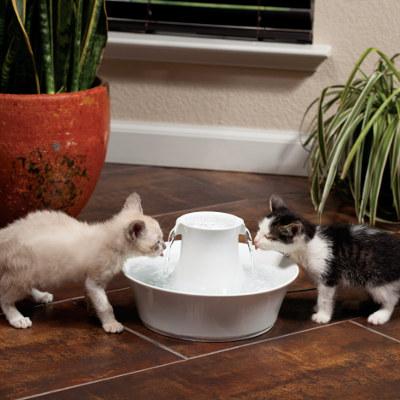
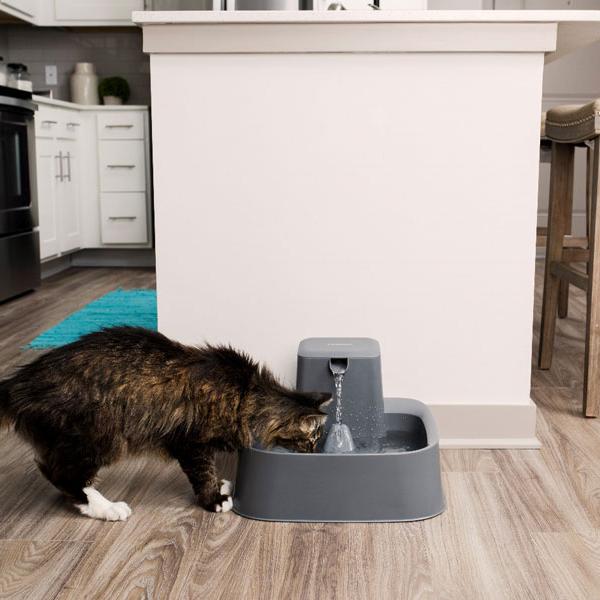
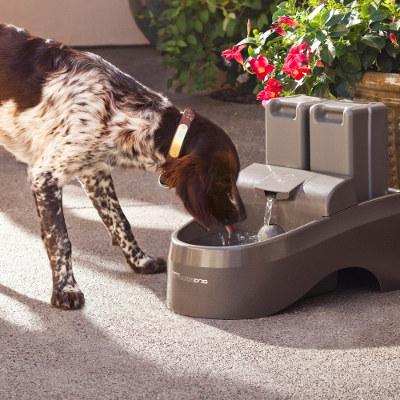
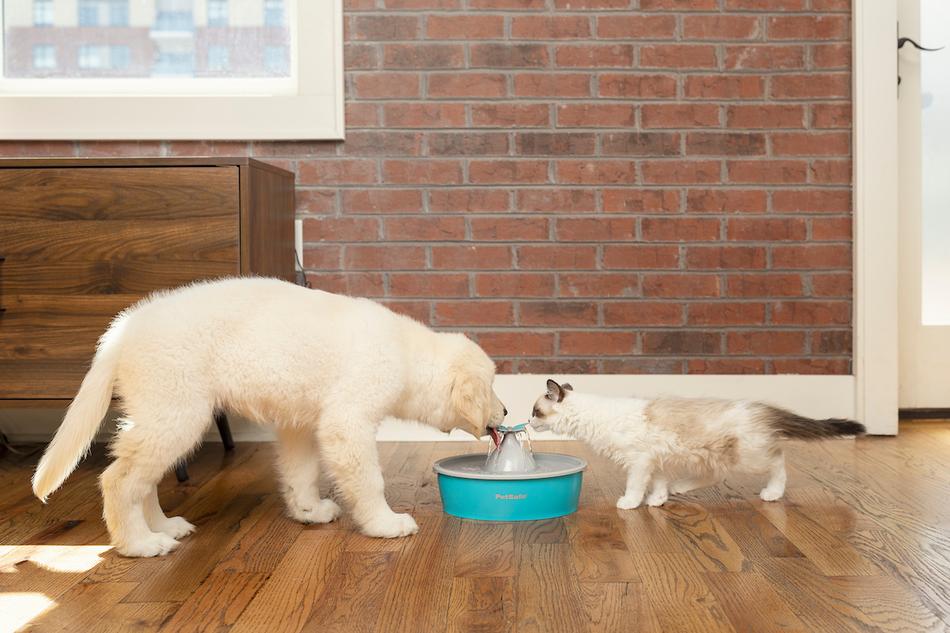
- Try a pet fountain. Cats and dogs are instinctively drawn to moving water, which is why so many cats drink from a dripping tap. A pet fountain keeps water circulating and filtered, and most pets drink noticeably more from a fountain than from a still bowl. For more on how a fountain can support feline urinary health, see how a cat fountain can prevent urinary problems.
- Add ice cubes on hot days. An ice cube or two makes the water more interesting. (Skip ice for a dog that is already overheated; offer room-temperature water instead so the body does not cool too quickly.)
- Add flavor, carefully. A small amount of unsalted, onion-free chicken broth or the water from a can of tuna packed in water can make the bowl more enticing. Check with your vet first if your pet has a medical condition.
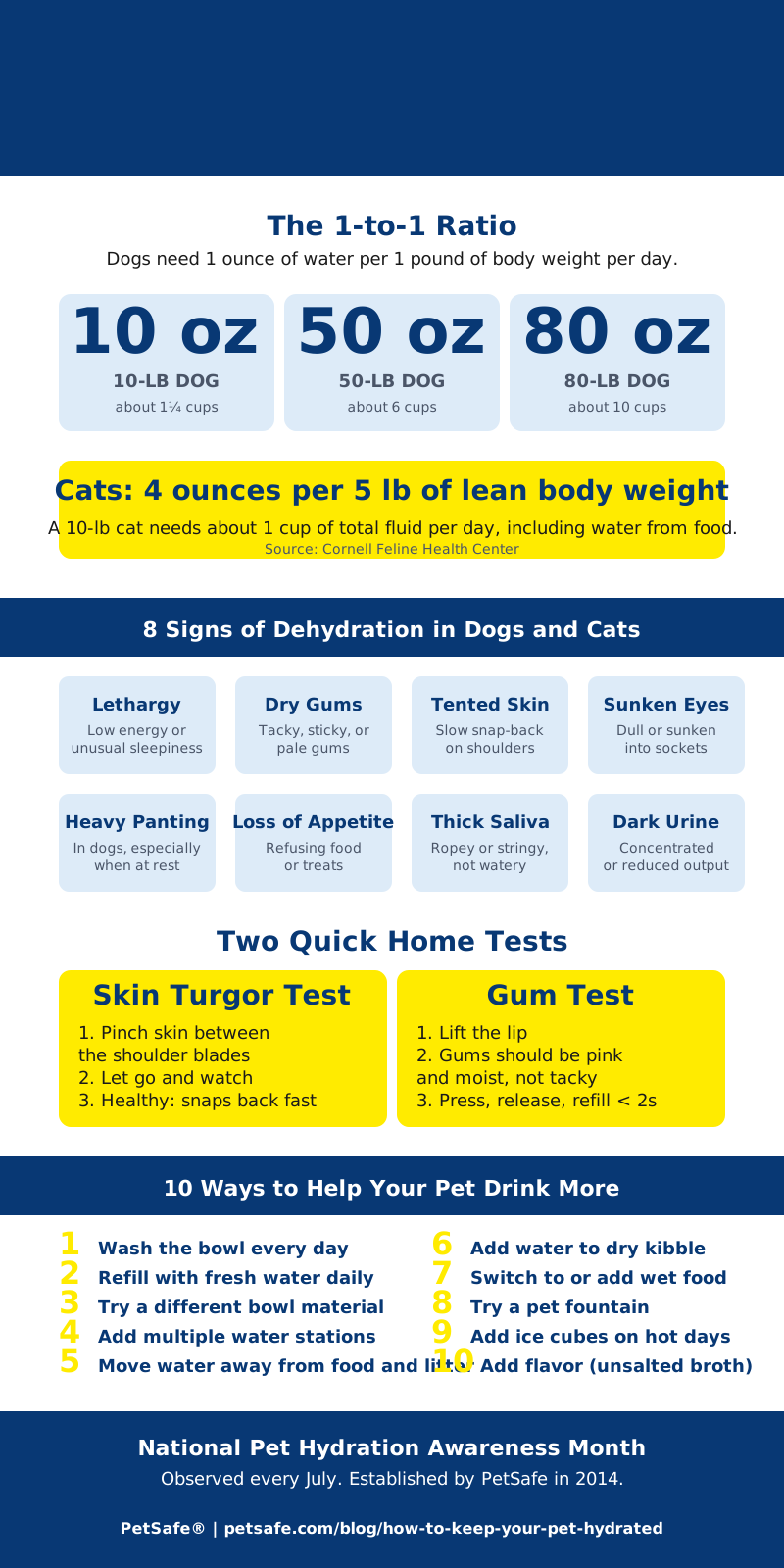
How much water dogs and cats really need, and how to help them drink more. From PetSafe.
Hydration in hot weather and on the go
Summer is when most preventable cases of dehydration happen, and the same is true for heat exhaustion and heatstroke. The two travel together: a dog behind on fluids is far more vulnerable to overheating. For more on the wider seasonal picture, see our guide to keeping pets safe during fireworks and summer events.
A few habits make a real difference on hot days:
- Walk early in the morning or after sunset, not during the hottest hours.
- Carry a collapsible travel bowl and a bottle of water on every walk longer than 15 minutes.
- Offer water every 20 to 30 minutes during outdoor activity.
- Watch the pavement. If it is too hot for the back of your hand, it is too hot for paws.
- Never leave a pet in a parked car, even briefly. Interior temperatures climb 20 degrees in 10 minutes.
- Set up shade and a second water bowl outside if your pet spends any time in the yard.
Hydration for puppies, kittens, seniors, and small pets
Puppies and kittens
Young pets dehydrate faster than adults. Their bodies are smaller, their kidneys are less efficient at concentrating urine, and they lose fluid quickly through bouts of diarrhea. Provide constant access to fresh water. The old advice to restrict a puppy's water during house training is outdated; instead, take the puppy out frequently and reward them for going outside.[1] If a puppy or kitten is not drinking, or has diarrhea for more than a few hours, call the vet the same day.
Senior dogs and cats
Older pets often drink less because of arthritis (it hurts to walk to the bowl), reduced thirst signaling, or early kidney changes that disrupt water balance. Watch for a sudden increase in thirst as well as a decrease, both of which can be early signs of disease worth raising with your vet.
Birds, rabbits, and small pets
Smaller animals have a smaller margin of error. Rabbits, guinea pigs, and ferrets dehydrate very quickly in heat and need constant access to fresh water, ideally from both a bowl and a bottle, since some prefer one to the other. Pet birds need fresh water at least twice a day, and the bowl needs to be cleaned thoroughly to prevent bacterial growth.
When to call your vet
Mild dehydration can usually be reversed at home by offering small, frequent amounts of water and switching to a wet-food meal. Moderate to severe dehydration cannot. It needs subcutaneous or intravenous fluids from a veterinary team.
Call your vet, or an emergency clinic if it is after hours, if your pet shows any of the following:
- Has not had water for 24 hours, or has been refusing to drink despite having access
- Is vomiting, has diarrhea, or both, especially for more than a few hours
- Has clearly tented skin that does not snap back
- Has very dry, tacky, pale, or dark-red gums
- Is collapsing, staggering, or showing confusion
- Is a puppy, kitten, senior, or pet with a chronic condition and is showing any signs above
A sudden increase in thirst can also be a red flag. Dogs and cats that start drinking dramatically more water than usual, with no change in weather or exercise, may be showing an early sign of diabetes, kidney disease, Cushing's disease, or a urinary tract infection.[1] If you notice a clear change in drinking habits in either direction, it is worth a call.
Water intoxication, while rare, can also be an emergency. Dogs that swallow too much water too fast (often from playing with a sprinkler, swimming, or biting at a hose) can develop dangerously diluted blood sodium, leading to vomiting, lethargy, staggering, and in severe cases seizures. After heavy water play, treat these signs as urgent.
Frequently asked questions
How long can a dog go without water?
A healthy dog can technically survive about 72 hours without water, but real damage to the kidneys and other organs begins well within the first 24 hours. If your dog has not drunk anything in a day, treat it as a vet visit, not a wait-and-see.
What is the fastest way to hydrate a dog?
For mild dehydration in a dog that is alert and not vomiting, offer small amounts of water every few minutes (about a teaspoon for a small dog or a quarter cup for a larger one). For moderate to severe dehydration, only a vet can rehydrate safely, typically through subcutaneous or intravenous fluids. Do not force a dehydrated, lethargic, or vomiting pet to drink large amounts at once; it can make things worse.
What can I add to my dog's water to keep them hydrated?
A splash of unsalted, onion-free chicken or bone broth, or the water from a can of tuna packed in water, can make water more appealing. Avoid anything with added salt, sugar, garlic, onion, or xylitol. If your dog needs electrolyte replacement, ask your vet before reaching for products made for humans.
Can I give my dog Pedialyte or Gatorade?
Unflavored Pedialyte is sometimes used short-term under veterinary guidance, particularly for puppies recovering from mild diarrhea, but the sodium and sugar content is formulated for humans, not dogs. Gatorade is generally not recommended because of its sugar load. Always check with your vet before giving any human electrolyte product to a pet.
How much water should a cat drink per day?
According to the Cornell Feline Health Center, cats need approximately 4 ounces of water per 5 pounds of lean body weight per day, including water from food. A 10-pound cat needs roughly one cup of total fluid. Cats that eat wet food will drink noticeably less from the bowl and still be properly hydrated.[2]
Why does my pet only drink from the faucet or the toilet?
Cats and dogs are instinctively drawn to moving water, which appears fresher and more oxygenated than a still bowl. This is one of the strongest arguments for a pet fountain. If your pet ignores the bowl but loves the tap, a circulating water source is usually the fix.
Citations and sources
- American Kennel Club. "Is Your Puppy Drinking Enough Water?" akc.org
- Cornell Feline Health Center, Cornell University College of Veterinary Medicine. "Hydration." vet.cornell.edu
- Rhea, Robin. "Pet Hydration Awareness Month, Why Now?" PetSafe Blog, July 2014. petsafe.com
- PetSafe. "Is Your Pet Dehydrated? Try These Simple Tests." petsafe.com
Author
Written by PetSafe® Guest
PetSafe® Guest contributors are pet experts, trainers, veterinarians, and brand partners who share their knowledge with the PetSafe® community. Articles published under this byline are reviewed by the PetSafe® editorial team before publication.
Last Modified: July 6, 2026


Get Email Updates
Subscribe to the latest news, promotions, & more from PetSafe® brand.
Sign up today for the latest news, promotions, and more from PetSafe® brand.