
August 19, 2026
PetSafe® Expert
PetSafe® Guest
Responsible Pet Ownership: A Complete Guide for Dogs, Cats, and More
Responsible pet ownership means providing lifelong care that meets your pet's physical, medical, behavioral, and social needs while protecting your family, community, and other animals. It is a commitment that starts before you bring a pet home and continues through every life stage, from the first veterinary visit to end-of-life decisions.
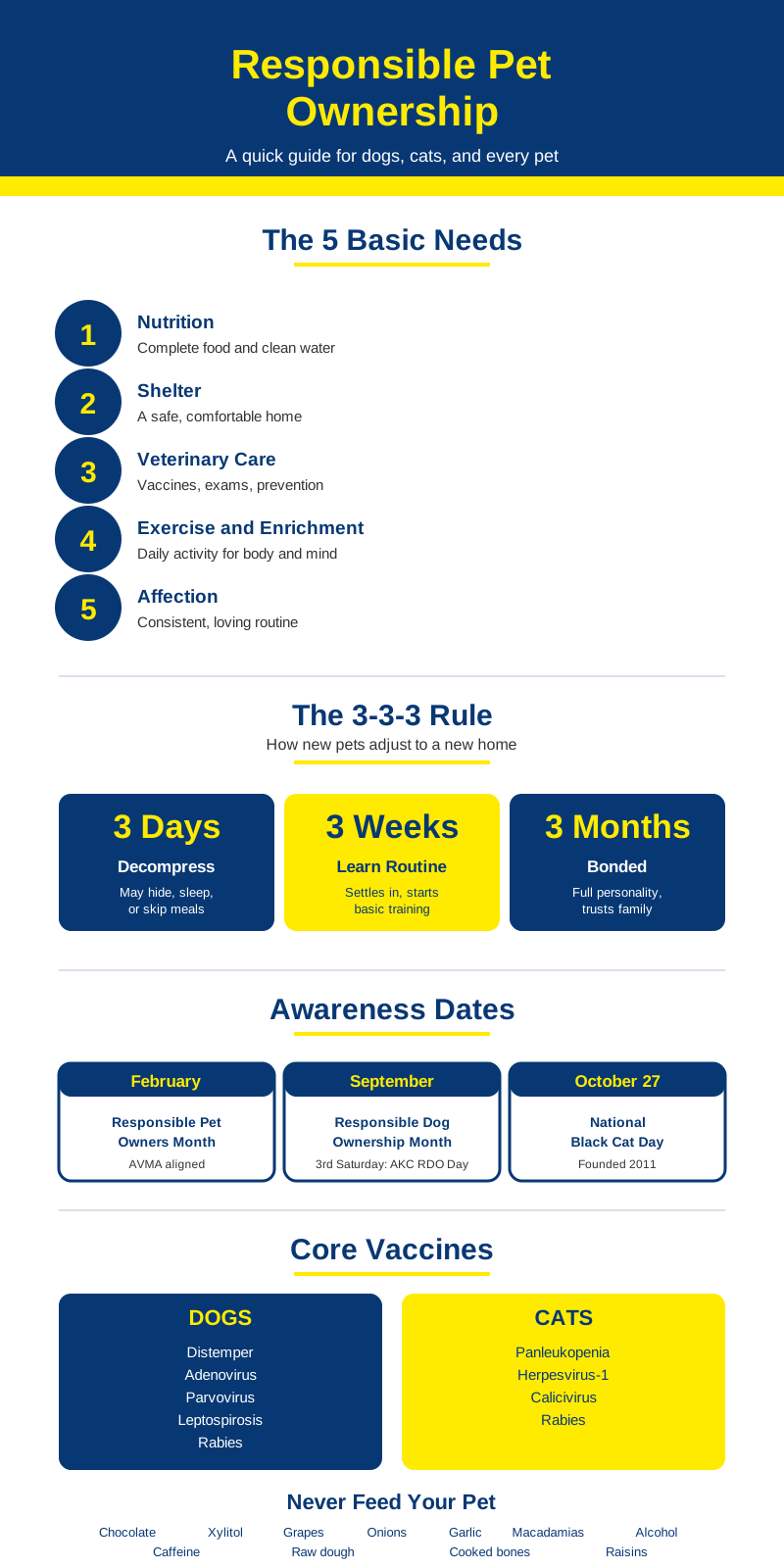
Two awareness periods bookend the calendar for pet parents. February is widely observed as Responsible Pet Owners Month, and September is Responsible Dog Ownership Month, culminating in the American Kennel Club's Responsible Dog Ownership Day on the third Saturday in September. This guide covers what responsible ownership looks like day to day, the veterinarian-backed care every dog and cat deserves, and the small habits that add up to a healthier, happier life for your pet. PetSafe® has been designing products for responsible pet parents for more than 30 years, and the principles below draw on guidance from leading veterinary and animal welfare organizations.
Key Points
- Responsible pet ownership is a lifelong commitment defined by the American Veterinary Medical Association (AVMA) as an 11-point framework covering veterinary care, identification, licensing, training, containment, and quality-of-life decisions.
- February is Responsible Pet Owners Month and September is Responsible Dog Ownership Month; the AKC's flagship Responsible Dog Ownership Day is held on the third Saturday in September.
- The 3-3-3 rule (3 days to decompress, 3 weeks to learn the routine, 3 months to feel secure) helps new pets settle in and applies to both dogs and cats.
- Microchipping more than doubles the return-to-owner rate for lost dogs and increases it more than 20-fold for cats, but only when the registry is kept current.
- Core canine vaccines are distemper, adenovirus, parvovirus, leptospirosis, and rabies; core feline vaccines are feline panleukopenia, feline herpesvirus-1, feline calicivirus, and rabies.
- The single most important puppy socialization window is the first three months of life, and puppies can begin socialization classes as early as 7 to 8 weeks with at least one set of vaccines.
Table of Contents
- What Is Responsible Pet Ownership?
- When Is Responsible Pet Ownership Month? February and September Explained
- Choosing the Right Pet for Your Lifestyle
- Bringing a New Pet Home and the 3-3-3 Rule
- Veterinary Care Fundamentals
- Nutrition and Feeding
- Identification: Why Microchipping Matters
- Exercise, Training, and Enrichment
- A Safe Home and Environment
- Legal and Community Responsibilities
- Emergency Preparedness and Travel Safety
- The Lifelong Commitment: Senior Care and End-of-Life Decisions
- How to Celebrate Responsible Pet Ownership Month
- Frequently Asked Questions
- Citations and sources
What Is Responsible Pet Ownership?
Responsible pet ownership is the ongoing practice of meeting every one of your pet's needs while acting as a considerate member of your community. The AVMA frames it as a lifelong commitment that begins with a deliberate decision to bring an animal into your family and extends to a quality-of-life plan at the end of that animal's life. [1]
At its core, responsible pet ownership meets five basic needs: nutritious food and clean water, safe shelter, routine veterinary care, daily physical and mental stimulation, and consistent affection. When those five needs are met reliably, most other aspects of care fall into place.

The AVMA framework for responsible pet ownership
The AVMA publishes an 11-point set of Pet Owner Responsibility Guidelines that has become the working definition across the veterinary and animal welfare fields. [1] The guidelines ask pet parents to:
- Commit to the relationship for the pet's entire lifetime.
- Select a pet suited to your home and lifestyle, and avoid impulsive decisions.
- Establish and maintain a veterinarian-client-patient relationship.
- Recognize any decline in your pet's quality of life and make timely decisions in consultation with a veterinarian.
- Provide proper identification through visible tags and a registered microchip.
- Adhere to local licensing, leash, rabies, and other ordinances.
- Manage your pet's reproduction responsibly through spay or neuter surgery, containment, or other veterinary-guided methods.
- Socialize and train your pet using positive, humane techniques.
- Minimize impact on the community through waste cleanup, secure containment, and noise control.
- Provide daily physical activity, mental stimulation, and species-appropriate nutrition.
- Prepare for emergencies with an evacuation plan and pet-specific supplies.
When Is Responsible Pet Ownership Month? February and September Explained
Responsible Pet Owners Month is observed each February. Its exact origin is not formally documented, but veterinary and shelter organizations have promoted it for decades, and the month aligns closely with AVMA Pet Dental Health Month, another February observance. [1]
September is Responsible Dog Ownership Month, an American Kennel Club initiative that has run since 2003. The AKC's flagship event, Responsible Dog Ownership Day, takes place on the third Saturday in September at the North Carolina State Fairgrounds in Raleigh, with more than 5,000 affiliated AKC clubs invited to host local events the same weekend. [2] The month draws on the AKC's Canine Good Citizen (CGC) program, which has certified more than one million dogs since its founding in 1989. Legislative resolutions endorsing the CGC program as a teaching tool for responsible dog ownership have been passed in 48 states. [3]
Other pet awareness dates worth marking
National Black Cat Day falls on October 27. The observance was founded in 2011 by a UK animal welfare charity to counter data showing that black and black-and-white cats waited significantly longer for homes than cats of other colors. [4]
National Pet Month is observed in May in the United States. In the United Kingdom the National Pet Month campaign runs across April and May and is built around five weekly welfare themes: Companionship, Behaviour, Diet, Health, and Environment. There is no single official US theme for National Pet Month, so the UK framework is a useful checklist regardless of where you live. [5]
Choosing the Right Pet for Your Lifestyle
The AVMA identifies impulsive pet selection as one of the most preventable causes of surrender to shelters. [1] Choosing well means matching a pet's needs to your realistic daily routine, not to the routine you wish you had. Before you bring any animal home, work through the following:
- Space. Apartments can suit many small and medium dogs, cats, rabbits, or small mammals, but high-energy working breeds usually need a home with a securely fenced yard and daily outdoor exercise.
- Time. Puppies and kittens require near-constant supervision during the first weeks. Adult dogs typically need at least two hours of combined exercise, training, and enrichment per day. Cats need at least two 15-minute interactive play sessions daily.
- Budget. Lifetime cost includes food, routine and emergency veterinary care, parasite prevention, grooming, supplies, boarding or pet sitting, and training. Budget-tier supplies can cover the essentials, but core veterinary care and quality nutrition should not be shortchanged.
- Allergies and family fit. Test time with the specific breed or animal before committing, and confirm every household member is on board.
- Existing pets. Consider temperament, age, and species compatibility, and plan a slow introduction protocol.
Adopting or shopping responsibly
Roughly 6.3 million companion animals enter US shelters each year, and 4.2 million dogs and cats were adopted in 2025, a 1 percent increase from the year prior. [6] Shelters and rescue groups are excellent sources for pets of every age, breed, and mix, and staff can help match temperament to home. If you choose to work with a breeder, look for one who health-tests parent animals, welcomes visits to the whelping site, provides written health guarantees, and asks you as many questions as you ask them.
Bringing a New Pet Home and the 3-3-3 Rule
The 3-3-3 rule is a widely used guideline for the decompression timeline of newly adopted dogs and cats. It is a general framework, not a rigid schedule, and every animal moves through the phases at their own pace.
- The first 3 days: decompression. Your new pet may hide, refuse food, sleep excessively, or show unusual body language. Keep introductions minimal, offer a quiet retreat space, and stick to a predictable routine. Do not force interaction.
- The first 3 weeks: learning the routine. Your pet begins to understand the household schedule, feeding times, and where they sleep. Some behavioral issues may surface as your pet becomes comfortable enough to test boundaries. Start basic training and continue socialization.
- The first 3 months: bonding and belonging. Your pet has settled into their new home, trusts their people, and shows their full personality. Attachment is well established, and long-term training and enrichment routines can be built confidently.
Pet-proofing checklist
Before the pet arrives, walk each room at their eye level and remove or secure the following:
- Loose electrical cords, blind pulls, and drawstrings.
- Household chemicals, medications, and rodent or insect bait, stored in latched cabinets.
- Small objects that could be swallowed, including hair ties, string, buttons, and coins.
- Toxic houseplants (see below).
- Open trash cans (use a covered bin) and unattended food.
- Unfenced pools, ponds, and balconies.
Veterinary Care Fundamentals
An established relationship with a veterinarian is the single most important tool a responsible pet parent has. The AVMA calls this the veterinarian-client-patient relationship, and it is the foundation for legal prescribing, early disease detection, and personalized preventive care. [1]
How often should I take my pet to the vet?
Healthy adult dogs and cats should see a veterinarian at least once a year for a comprehensive wellness exam. Puppies and kittens need multiple visits in the first four to five months for their vaccine series. Senior pets (dogs typically age 7 and up, cats typically age 10 and up) benefit from twice-yearly wellness exams because they age more quickly and disease can progress rapidly at these life stages. [7]
What vaccines does my dog need?
According to the American Animal Hospital Association (AAHA) 2022 Canine Vaccination Guidelines, core canine vaccines are canine distemper virus, canine adenovirus, canine parvovirus, leptospirosis, and rabies. Parainfluenza is often included in combination vaccines. Non-core vaccines that your veterinarian may recommend based on lifestyle and location include Bordetella (kennel cough), Lyme disease, canine influenza, and rattlesnake toxoid. Puppies receive a vaccine series every 3 to 4 weeks starting at 6 to 8 weeks of age, with the final dose given no earlier than 16 weeks. Rabies vaccination is required by law in every US state. [7]
What vaccines does my cat need?
Core feline vaccines are feline panleukopenia (FPV), feline herpesvirus-1 (FHV-1), feline calicivirus (FCV), and rabies. Feline leukemia virus (FeLV) vaccination is considered core for kittens and non-core for adult indoor-only cats. Indoor and outdoor lifestyle, local disease risk, and life stage all shape your veterinarian's recommendation. [8]
Parasite prevention and dental care
Year-round flea, tick, and heartworm prevention is standard veterinary guidance in most US regions. Dental disease is one of the most common conditions in adult dogs and cats and can contribute to pain, tooth loss, and systemic health problems. Daily toothbrushing is the gold standard, and professional dental cleanings under anesthesia are performed as recommended by your veterinarian. February is AVMA Pet Dental Health Month, a good annual prompt to schedule a dental exam. [1]
Should I spay or neuter my pet?
Spaying and neutering prevent unwanted litters and eliminate or reduce the risk of several serious diseases, including pyometra in females and testicular cancer in males. The American College of Veterinary Surgeons reports that mammary tumor risk in female dogs is 0.5 percent when spayed before their first heat cycle, 8 percent after their first heat, and 26 percent after their second heat. [9]
Optimal timing depends on breed and body size. AAHA Canine Life Stage Guidelines suggest that small dogs (under 45 pounds) can be spayed or neutered around 5 to 6 months of age, while large and giant breeds may benefit from waiting until skeletal growth is complete, often between 9 and 15 months. A 2024 study in Frontiers in Veterinary Science, funded by the AKC Canine Health Foundation, offers breed- and weight-specific timing guidance for 41 breeds and shows that in larger dogs, delaying neuter can reduce the risk of certain joint disorders and cancers. Your veterinarian can help you weigh the tradeoffs for your specific pet. [7][10]
Nutrition and Feeding
Species-appropriate nutrition is one of the AVMA's core responsible-ownership pillars. [1] Look for a pet food label that includes an Association of American Feed Control Officials (AAFCO) statement declaring the food "complete and balanced" for a specific life stage: growth (including reproduction), adult maintenance, or all life stages. The AAFCO statement is substantiated either by formulation to AAFCO nutrient profiles or by feeding trials. AAFCO sets nutritional standards but does not test or approve individual products; the FDA and state feed control officials handle enforcement. [11]
Toxic foods to never feed your pet
The ASPCA Animal Poison Control Center (APCC) responded to more than 451,000 calls in 2024, a nearly 4 percent year-over-year increase. Leading categories of exposure were over-the-counter medications, food and drink, prescription medications, and chocolate. [12] Common human foods that are toxic to dogs, cats, or both include:
- Chocolate and cocoa (methylxanthines).
- Xylitol (a sugar substitute in gum, mints, some peanut butters, and baked goods; can cause hypoglycemia and liver failure).
- Grapes and raisins (kidney failure).
- Onions, garlic, chives, and leeks.
- Macadamia nuts.
- Alcohol and caffeine.
- Raw yeast dough.
- Cooked bones (splinter hazard).
Program the APCC 24-hour hotline into your phone: (888) 426-4435. A consultation fee may apply. If you suspect a poisoning, call immediately rather than waiting for symptoms. [12]
Identification: Why Microchipping Matters
A microchip is a rice-grain-sized radio-frequency identification device implanted between a pet's shoulder blades. It cannot track your pet's location, but it stores a unique ID number that any veterinary clinic or shelter can scan and match to your contact information in the microchip registry.
In the landmark 2009 JAVMA study by Lord and colleagues, microchipped dogs were returned to their owners 52.2 percent of the time compared with 21.9 percent for non-chipped dogs, and microchipped cats were returned 38.5 percent of the time compared with only 1.8 percent for non-chipped cats. [13]
Those numbers hold only when the registry information is current. A 2015 study in Animals found that 37 percent of microchipped stray animals had registry data problems, including being registered to a previous owner or organization, having disconnected phone numbers, or never being registered at all. [14] Update your microchip registration whenever you move, change phone numbers, or transfer a pet to a new home. Pair the chip with a visible collar tag that includes your current phone number.
Exercise, Training, and Enrichment
Boredom and under-exercise are among the most common root causes of behavior problems in dogs and cats. Meeting exercise and enrichment needs is not optional; it is a core welfare requirement.
Dog exercise and socialization
Most adult dogs need at least 30 to 60 minutes of moderate exercise daily, plus mental stimulation and social interaction. Working breeds, sporting breeds, and many mixed breeds require more. Puppies and senior dogs need shorter, gentler activity spread across the day.
Socialization windows matter enormously. The American Veterinary Society of Animal Behavior (AVSAB) Position Statement on Puppy Socialization states that "the primary and most important time for puppy socialization is the first three months of life" and that "it should be the standard of care for puppies to receive such socialization before they are fully vaccinated." Puppies can begin socialization classes as early as 7 to 8 weeks of age, provided they have received at least one set of vaccines given at least 7 days prior and a first deworming. [15]
Training should be based on positive reinforcement: rewarding desired behavior with food, play, or attention. Avoid aversive methods, which multiple veterinary behavior organizations have identified as increasing the risk of fear and aggression. Recall training and calm behavior around visitors, other dogs, traffic, and loud events like thunderstorms and holiday celebrations pay dividends for a lifetime. Our guide on keeping pets calm during fireworks covers the acclimation techniques that also apply to storms and other loud events.
Cat enrichment and the Five Pillars
Cats are often assumed to be self-sufficient, but they have specific environmental needs. The American Association of Feline Practitioners (AAFP) and International Society of Feline Medicine (ISFM), in their 2013 Feline Environmental Needs Guidelines published in the Journal of Feline Medicine and Surgery, describe the Five Pillars of a healthy feline environment: [16]
- Provide a safe place.
- Provide multiple and separated key environmental resources, including food, water, litter boxes, scratching posts, play areas, and resting spots.
- Provide opportunity for play and predatory behavior.
- Provide positive, consistent, and predictable human-cat social interaction.
- Provide an environment that respects the importance of the cat's sense of smell.
In practical terms, that means one litter box per cat plus one extra, separated food and water stations, vertical space (cat trees, shelves), daily interactive play with wand toys or feather teasers, and predictable routines. If you are choosing a new litter setup, our guide to choosing the best automatic litter box walks through the tradeoffs.
Grooming basics
Brushing frequency depends on coat type: short-haired dogs and cats typically need weekly brushing, medium- and long-haired pets need brushing several times a week, and double-coated breeds need more during shedding seasons. Trim nails when you hear them click on hard floors, check and clean ears if your veterinarian recommends it for your pet's breed or coat, and bathe as needed with a pet-appropriate shampoo. Over-bathing strips natural oils and can irritate skin.
A Safe Home and Environment
A safe environment is one of the AVMA's responsible-ownership pillars, and it extends beyond the pet-proofing checklist above to secure containment and travel restraint. [1]
Common household plants that are toxic to dogs and cats include lilies (especially dangerous to cats, even in small amounts), sago palm, azaleas and rhododendrons, tulips and daffodils (bulbs are most toxic), oleander, and English ivy. The ASPCA maintains a searchable toxic and non-toxic plants database at aspca.org. [12]
Secure outdoor space is essential for dogs. Physical fencing, pet doors, and electronic containment systems can all be part of a well-designed containment plan. Our comparison of wired, wireless, and GPS dog fences covers the pros and cons of each approach.
Hot weather and cold weather both pose serious risks. Never leave a pet in a parked car in warm weather, and know the warning signs of heat stroke, which we cover in depth in our guide to overheating in dogs. Keep water available at all times, and read our pet hydration guide for signs of dehydration and daily water requirements by body weight.
Legal and Community Responsibilities
Responsible pet ownership does not stop at your front door. Nearly every US municipality has some combination of licensing, leash, waste, noise, and rabies vaccination ordinances, and many jurisdictions also have breed-specific legislation, dangerous-dog laws, and limits on the number of pets per household. [1]
- License your pet. Local licensing usually requires proof of rabies vaccination and helps reunite lost pets with owners.
- Follow leash laws. Off-leash is only appropriate in designated areas.
- Always clean up after your pet. Pet waste is an environmental and public-health issue, not just an etiquette one.
- Check HOA, condo, and rental rules. Pet policies vary widely and can include breed, size, and count restrictions.
- Be a good neighbor. Address nuisance barking through training, environmental management, and, if needed, professional behavior support. Keep dogs from bolting through gates or barking at fences.
Community responsibility also means supporting the systems that support pets: donate to or volunteer at local shelters, support trap-neuter-return (TNR) programs for community cats, and report suspected animal cruelty or neglect to local animal control.

Emergency Preparedness and Travel Safety
Every household should have a pet-specific emergency kit and evacuation plan. Include at least a week's supply of food and medication, bottled water, bowls, a spare leash and collar with ID tags, a carrier or crate, waste bags or a litter pan, current photos of your pet, and copies of vaccination and medical records. Identify pet-friendly hotels and evacuation routes in advance, and keep your veterinarian's phone number and the ASPCA APCC number (888-426-4435) somewhere easy to find. [12]
Safe travel restraint reduces the risk of injury to your pet and to human passengers in a crash. The Center for Pet Safety is an independent, non-profit organization that publishes crash-test-certified lists of harnesses, carriers, and crates. Look for products that carry current CPS certification rather than marketing claims alone. [17]
For deeper coverage of car and air travel with pets, see our guides on traveling with a dog, traveling with a cat, and the species-agnostic pet travel safety tips pillar.
The Lifelong Commitment: Senior Care and End-of-Life Decisions
The AVMA's first responsible-ownership principle is to commit to the relationship for the pet's entire lifetime. [1] That commitment includes planning for the senior years and, eventually, for a compassionate end-of-life decision.
Average lifespans vary by species and, in dogs, by size. Small dogs commonly live 12 to 16 years, medium dogs 10 to 13 years, and large and giant breeds 8 to 12 years. Cats commonly live 12 to 18 years, and indoor cats often live longer than outdoor cats. Rabbits commonly live 8 to 12 years with good care, and some parrots can live 50 years or more. Choose a pet whose expected lifespan fits your long-term plans.
Cost of ownership adds up over a pet's lifetime. Budget-tier expenses include basic food and routine supplies. Mid-range costs cover higher-quality nutrition, standard veterinary care, and everyday enrichment. Premium and ultra-premium tiers include specialty diets, comprehensive preventive care packages, advanced training, and pet insurance. Emergency veterinary care can be significant at any tier, which is why many veterinarians recommend either pet insurance or a dedicated pet savings account.
Senior pets often benefit from more frequent veterinary visits, joint supplements, ramps or steps to reduce jumping, orthopedic bedding, and dietary adjustments. When quality of life declines, the AVMA and your veterinarian can help you evaluate options including hospice care, pain management, and, when appropriate, humane euthanasia. Making a timely, informed decision is one of the most difficult and most loving acts of responsible ownership. [1]
How to Celebrate Responsible Pet Ownership Month
Whether you are marking Responsible Pet Owners Month in February or Responsible Dog Ownership Month in September, these actions turn awareness into practice:
- Schedule your pet's annual wellness exam.
- Update microchip registration and confirm ID tag information is current.
- Review vaccine records and confirm you are on schedule.
- Book a professional dental exam or start a home toothbrushing routine.
- Refresh your pet's emergency kit and evacuation plan.
- Enroll in a positive-reinforcement training class or the AKC Canine Good Citizen program. [3]
- Take the AVMA responsible pet ownership pledge or download the AVMA Pet Owner Responsibility Guidelines to review with your family. [1]
- Volunteer, foster, or donate to a local shelter or rescue.
- Share what you have learned on social media using the campaign hashtags to help spread accurate pet care information.
Frequently Asked Questions
What is responsible pet ownership?
Responsible pet ownership is a lifelong commitment to meeting your pet's physical, medical, behavioral, and social needs while acting as a considerate member of your community. It includes veterinary care, identification, licensing, training, safe containment, and quality-of-life decisions across a pet's entire life. [1]
What are the rules for responsible pet ownership?
The AVMA's Pet Owner Responsibility Guidelines list 11 rules: commit for a lifetime, choose the right pet, establish a veterinarian relationship, recognize quality-of-life changes, provide identification, follow local laws, control reproduction, socialize and train, minimize community impact, provide exercise and nutrition, and prepare for emergencies. [1]
What is the 3-3-3 rule for pet adoption?
The 3-3-3 rule is a general guideline for how a newly adopted dog or cat adjusts to a new home. The first 3 days are decompression, when the pet may hide, sleep, or refuse food. The first 3 weeks are for learning routines and starting basic training. The first 3 months are for full bonding and settling in. Every pet moves through the phases at their own pace.
When is Responsible Pet Ownership Month?
Responsible Pet Owners Month is observed each February. September is Responsible Dog Ownership Month, an American Kennel Club initiative. [2]
When is Responsible Dog Ownership Month?
Responsible Dog Ownership Month is observed each September by the American Kennel Club, and the flagship AKC Responsible Dog Ownership Day is held on the third Saturday in September. [2]
When is AKC Responsible Dog Ownership Day?
AKC Responsible Dog Ownership Day is held annually on the third Saturday in September at the North Carolina State Fairgrounds in Raleigh, with local events hosted by more than 5,000 affiliated AKC clubs around the same time. [2]
What is the theme for National Pet Month?
The United States observes National Pet Month in May without a single official annual theme. The United Kingdom's National Pet Month campaign runs across April and May and is organized around five welfare themes: Companionship, Behaviour, Diet, Health, and Environment. [5]
What does October 27th mean for pets?
October 27 is National Black Cat Day. The observance was created in 2011 by a UK animal welfare charity to raise awareness that black and black-and-white cats historically waited longer than other cats to find homes. [4]
How can I be a more responsible pet owner?
Schedule your pet's annual wellness exam, keep vaccines and parasite prevention current, update microchip registration, follow local licensing and leash laws, provide daily exercise and mental stimulation, use positive-reinforcement training, and prepare an emergency evacuation kit. [1]
What are the 5 basic needs of a pet?
The five basic needs are nutritious food and clean water, safe shelter, routine veterinary care, daily physical and mental stimulation, and consistent affection. The UK National Pet Month campaign frames a similar set of five welfare themes: Companionship, Behaviour, Diet, Health, and Environment. [5]
How much does it cost to own a pet?
Lifetime cost depends on species, size, and health. Budget-tier ownership covers essential food and supplies. Mid-range covers quality nutrition and standard veterinary care. Premium and ultra-premium tiers include specialty diets, comprehensive preventive care, and pet insurance. Emergency care can be significant at any tier, which is why pet insurance or a dedicated savings account is often recommended.
What are the legal responsibilities of a pet owner?
Most US jurisdictions require rabies vaccination, licensing, and adherence to leash and waste ordinances. Some areas also have breed-specific legislation, dangerous-dog laws, and limits on the number of pets per household. Check your city, county, and, if applicable, HOA or rental rules.
What vaccines does my dog need?
According to AAHA guidelines, core canine vaccines are distemper, adenovirus, parvovirus, leptospirosis, and rabies. Non-core vaccines may include Bordetella, Lyme, canine influenza, and rattlesnake toxoid based on your dog's lifestyle and location. [7]
What vaccines does my cat need?
Core feline vaccines are feline panleukopenia, feline herpesvirus-1, feline calicivirus, and rabies. Feline leukemia virus vaccination is core for kittens and non-core for adult indoor-only cats. Your veterinarian will personalize the schedule based on lifestyle and life stage. [8]
How often should I take my pet to the vet?
Healthy adult dogs and cats need at least one comprehensive wellness exam per year. Puppies and kittens need multiple visits in the first four to five months for their vaccine series. Senior pets benefit from twice-yearly wellness exams because disease can progress quickly at older life stages. [7]
Should I spay or neuter my pet?
Spaying and neutering prevent unwanted litters and reduce the risk of certain diseases, including pyometra in females and testicular cancer in males. Optimal timing depends on species, breed, and body size, and a 2024 study published in Frontiers in Veterinary Science offers breed-specific guidance for 41 dog breeds. Discuss the right timing for your pet with your veterinarian. [10]
Why is microchipping important?
A microchip greatly increases the chances that a lost pet is returned home. In the landmark 2009 JAVMA study, microchipped dogs were returned to their owners 52.2 percent of the time compared with 21.9 percent for non-chipped dogs, and microchipped cats were returned 38.5 percent of the time compared with 1.8 percent for non-chipped cats. Registry information must be kept current for the microchip to work. [13][14]
Citations and sources
- avma.org: AVMA Pet Ownership Responsibility Guidelines.
- akc.org: Flagship AKC Responsible Dog Ownership Day.
- akc.org: Canine Good Citizen Program.
- cats.org.uk: National Black Cat Day.
- nationalpetmonth.org.uk: UK National Pet Month campaign themes.
- shelteranimalscount.org: Shelter Animals Count 2025 Annual Data Report.
- aaha.org: 2022 AAHA Canine Vaccination Guidelines.
- catvets.com: AAFP Feline Vaccination Guidelines.
- acvs.org: American College of Veterinary Surgeons, Mammary Tumors.
- akcchf.org: AKC Canine Health Foundation, 2024 breed-specific spay and neuter study.
- aafco.org: Understanding Pet Food Labels.
- aspca.org: ASPCA Animal Poison Control Center.
- avmajournals.avma.org: Lord LK, et al. Search and identification methods that owners use to find a lost dog and cat. JAVMA, 2009.
- mdpi.com: Lancaster E, Rand J, Collecott S, Paterson M. Problems Associated with the Microchip Data of Stray Dogs and Cats Entering RSPCA Queensland Shelters. Animals, 2015;5(2):332-348.
- avsab.org: AVSAB Position Statement on Puppy Socialization.
- journals.sagepub.com: Ellis SLH, Rodan I, et al. AAFP and ISFM Feline Environmental Needs Guidelines. Journal of Feline Medicine and Surgery, 2013.
- centerforpetsafety.org: Center for Pet Safety crash-tested product certifications.
About the author
PetSafe® Guest brings you tips, guidance, and stories from across the PetSafe team of pet parents, product experts, and veterinary partners. Every article is reviewed for accuracy and updated regularly.
Last modified: August 20, 2026


Get Email Updates
Subscribe to the latest news, promotions, & more from PetSafe® brand.
Sign up today for the latest news, promotions, and more from PetSafe® brand.