PetSafe® Expert
PetSafe® Guest
Best Automatic Litter Box: A Complete Buying Guide for Cat Parents
Key Points
- The best automatic litter box for most households is a self-cleaning system matched to your cat's size, temperament, and litter preference, not the most expensive model on the market.
- Automatic litter boxes fall into four mechanical categories: rake-based crystal systems, rotating drum systems, open-top systems, and flushing systems. Each has different strengths for different homes.
- Crystal litter absorbs urine and dehydrates solid waste for stronger odor control and lower dust than clumping clay, and it powers all five boxes in the ScoopFree® Crystal series.
- Multi-cat homes should prioritize a large sealed waste drawer, an open or roomy entry, flexible litter compatibility, and app-based weight tracking to tell cats apart in the data.
- PetSafe ScoopFree is the only major self-cleaning litter box brand that offers both crystal-tray and any-litter drum systems, so pet parents can pick the mechanism and the litter that fit their cat.
- App-connected boxes from PetSafe include weight and usage tracking in the box price with no ongoing subscription required to see your cat's data.
Table of contents
- Are automatic litter boxes worth it?
- How automatic litter boxes work
- Types of automatic litter boxes
- Crystal litter vs. clumping clay litter
- Best automatic litter boxes by category
- The ScoopFree lineup at a glance
- PetSafe ScoopFree SmartSpin vs. the other robot litter box: a head-to-head
- How ScoopFree compares to other self-cleaning litter box brands
- What to look for when choosing an automatic litter box
- Automatic litter box safety
- Health monitoring and multi-cat households
- Frequently asked questions
- Citations and sources
An automatic litter box can transform daily cat care by handling the one chore no cat parent enjoys. The best automatic litter box for your household depends on the number of cats you have, your budget, your cat's size and temperament, the type of litter you prefer, and whether you want app-based health monitoring. This guide walks through every major mechanism, explains the litter differences, and matches the right ScoopFree model to your home.
PetSafe has helped more than 1.5 million cat parents live scoop-free through the ScoopFree line of self-cleaning litter boxes, and this guide draws on that experience to give you a clear, honest breakdown of what to look for.
Are automatic litter boxes worth it?
For most busy households, multi-cat homes, and pet parents with mobility limitations, an automatic litter box is worth the investment. Self-cleaning systems remove waste after every visit, cut daily scooping to zero, contain odor more effectively than open pans, and can flag changes in your cat's habits that may signal a health issue. The trade-offs are a higher upfront cost than a manual box, a larger footprint in your home, and periodic deep cleaning every one to three months.
If you have a single cat, a manageable schedule, and no interest in health tracking, a well-maintained manual box can still work. If you have more than one cat, travel often, work long hours, or want a cleaner bathroom for a picky feline, the case for automating gets stronger fast.
Cats are creatures of habit, and a consistently clean bathroom is one of the strongest predictors of good litter box behavior. Automatic litter boxes deliver that consistency more reliably than any human schedule.
How automatic litter boxes work
Every automatic litter box performs three basic jobs: it detects when your cat is present, waits for a safe interval after the cat leaves, and then separates waste from clean litter. The differences between models come down to how they perform the separation and where they store the waste.
Most systems use a combination of weight sensors and infrared sensors to know when a cat is inside. After the cat exits, a countdown timer runs (usually a few minutes) before the cleaning cycle starts. This delay gives the litter time to clump and prevents the machine from cycling if your cat returns. The waste is then swept, sifted, or rotated into a sealed compartment. Some boxes deodorize the compartment, some use a disposable tray, and some connect to an app that tracks weight and usage over time.
Types of automatic litter boxes
Self-cleaning litter boxes fall into four mechanical categories. Each has strengths that suit different cats and different homes.
Rake-based systems
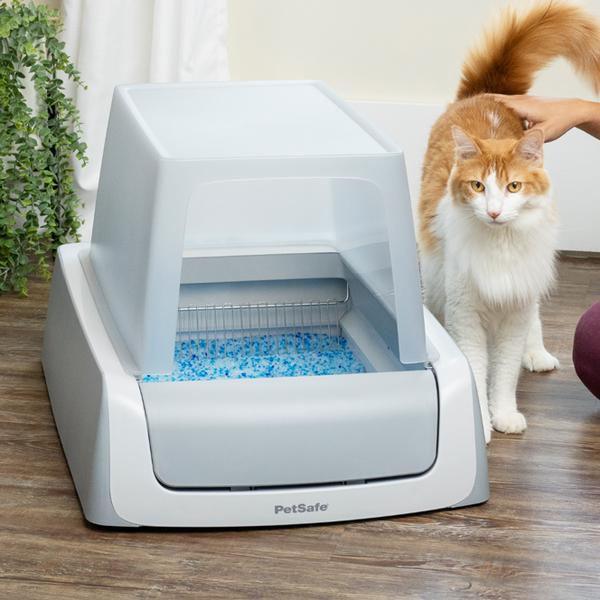
A rake or comb sweeps across a low bed of crystal or silica litter after the cat leaves, pushing solid waste into a covered trap at one end of the box. Crystals absorb urine and dehydrate solids, so the whole tray is replaced periodically instead of scooping individual clumps. Rake systems have few moving parts, run quietly, and stay low-profile. The ScoopFree Crystal series uses this design.
Drum and spherical systems
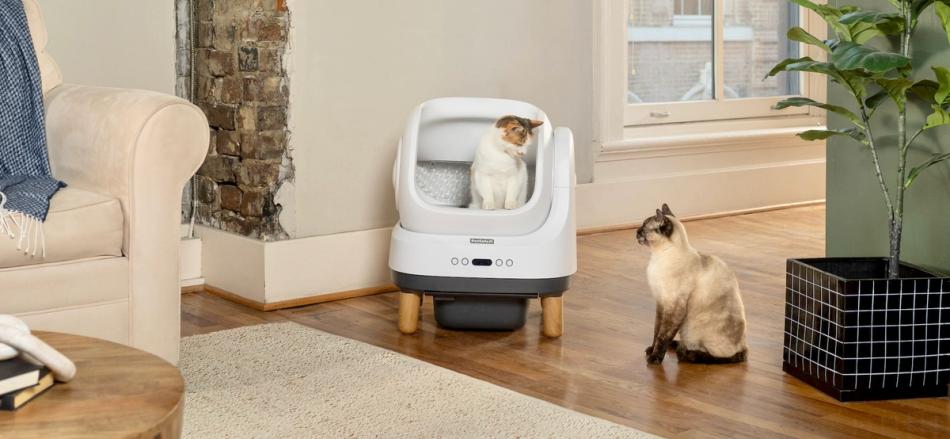
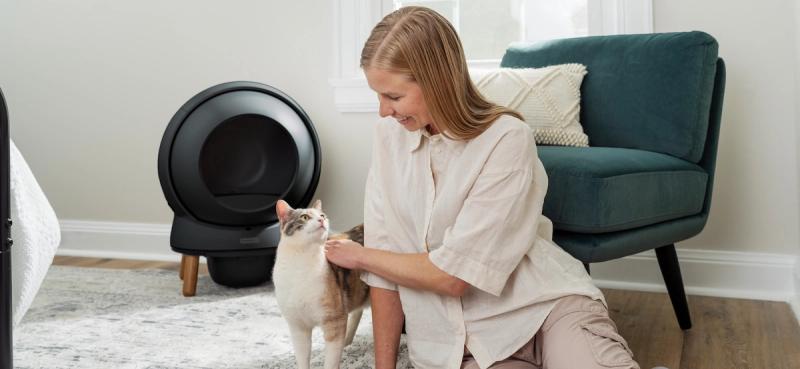
A rotating chamber tumbles clumping litter through a sifting grate. Clumps drop into a sealed drawer while clean litter returns to the surface. Drum systems offer strong odor control because waste stays behind a closed door and does not sit in an open tray. They typically require clumping litter to work properly, though the ScoopFree SmartSpin™ accepts any litter with premium clumping recommended for best performance.
Open-top systems
An uncovered bed with a rake or sifter that never fully encloses the cat. The open design suits timid cats, large cats, and cats that dislike enclosed spaces. Sifting or raking happens automatically after the cat exits, and waste falls into a sealed compartment below. The ScoopFree OpenSky™ is an open-top automatic litter box that accommodates cats up to 33 pounds.
Flushing systems
A small category that connects to household plumbing and uses reusable granules instead of traditional litter. Waste is flushed through the drain after each use. These systems require water and electrical connections at the installation site and are not compatible with regular cat litter.
Crystal litter vs. clumping clay litter
The mechanism you choose determines the litter you can use, and each litter type has real advantages worth knowing before you buy.
Crystal (silica gel) litter
Crystal litter absorbs urine and dehydrates solid waste, then holds moisture and odor inside the granules until the tray is replaced. Because it dehydrates rather than clumps, it typically outperforms traditional clumping clay on odor control. Crystal is 99% dust-free and low-tracking, which helps with cat asthma sensitivities and keeps floors cleaner. A single tray can last up to 30 days in a single-cat home. The trade-off is that crystal litter comes in proprietary disposable litter trays for each box.
Clumping clay litter
Clumping clay is the most familiar litter texture for cats, which makes acclimation easy. It costs less upfront per pound and is available anywhere. Clumping is required for most drum and spherical self-cleaning boxes because the sifting grate depends on formed clumps. Clay is dustier and tracks more than crystal, and the full litter bed needs full replacement roughly every two to four weeks.
Which one to choose
If odor control and low dust are your priorities and you like the "set it and forget it" convenience of monthly tray swaps, a crystal-litter box like the ScoopFree Crystal series is a natural fit. If you prefer a familiar texture, want flexibility to shop for litter at any store, or want a drum or open-top design, a clumping-compatible model like the ScoopFree SmartSpin or ScoopFree OpenSky is the better path.
Best automatic litter boxes by category
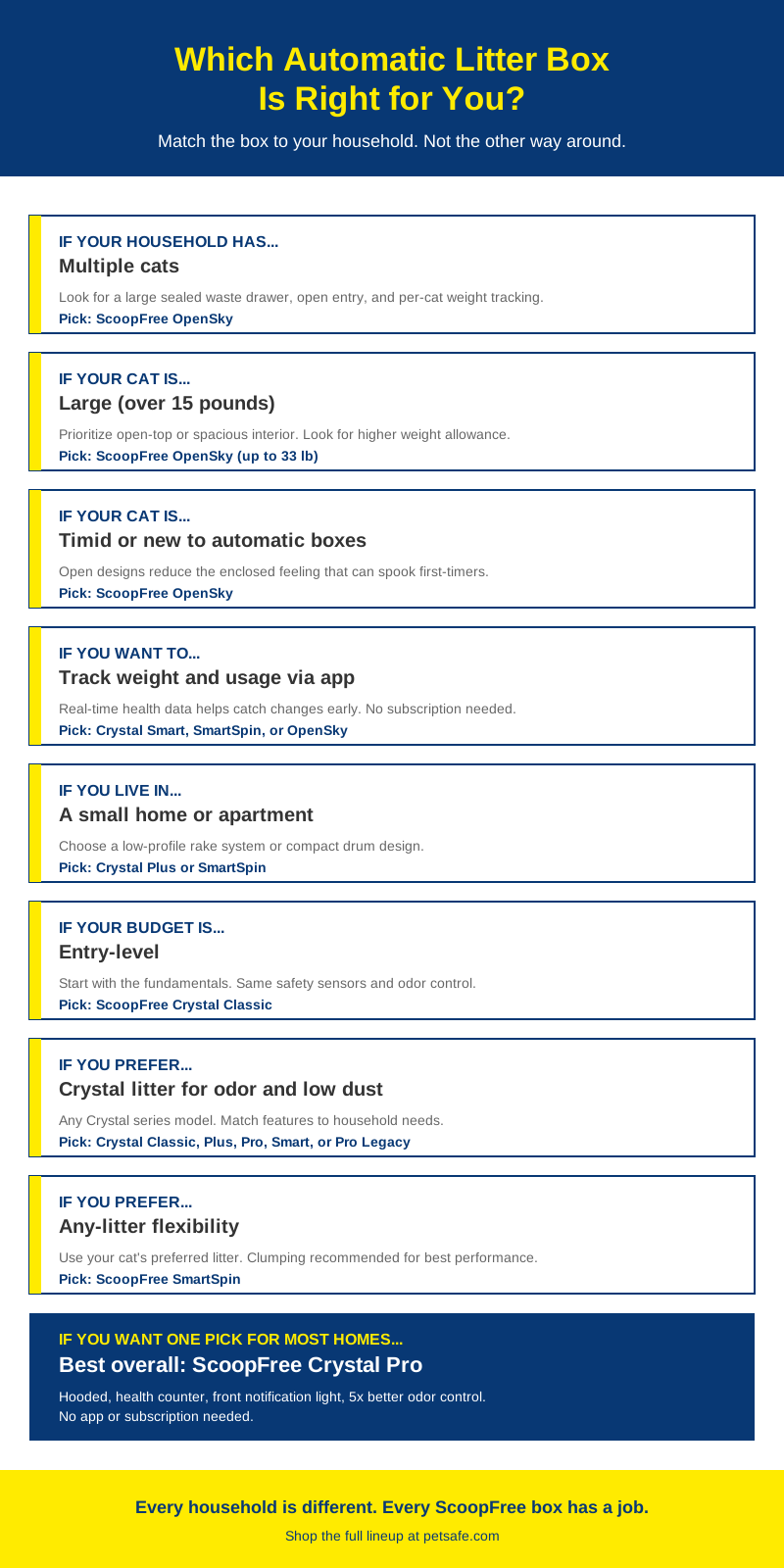
The right pick depends on what matters most in your home. Here is how the ScoopFree lineup maps to the most common buyer needs.
Best overall
ScoopFree Crystal Pro Self-Cleaning Litter Box. A hooded rake-based system with a health counter, a front-facing tray-change indicator light, and 5x better odor control than traditional clay. The privacy hood gives cats a private bathroom and reduces litter tracking, and the health counter monitors usage over time so you can spot early signs of a problem. No app subscription needed to see the data.
Best for multi-cat households
ScoopFree OpenSky Self-Cleaning Litter Box. Open-top design so no cat feels crowded out, an 8.5-liter sealed waste drawer that stores up to two weeks of clumps for a single cat, and app-based weight and usage tracking that helps you tell your cats apart in the data. Works with most clumping litter types, giving multi-cat homes flexibility as litter goes through faster.
Best value
ScoopFree Crystal Classic Self-Cleaning Litter Box. The entry point to the ScoopFree lineup. Same 5x better odor control from the crystal litter and safety motion sensors as the rest of the Crystal series, in a simple uncovered design without the health counter or notification light. Suitable for cats up to 15 pounds.
Best for large cats
ScoopFree OpenSky Self-Cleaning Litter Box. Accommodates cats up to 33 pounds. The open-top layout gives large cats room to enter, turn around, back up, and cover, which is a common problem in globe-style boxes designed for average-sized cats. Height and interior space also make entry easier for senior cats with reduced mobility.
Best for timid or anxious cats
ScoopFree OpenSky Self-Cleaning Litter Box. The open-top layout removes the enclosed feeling that can spook cats new to automatic boxes. Cats can see their surroundings the entire time they are inside, which reduces hesitation during the transition from a traditional pan. A customizable cleaning countdown (adjustable from 1 to 60 minutes via the app) means the cycle can be timed to your cat's routine.
Best for health monitoring
ScoopFree Crystal Smart Self-Cleaning Litter Box or ScoopFree SmartSpin Self-Cleaning Litter Box. Both connect to a PetSafe app for 24/7 monitoring at no additional subscription cost. The Crystal Smart pairs the app with an LCD display and health counter on the box, and lets you use crystal-litter trays. The SmartSpin pairs the app with a drum-style mechanism, works with any litter (clumping recommended for best performance), and tracks weight over time to help you identify shifts before they become vet visits.
Best for small spaces
ScoopFree Crystal Plus Self-Cleaning Litter Box. A low-profile uncovered rake system with a tray-change alert light. Slim vertical footprint fits under counters, in bathrooms, and in laundry closets where a hooded or drum-style box would not fit.
Best for crystal litter
Any model in the ScoopFree Crystal series. All five Crystal boxes (Classic, Plus, Pro, Smart, and Pro Legacy) run on ScoopFree crystal litter trays. Choose Classic or Plus for a basic uncovered design, Pro for a hood and health counter, Smart for app monitoring, or Pro Legacy for a health counter with a choice of three entry styles.
Best clumping or any-litter option
ScoopFree SmartSpin Self-Cleaning Litter Box. Works with any litter your cat prefers, though a premium clumping litter delivers the best performance from the sifting mechanism. Sealed 6-liter waste drawer with an integrated deodorizer, child lock, on-demand cleaning, and weight change detection. Only 12 inches from the ground for easy access.
The ScoopFree lineup at a glance
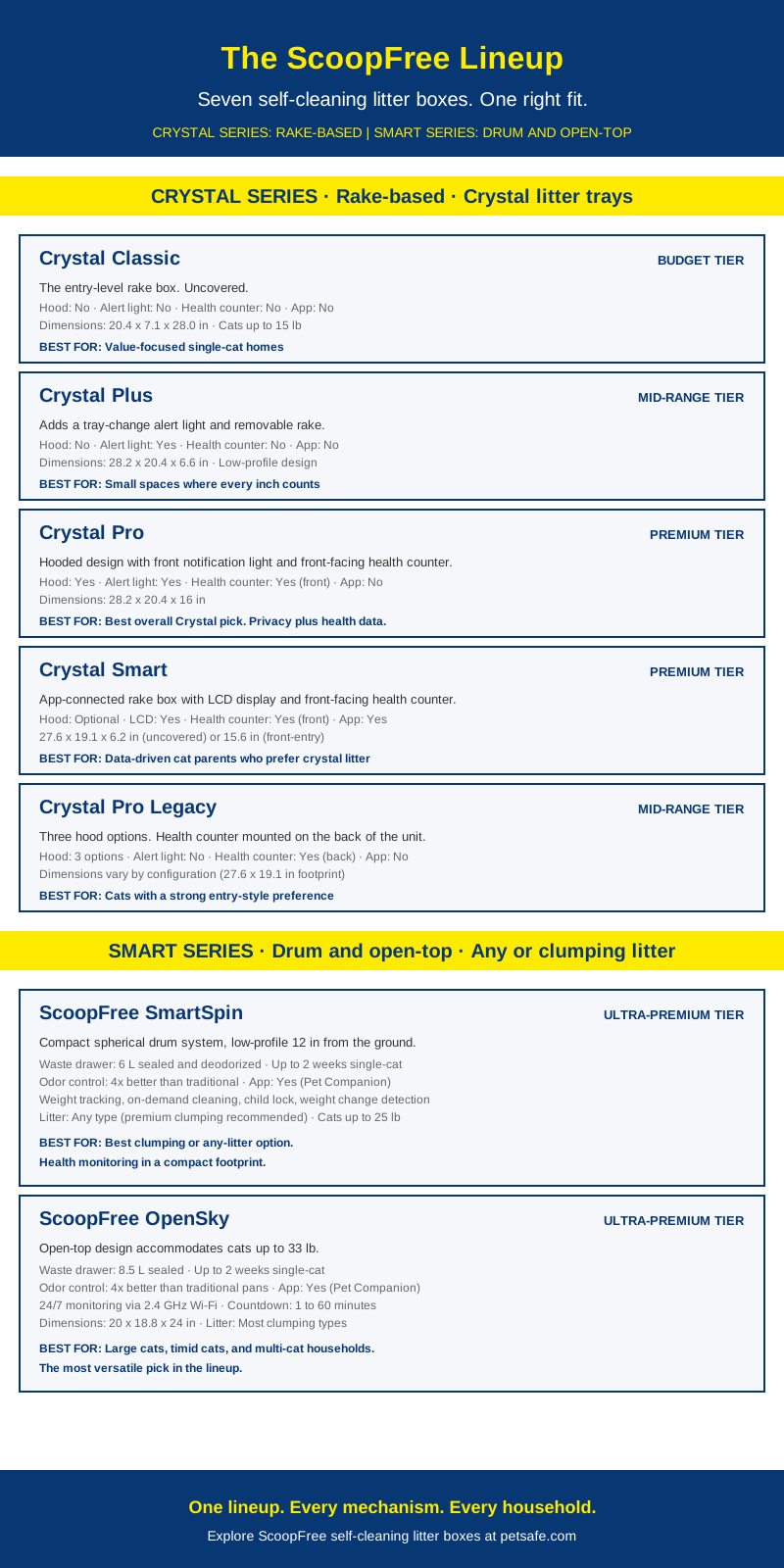
The ScoopFree line covers every major mechanism, litter preference, and household size. Here is how each model differs.
ScoopFree Crystal Classic Self-Cleaning Litter Box
The entry-level rake-based box. Uncovered, plug-in, and compatible only with ScoopFree crystal litter trays. Safety motion sensors, 5x better odor control than traditional clumping litter, 99% dust-free crystals, disposable trays with plastic lining, and dimensions of 20.4 x 7.1 x 28.0 inches. Suitable for cats up to 15 pounds. No tray-change alert light and no health counter.
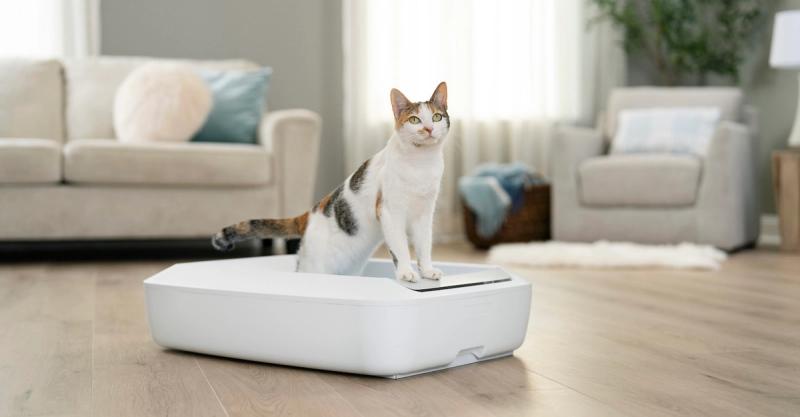
ScoopFree Crystal Plus Self-Cleaning Litter Box
An uncovered rake-based box with a tray-change indicator light that alerts you precisely when to replace the tray. Removable rake and smooth interior make maintenance simple. 5x better odor control, 99% dust-free crystals, and dimensions of 28.2 x 20.4 x 6.6 inches. Compatible only with ScoopFree crystal litter trays. No hood and no health counter.
ScoopFree Crystal Pro Self-Cleaning Litter Box
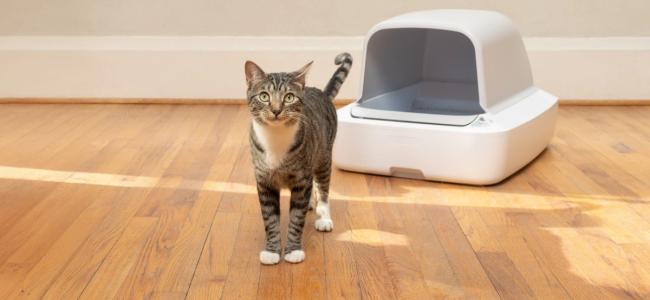
The hooded, feature-forward option in the Crystal lineup. A removable privacy hood gives cats a private bathroom while reducing litter tracking, and the notification light on the front of the unit alerts you when it is time to replace the tray. Includes a digital display health counter that monitors your cat's usage so you can identify possible health issues. Removable rake, smooth interior, and dimensions of 28.2 x 20.4 x 16.0 inches with the hood.
ScoopFree Crystal Smart Self-Cleaning Litter Box
App-connected rake-based box with an LCD display and health counter on the unit itself. Connects to the My PetSafe app for 24/7 monitoring, real-time health tracking through activity logs, and custom alerts for tray changes. Available in an uncovered version (27.6 x 19.1 x 6.2 inches) or a front-entry version (27.6 x 19.1 x 15.6 inches). Designed for use with ScoopFree crystal litter only.
ScoopFree Crystal Pro Legacy Self-Cleaning Litter Box
The most flexible entry-style choice in the Crystal series. Available as uncovered (27.6 x 19.1 x 6.2 inches), front-entry (27.6 x 19.1 x 16.0 inches), or top-entry (27.6 x 19.1 x 15.6 inches). Includes a health counter that tallies how many times your cat uses the box. One important design note: the health counter on the Pro Legacy sits at the back of the unit, unlike the newer Crystal Pro and Crystal Smart, which position the display on the front. Safety motion sensors, 5x better odor control, and disposable crystal litter trays. No app connectivity and no tray-change alert light.
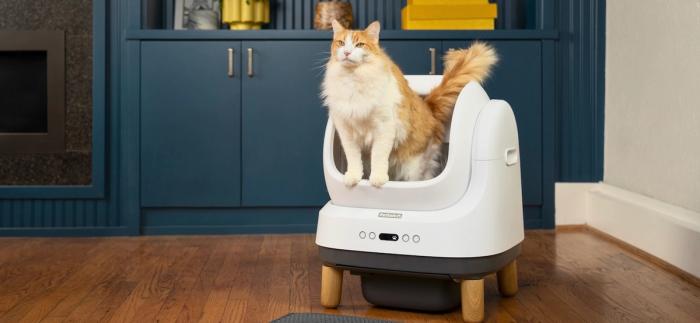
ScoopFree OpenSky Self-Cleaning Litter Box
Open-top drum-style automatic litter box for cats up to 33 pounds. Sensors detect when the cat has exited and start a countdown (customizable from 1 to 60 minutes via the app) before cleaning. 8.5-liter sealed waste drawer holds up to two weeks of clumps for a single cat. 4x better odor control than traditional pans, integrated deodorizer, 24/7 app monitoring via 2.4 GHz Wi-Fi, and dimensions of 20 x 18.8 x 24 inches. Works with most clumping litter types.
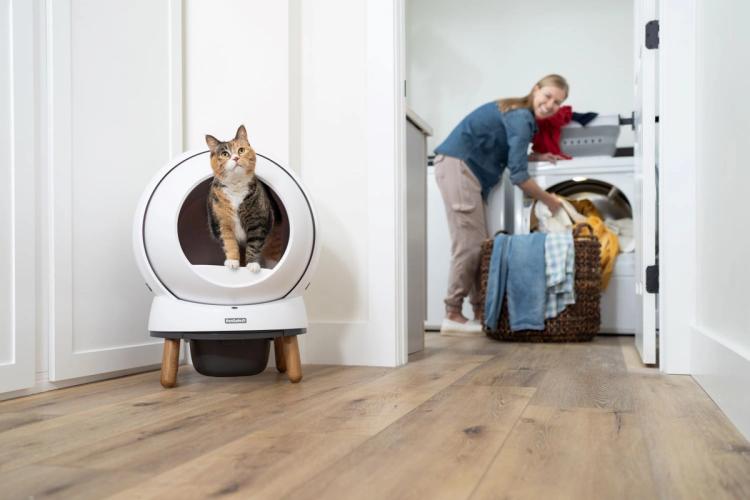
ScoopFree SmartSpin Self-Cleaning Litter Box
Compact spherical drum system with a low-profile 12-inch height for easy access. Automatically sifts clumps into a 6-liter sealed, deodorized waste drawer that holds up to two weeks of clumps. 4x better odor control than traditional litter boxes. Connects to the PetSafe Pet Companion app for real-time weight tracking and litter box usage data. Easy-to-use control panel with on-demand cleaning, child lock, and weight change detection. Suitable for cats up to 25 pounds. Compatible with any litter type, though a premium clumping litter is recommended for best performance.
PetSafe ScoopFree SmartSpin vs. the other robot litter box: a head-to-head
Cat parents shopping for a drum-style automatic litter box almost always cross-shop the ScoopFree SmartSpin with the other top-rated "globe style" robot litter box. Both are self-cleaning drum systems with app connectivity, sealed waste drawers, and health tracking. Here is how they stack up on the details that matter most.
Litter compatibility
The SmartSpin is the more flexible pick. It works with any litter your cat prefers (clumping, non-clumping, or crystal), with premium clumping recommended for best performance from the sifting mechanism. Other robot litter boxes require clumping clay litter to function properly. If your cat has a strong litter preference or you want the freedom to switch, the SmartSpin gives you room to experiment.
App and health data cost
PetSafe includes weight tracking and usage monitoring in the Pet Companion app at no additional subscription cost. Some competitor apps offer advanced multi-cat identification and full analytics dashboard, but require a paid subscription. Over the life of the box, the difference adds up.
Profile and accessibility
The SmartSpin sits 12 inches from the ground with a low-profile spherical design that suits kittens over six months, seniors, and cats with mobility limits. Globe-style drum boxes on the market typically stand taller with a higher entry point, which can be an obstacle for smaller or older cats.
Waste drawer and cadence
The SmartSpin holds up to two weeks of clumps for a single cat in a 6-liter sealed, deodorized drawer. Larger globe-style boxes may hold slightly more before emptying, but the SmartSpin's smaller footprint often fits better in real homes where kitchen counters, powder rooms, and laundry corners set the limits.
Odor control
Both approaches use a sealed drawer plus a deodorizer to contain smell. The SmartSpin delivers 4x better odor control than a traditional pan. Sealed-drawer designs across the category generally perform similarly on odor as long as the drawer is emptied on schedule.
Safety and support
The SmartSpin uses weight and motion sensors to prevent cycling while a cat is inside, plus an app-based child lock and on-demand manual cleaning. PetSafe's U.S.-based customer care team is available by phone, email, and chat. That is a meaningful convenience when a sensor needs recalibration or the app needs a reset.
The short version
If you want any-litter flexibility, no subscription for the health data your cat generates, a low profile that suits most cats, and U.S.-based support, the ScoopFree SmartSpin is the stronger value in the drum category. If globe-style aesthetics or extreme height clearances are a deciding factor for your household, other robot litter boxes may be worth a look. Either way, the mechanism you choose should serve your cat, not the other way around.
How ScoopFree compares to other self-cleaning litter box brands
Several third-party brands appear in the self-cleaning category. Here is a neutral, factual overview so you can weigh the field before making a decision.
Rake-based crystal systems
PetSafe ScoopFree is the dominant name in this category. Rake systems suit cat parents who want a low-profile footprint, quiet operation, and monthly tray swaps instead of daily maintenance. Other rake-style automatic litter boxes exist but are less common in the current market and typically use clumping clay rather than crystal, so the odor-control and low-dust advantages of crystal are unique to the ScoopFree Crystal series.
Open-top systems
The ScoopFree OpenSky suits timid and large cats because the design never fully encloses the animal. The OpenSky pairs a 33-pound weight allowance and a customizable countdown timer with app-based weight and usage tracking at no additional subscription cost. Some third-party open-top boxes place advanced health features behind a paid app tier.
Flushing systems
A "self-flushing" litter box requires plumbing and electrical hookups at the installation location, uses reusable washable granules instead of standard cat litter, and runs a longer cleaning cycle than sifting-based systems. It is a specialized choice for cat parents who want zero-waste-drawer disposal and have the plumbing setup to support it. PetSafe does not offer a flushing model.
What to look for when choosing an automatic litter box
Match the box to your household, not the other way around. The following factors matter most.
Footprint and location
Self-cleaning boxes are larger than manual pans. Measure your intended location before ordering. Low-profile rake systems fit almost anywhere. Hooded and drum designs need vertical clearance. Open-top designs need floor space but stay short.
Entry size and interior room
Large cats need room to enter, turn around, and cover their waste. If your cat weighs more than about 15 pounds, prioritize an open-top or larger-interior design. Small openings force big cats to squeeze through, and cramped interiors lead cats to leave waste uncovered.
Waste drawer or tray capacity
More cats means more frequent emptying. Sealed waste drawers of 6 to 8.5 liters generally handle a single cat for one to two weeks. Multi-cat homes should expect to empty the drawer more often or upsize to the larger capacity models.
Litter compatibility
Rake systems typically require the manufacturer's crystal trays. Drum and open-top systems typically require clumping litter, though a few (including the ScoopFree SmartSpin) work with any litter type. Choose the litter first if you know your cat has a preference, then choose the box.
Safety features
Weight sensors, infrared sensors, and delayed cleaning cycles all reduce risk. Reliable brands publish their safety features clearly and test them across product lines. Established-brand boxes have safety features engineered into each cleaning cycle. Avoid unbranded rotating boxes with a single small entry hole and unspecified sensor systems.
App connectivity
Not every household needs an app-connected box, but real-time weight and usage data can help you spot health changes early. The PetSafe Pet Companion app and the My PetSafe app deliver these features without a subscription fee.
Warranty and support
Look for a return window (PetSafe offers a 45-day satisfaction guarantee across the line) and clear customer support channels. A U.S.-based customer care team, available by phone, email, or chat, is a meaningful convenience when a sensor needs recalibration.
Automatic litter box safety
Automatic litter boxes are safe when they come from an established brand with engineered sensors. The safety concerns you may have read about almost always trace back to unbranded imported boxes with single-sensor systems, no clear safety testing, and no U.S.-based support. Reliable models use redundant sensor arrays (weight plus infrared), delayed cleaning cycles that start only after the cat has clearly left the box, and automatic shut-off if a cat enters mid-cycle.
All ScoopFree self-cleaning litter boxes include safety motion sensors that ensure the cleaning cycle only activates when your cat is out of the box. The SmartSpin adds a child lock for households with young children. If you have a kitten under six months of age, PetSafe recommends keeping the box unplugged and scooping by hand until your kitten is old enough to trigger the sensors reliably.
Health monitoring and multi-cat households
Changes in litter box habits are among the earliest signals of urinary problems, kidney disease, diabetes, and gastrointestinal issues in cats [1]. A healthy adult cat typically urinates two to four times per day. Sudden increases in trips to the box with little output produced, sudden decreases in frequency, or sharp weight changes can all indicate a developing condition worth a vet visit.
An automatic litter box with app-based weight and usage tracking builds a baseline for your cat's normal routine and flags deviations. In multi-cat households, this is especially valuable because it can be difficult to tell which cat is exhibiting a change. The PetSafe Pet Companion app (used by SmartSpin and OpenSky) and the My PetSafe app (used by Crystal Smart) both provide weight and usage tracking without a paid subscription.
A common concern about self-cleaning boxes is that they clean waste away before you can see it. Cat behavior consultants recommend that owners of automatic boxes still perform occasional visual checks of the sifted waste before disposal, especially if the app flags unusual activity or if your cat shows other symptoms.
For multi-cat homes, the general veterinary guideline is one litter box per cat plus one extra [2]. An automatic box does not eliminate this rule, though it can reduce the burden of maintaining several boxes.
Frequently asked questions
Are automatic litter boxes worth it?
For most busy, multi-cat, or mobility-limited households, yes. Self-cleaning boxes reduce daily scooping to zero, control odor better than open pans, and can track health data. The upfront cost is higher than a manual box, but many pet parents recover the difference in time saved and reduced litter waste.
Do automatic litter boxes work?
Established-brand automatic litter boxes reliably separate waste after every visit. Performance varies by mechanism (rake, drum, open-top) and by how well the model fits your cat, so match the box to your household before buying.
Do veterinarians recommend automatic litter boxes?
Many veterinarians recommend automatic litter boxes for households where a consistently clean box supports urinary and behavioral health [3]. Behavior consultants add the reasonable caveat that owners should still occasionally inspect waste for changes that might otherwise be missed.
Are automatic litter boxes safe for cats?
Automatic litter boxes from established brands with engineered weight and infrared sensors, delayed cleaning cycles, and automatic shut-off are safe for cats over six months of age. Kittens under six months should not use automatic boxes; keep the box unplugged and scoop by hand until they are old enough to reliably trigger the sensors.
How do self-cleaning litter boxes work?
Sensors detect when the cat exits, a countdown timer runs, and then a rake, drum, or sifter separates waste from clean litter and moves it into a sealed compartment. Some systems also weigh the cat, track usage, and send data to a companion app.
What is the best automatic litter box for multiple cats?
Prioritize a large sealed waste drawer, a roomy or open entry, flexible litter compatibility, and per-cat weight tracking. The ScoopFree OpenSky was designed with multi-cat homes in mind: an 8.5-liter waste drawer, an open-top layout, and app-based weight and usage tracking.
What is the difference between crystal and clumping litter?
Crystal litter absorbs urine and dehydrates solid waste for stronger odor control and lower dust, and it is used with rake-based systems that swap disposable trays. Clumping clay forms hard clumps that can be sifted, is required by most drum systems, is cheaper per pound, and is available anywhere.
How often should you clean an automatic litter box?
Empty a sealed waste drawer every few days to weekly depending on the number of cats. Replace a crystal tray about once a month for a single-cat home. Perform a full deep clean of the box every one to three months by disassembling, wiping down, and reassembling.
What are the disadvantages of automatic litter boxes?
The main disadvantages are higher upfront cost, larger footprint, the periodic deep-cleaning chore, potential noise during cycling, a short acclimation period for some cats, and less opportunity to visually inspect waste for health changes.
Can an automatic litter box help with pet health monitoring?
Yes. App-connected boxes track weight and litter box usage over time, which can help you notice early changes in urinary frequency, output, or body weight that may point to an emerging health issue.
What size cat can use an automatic litter box?
Most automatic litter boxes fit cats between about 5 and 15 pounds. Open-top designs like the ScoopFree OpenSky accommodate larger cats up to 33 pounds. Kittens under six months of age should not use automatic boxes.
Do automatic litter boxes save money over time?
Sometimes. Efficient litter usage and reduced waste can offset the higher upfront cost, especially with crystal-litter systems that swap trays about once a month. Total savings depend on your household size, previous litter habits, and how you value time spent scooping.
Citations and sources
- Cornell Feline Health Center. "Feline Lower Urinary Tract Disease." vet.cornell.edu
- American Association of Feline Practitioners. "Feline Environmental Needs Guidelines." catvets.com
- The Ohio State University Indoor Pet Initiative. "Litter Box Guidance for Cats." indoorpet.osu.edu
- International Cat Care. "Litter and Litter Tray Guidance." icatcare.org
Author
Written by PetSafe Guest
PetSafe Guest contributors are pet experts, trainers, veterinarians, and brand partners who share their knowledge with the PetSafe community. Articles published under this byline are reviewed by the PetSafe editorial team before publication.
Last Modified: July 30, 2026


Get Email Updates
Subscribe to the latest news, promotions, & more from PetSafe® brand.
Sign up today for the latest news, promotions, and more from PetSafe® brand.