September 2, 2026
PetSafe® Expert
PetSafe® Guest
New Kitten Checklist: Everything You Need Before Bringing Your Kitten Home
Bringing home a new kitten is exciting, and a little preparation goes a long way. This new kitten checklist walks you through everything your kitten needs, from the supplies that make the first weeks smooth to the home prep, vet care, and slow introductions that help a young cat settle in and thrive. Use it to plan, shop, and welcome your kitten with confidence.
Key points
- Get ready in four steps: gather supplies, kitten-proof your home, schedule a first vet visit, and introduce your kitten to any resident pets gradually.
- Must-have supplies include kitten food, food and water bowls, a litter box and litter, a carrier, a bed, a scratching post, toys, grooming tools, and identification.
- Provide one litter box per cat, plus one extra, so a single kitten needs at least two boxes.
- Book the first vet visit within the first week to start the vaccine series and parasite prevention and to microchip your kitten. [1]
- Plan to spay or neuter by five months of age. [2]
- Keep lilies and other toxic plants out of the home entirely, since even tiny amounts can be dangerous to cats. [6]
In this article
- Your new kitten checklist at a glance
- Essential kitten supplies
- How to kitten-proof your home
- Your kitten's first night at home
- How to introduce your kitten to other pets
- Kitten health: vet visits, vaccines, and parasite prevention
- How to feed your kitten
- Litter box setup and training
- Kitten development milestones
- Frequently asked questions
Your new kitten checklist at a glance
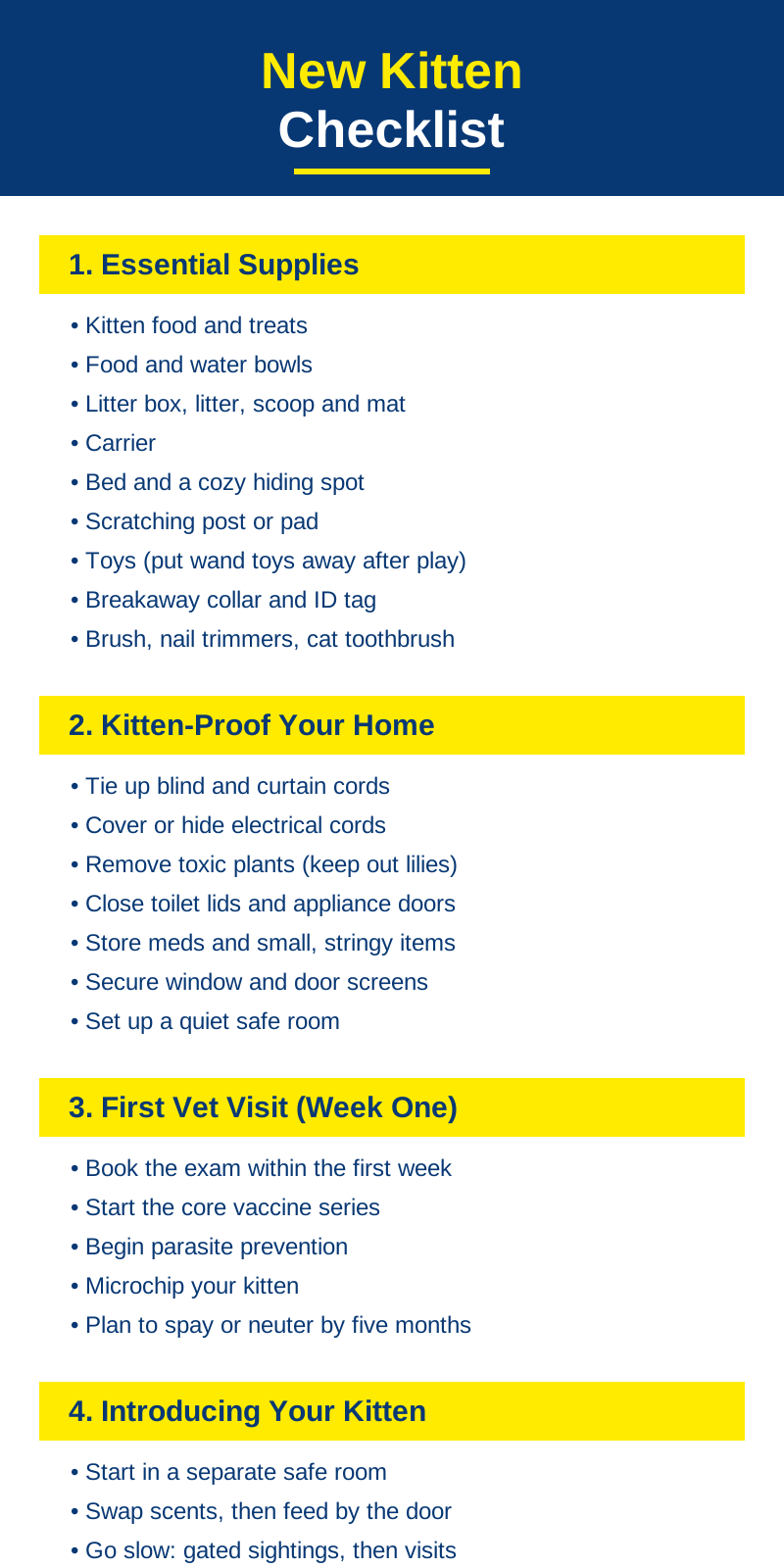
Getting ready for a kitten comes down to four things: the supplies your kitten needs day to day, a home that is safe to explore, a plan for early veterinary care, and a calm, gradual arrival. Here is the whole checklist in one place, so you can gather what you need in a single trip to the new kitten supplies aisle and tick items off as you go.
Supplies to buy: kitten food and a few treats; food and water bowls; a litter box and litter; a scoop and litter mat; a carrier; a bed or two; a scratching post or pad; a small selection of toys; a breakaway collar with an identification tag; and basic grooming tools.
Home prep: set up a quiet safe room; secure blind and curtain cords; tuck away or cover electrical cords; remove or relocate toxic plants; close toilet lids; put away small, chewable, or stringy objects; and check that window screens are secure.
Health to schedule: a first veterinary exam within the first week; the kitten vaccine series; parasite prevention; a plan to spay or neuter; and microchipping.
Settling in: keep the first day quiet, let your kitten explore the safe room at its own pace, and introduce any resident pets slowly over days to weeks rather than all at once.
Essential kitten supplies
A well-stocked kitten starter kit covers food, hydration, litter, rest, play, and safety. You do not need everything at once, but having the basics ready before your kitten arrives makes the transition far smoother.
Kitten food and treats
Choose a food formulated for growth or for all life stages, so it meets the higher calorie and nutrient needs of a growing kitten. Feeding a mix of wet and dry food early can help prevent picky habits later, and wet food adds moisture that supports hydration. If you are adopting an older kitten, keep it on its current food at first and transition gradually to avoid an upset stomach. There is more on portions and schedules in the feeding section below.
Food and water bowls
Pick shallow, wide bowls that are gentle on your kitten's whiskers and easy to clean. Fresh water should always be available. Many cats drink more readily from moving water, so a cat water fountain can be a helpful way to encourage steady drinking, which supports urinary and kidney health over the long run.
Litter box and litter
Start with a box that has low sides so a small kitten can climb in and out easily, and size up as your kitten grows. Very young kittens do best with a plain, unscented, non-clumping litter, since they sometimes taste and swallow litter while they are learning. You can move to an unscented clumping litter as your kitten matures. Browse cat litter boxes to find a size and style that fits your space, and see the litter box section below for placement and the one-per-cat-plus-one rule.
Carrier
A sturdy carrier keeps your kitten secure on the ride home and for every vet visit after. Hard-sided carriers that open from both the top and the front make it easier to lift a nervous cat in and out. Leave the cat carrier out at home with a soft blanket inside so your kitten comes to see it as a cozy, familiar spot rather than a signal that something stressful is coming.
Bed and a safe space
Kittens sleep a great deal, so offer at least one soft, washable bed in a quiet corner. A covered or cave-style bed gives shy kittens a place to hide, which helps them feel secure in a new home.
Scratching post and cat tree
Scratching is a natural, healthy behavior that helps cats stretch, mark territory, and shed old claw sheaths. Give your kitten appropriate outlets from day one so furniture does not become the target. Offer both vertical and horizontal options, since cats have individual preferences, and place a cat scratcher near the spots your kitten already likes to rest.
Toys
A few simple toys go a long way. Wand and teaser toys are great for interactive play, but use them only with you in the room, and put them away afterward so your kitten cannot chew and swallow the string. Skip anything with small parts your kitten could pull off, and keep yarn, hair ties, and rubber bands out of reach, since they are easily swallowed and can cause a serious blockage.
Collar, identification, and grooming
Fit your kitten with a breakaway collar and an identification tag, even if your kitten will live indoors, because cats can slip out. Round out your kit with a soft brush, cat nail trimmers, and a cat-specific toothbrush and toothpaste. Never use human toothpaste, which is not safe for cats to swallow.

How to kitten-proof your home
Kittens are curious climbers who investigate the world with their paws and mouths, so a quick safety sweep before your kitten arrives prevents most household accidents. Work room by room and get down to kitten height to spot hazards you might otherwise miss.
- Tie up or shorten blind and curtain cords, which are a strangulation risk.
- Bundle, cover, or hide electrical cords and charging cables to discourage chewing.
- Secure tall or wobbly furniture and remove breakable items from shelves your kitten can reach.
- Close toilet lids and keep washing machine and dryer doors shut.
- Store human medications, cleaning products, and stringy or small objects well out of reach.
- Check that all window and door screens are secure, and be mindful of open windows on upper floors.
- Move houseplants out of reach and remove any that are toxic to cats.
Toxic plants deserve special attention. Common flowers and greenery such as tulips, daffodils, and sago palm can make cats ill, and onions and garlic are dangerous in food. [6][7]
Lilies are especially dangerous. Every part of a true lily or daylily is toxic to cats, and even the pollen or the water in a vase can cause kidney failure, so the safest choice is to keep them out of your home entirely. If you think your kitten has eaten something toxic, contact your veterinarian or the ASPCA Animal Poison Control Center at (888) 426-4435 right away.
If you want to give your kitten the run of some rooms while keeping others off limits, an interior cat door lets your cat reach its litter box and food while keeping curious paws out of spaces you would rather protect.
Your kitten's first night at home
Set up the safe room before your kitten arrives, with the litter box, food and water, a bed, a scratching surface, and a couple of toys all in one quiet space. When you get home, place the carrier on the floor, open the door, and let your kitten come out on its own rather than reaching in to pull it out. Some kittens explore right away, while others hide for a while, and both are normal.
Keep the first day calm and low key, with dim lighting and few visitors. Kittens sleep best somewhere warm, so a cozy, draft-free spot helps. It is common for a kitten to cry the first night or two in an unfamiliar place, and quiet reassurance usually settles them. Keep any resident pets in a separate part of the home for now, since introductions work best when they happen slowly.

How to introduce your kitten to other pets
The golden rule of introductions is to go at the pace of your most nervous animal and to let first impressions happen through a closed door. Rushing face-to-face meetings is the most common cause of lasting tension between pets. Aim for calm tolerance as your goal, since not every pair of animals becomes best friends, and that is perfectly fine. [8]
Start with a separate safe room
For the first several days, keep your new kitten in its own room with everything it needs. This lets your kitten adjust to new sights, sounds, and smells while your resident pet keeps its familiar territory, and it gives each animal a chance to notice the other without direct contact.
Swap scents
Gently rub a soft cloth on each animal and place it in the other's space, or trade bedding between the rooms. Feeding both animals near the closed door, starting far enough back that everyone stays relaxed, helps each one build a positive association with the other's scent.
Move to controlled visual introductions
Once both animals are eating and resting calmly on either side of the door, allow brief, supervised sightings through a baby gate or a cracked door. Reward calm behavior with treats and gentle play, and keep sessions short and upbeat. If either animal hisses, growls, or hides, simply take a step back to the previous stage for a few more days.
Supervised time together
When visual meetings stay relaxed, allow short, supervised time in the same room, and gradually extend it. Watch body language closely. Loose, easy movement and normal eating, grooming, and play are good signs, while flattened ears, a puffed tail, staring, or crouching mean it is time to slow down. Never punish either animal for tension, since that only adds stress to the situation.
Introducing a kitten to a dog
Keep a new kitten and a resident dog fully separated for the first day or two, then follow the same scent-swapping and gated introduction steps. When you first allow them in the same room, keep your dog calm and under control on a leash, and make sure your kitten always has an easy escape route and a high perch to retreat to. Reward your dog for staying settled around the kitten.
In any multi-pet home, give each cat its own resources in separate spots. That means one litter box per cat plus one extra, along with separate feeding stations so no one has to share or guard a meal. An automatic cat feeder can help you keep separated feeding routines consistent.
Kitten health: vet visits, vaccines, and parasite prevention
Schedule your kitten's first veterinary visit within the first week of bringing it home. That early exam sets a baseline for your kitten's health, starts the protection your kitten needs, and gives you a trusted partner for questions along the way. [1]
The first vet visit
At the first appointment, your veterinarian will weigh your kitten, listen to its heart and lungs, check for common congenital issues, and often test for feline leukemia virus and feline immunodeficiency virus. Bring any paperwork from the breeder or shelter, transport your kitten in its carrier, and jot down questions in advance about feeding, behavior, and what to expect at future visits.
Vaccination schedule
Your veterinarian will start a series of core vaccines. The combination vaccine that protects against feline viral rhinotracheitis, calicivirus, and panleukopenia is typically begun as early as six weeks of age and then repeated every three to four weeks until a kitten is about sixteen to twenty weeks old. A rabies vaccine is given according to your local laws and the product label, and the feline leukemia vaccine is considered core for kittens. Your kitten is not fully protected until roughly two weeks after the final dose in the series, so keep it away from unknown animals until then. Your veterinarian will tailor the exact timing to your kitten. [1]
Deworming and parasite prevention
Many kittens are born with or pick up intestinal worms, so early deworming is routine, and some of these parasites can spread to people, which makes prompt treatment important. Your veterinarian will also start year-round prevention for fleas, and often for ticks and heartworm, and this matters even for indoor cats, since pests find their way inside. Follow the products and schedule your veterinarian recommends.
Spay or neuter by five months
Veterinary and shelter organizations widely recommend spaying or neutering kittens by five months of age. Doing so prevents unwanted litters, avoids the stress of heat cycles, and reduces the risk of certain reproductive problems and cancers later in life. Spaying a female before her first heat cycle, in particular, dramatically lowers her lifetime risk of mammary cancer. Your veterinarian can confirm the best timing for your kitten. [2]
Microchipping
A microchip is a permanent form of identification that greatly improves the odds of a reunion if your kitten is ever lost, and lost cats with a registered microchip are returned to their owners far more often than those without one. Many veterinarians can place the chip during the spay or neuter procedure. A chip only works if the registration is current, so remember to keep your contact details up to date. [3]
How to feed your kitten
Feed a kitten-formulated diet that meets recognized standards for growth, and measure portions rather than leaving food out all day, which helps prevent excess weight. Kittens have small stomachs and big energy needs, so they eat little and often. A general guide by age looks like this:
- About eight weeks to six months: three to four small, measured meals a day.
- Six to twelve months: around two meals a day.
- Twelve months and older: transition gradually to an adult cat food and an adult feeding routine.
Offer a mix of wet and dry food to support both hydration and healthy eating habits, and always keep fresh water available nearby. If your schedule makes regular mealtimes tricky, an automatic cat feeder can deliver measured portions on time, and a cat water fountain encourages steady drinking between meals. Check your kitten's growth and body condition with your veterinarian and adjust portions as it grows.
Litter box setup and training
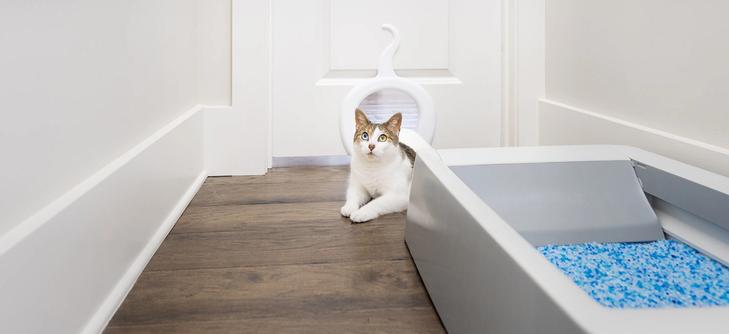
Most kittens take to a litter box naturally, especially when the setup is easy to use and kept clean. The single most important rule is to provide one box per cat, plus one extra, so a single kitten needs at least two boxes. Place them in separate, quiet, low-traffic spots rather than lined up side by side, which cats tend to treat as a single box.
- Size and access: choose a box roughly one and a half times your kitten's length from nose to tail, with low sides a small kitten can step over, and size up as it grows.
- Litter type: start young kittens on plain, unscented, non-clumping litter, then move to unscented clumping litter as they mature.
- Cleanliness: scoop at least once a day and wash the box regularly, since cats often avoid a dirty box.
- Training: gently place your kitten in the box after meals and naps, and quietly clean up any accidents without scolding, which only creates fear.
Explore cat litter boxes to match the right size and style to your kitten and your home.
Kitten development milestones
Knowing what to expect helps you support your kitten through each stage of its first year.
Teething: kittens have a set of baby teeth that they begin to lose around three months of age, usually finishing with a full set of adult teeth by about six months. You may find tiny teeth around the house or notice extra chewing during this time. Offer safe, soft chew toys, and mention any red, swollen gums or teeth that seem stuck to your veterinarian.
Socialization: the window when kittens most readily accept new people, animals, and experiences opens very early, in the first weeks of life, and gradually narrows after that. Most kittens come home after that peak period, so keep offering gentle, positive exposure to new sights, sounds, and handling to raise a confident, friendly adult cat. [4][5]
Growing up: as your kitten approaches its first birthday, its rapid growth slows. Around twelve months, work with your veterinarian to transition to an adult diet and settle into adult feeding and care routines.
Frequently asked questions
What do you need before bringing a kitten home?
Before your kitten arrives, gather kitten food, food and water bowls, a litter box and litter, a carrier, a bed, a scratching post, a few toys, grooming tools, and a breakaway collar with an identification tag. Set up a quiet safe room and kitten-proof your home, and schedule a first vet visit within the first week.
What are the essential kitten supplies?
The core kitten starter kit is kitten food and treats, food and water bowls, a litter box, litter, a scoop and mat, a carrier, a bed, a scratching post or pad, toys, grooming tools, and identification. Everything else, from a cat tree to a water fountain, is a helpful extra you can add over time.
How many litter boxes should I have for one kitten?
Provide one litter box per cat, plus one extra, so a single kitten needs at least two boxes. Place them in separate, quiet locations rather than side by side, since cats usually treat two boxes in the same spot as one.
What kind of litter is best for a kitten?
Start very young kittens on a plain, unscented, non-clumping litter, because kittens sometimes taste litter while learning to use the box. Once your kitten is a little older, you can switch to an unscented clumping litter, which many owners find easier to keep clean.
When are kitten vaccinations due?
The core kitten vaccine series usually begins as early as six weeks of age and repeats every three to four weeks until about sixteen to twenty weeks old. Rabies is given based on local law and the product label. Your veterinarian will set the exact schedule for your kitten. [1]
When should a kitten go to the vet for the first time?
Schedule the first veterinary visit within the first week of bringing your kitten home. The early exam checks your kitten's overall health, starts the vaccine series and parasite prevention, and lets you ask questions about care. [1]
How often should I feed a kitten?
Feed young kittens three to four small, measured meals a day, moving to about two meals a day between six and twelve months, then transition to an adult routine around a year old. Use a food made for growth and measure portions to help prevent excess weight.
When should a kitten be spayed or neutered?
Veterinary and shelter groups widely recommend spaying or neutering by five months of age. It prevents unwanted litters and lowers the risk of certain health problems, and spaying a female before her first heat greatly reduces her risk of mammary cancer. Confirm timing with your veterinarian. [2]
What plants and foods are toxic to kittens?
Lilies are extremely dangerous, and even pollen or vase water can cause kidney failure, so keep them out of the home entirely. Tulips, daffodils, and sago palm are also toxic, as are onions and garlic in food. Keep the ASPCA Animal Poison Control Center number, (888) 426-4435, handy. [6]
When do kittens start and finish teething?
Kittens begin losing their baby teeth around three months of age and usually have a full set of adult teeth by about six months. Offer safe, soft chew toys during this stage, and ask your veterinarian about any gum inflammation or teeth that appear to be stuck.
How do I introduce a new kitten to my cat or dog?
Keep your kitten in a separate safe room at first, swap scents between animals, then feed them on opposite sides of a closed door. Progress to brief gated sightings, and finally to short supervised time together, always rewarding calm behavior and slowing down at any sign of stress. [8]
Should an indoor kitten be microchipped?
Yes. Even indoor cats can slip outside, and a registered microchip greatly increases the chance of a reunion if your kitten is ever lost. Pair the chip with a breakaway collar and identification tag, and keep your contact details current in the registry. [3]
Citations and sources
- American Animal Hospital Association. New Kitten Checklist: First Vet Visit, Supplies and First-Year Care. aaha.org
- American Animal Hospital Association. The Fix by Five Initiative: Feline Spay and Neuter by Five Months of Age. aaha.org
- American Veterinary Medical Association. Pet Owners, Shelters, and Clinics: Check the Chip. avma.org
- American Veterinary Medical Association. Socialization of Puppies and Kittens: Literature Review. avma.org
- VCA Animal Hospitals. Socialization and Fear Prevention in Kittens. vcahospitals.com
- ASPCA. Toxic and Non-Toxic Plants. aspca.org
- ASPCA. These Harmful Feline Hazards Could Be in Your Home. aspca.org
- Humane World for Animals. How to Introduce Your New Cat to Resident Cats. humaneworld.org


Get Email Updates
Subscribe to the latest news, promotions, & more from PetSafe® brand.
Sign up today for the latest news, promotions, and more from PetSafe® brand.