August 11, 2026
PetSafe® Expert
PetSafe® Guest
How Much Should My Cat Weigh? A Vet-Informed Weight Guide
Key Points
- Most healthy adult domestic cats weigh between 8 and 12 pounds, with about 10 pounds a common average.
- Ideal weight depends on breed, frame, age, and body condition; a Maine Coon at 18 pounds can be perfectly lean, while a 12-pound domestic shorthair may be overweight.
- Veterinarians use a 9-point Body Condition Score alongside the scale, and a score of 5 out of 9 is considered ideal.
- A cat is generally considered overweight at 10 to 20 percent above ideal weight and obese at more than 20 percent above.
- An estimated 61% of U.S. cats are overweight or obese, per the Association for Pet Obesity Prevention, and safe weight loss is only 0.5% to 2% of body weight per week.
- Sudden weight loss or weight gain in a cat is a medical concern; contact your veterinarian if either happens without an obvious explanation.
Table of Contents
- Quick answer: how much should my cat weigh?
- What is the average cat weight?
- Cat weight chart by breed
- Cat weight by age (kitten to senior)
- Body Condition Score: a better measure than the scale
- How to tell if your cat is overweight
- Health risks of feline obesity
- How to help your cat reach a healthy weight safely
- When to see your veterinarian
- Frequently asked questions
- Citations and sources
Quick answer: how much should my cat weigh?
Most healthy adult domestic cats weigh between 8 and 12 pounds, with about 10 pounds a common average [1]. Ideal weight varies by breed, frame, and age, though. A lean Maine Coon can healthily reach 18 to 20 pounds, and a petite Siamese may top out around 8 pounds, so a single "right" number for every cat does not exist.
The most reliable way to know whether your cat is at a healthy weight is Body Condition Score, a 9-point scale that measures how much fat and muscle your cat carries relative to its frame. Body condition scoring pairs a hands-on check at home with a numeric target of 5 out of 9. The sections that follow cover breed ranges, kitten growth, how to score your own cat, and what to do if the scale reads higher or lower than it should.
What is the average cat weight?
The often-cited average for a healthy adult domestic shorthair or domestic longhair is around 10 pounds, with a normal range of 8 to 12 pounds [1][2]. Cats housed indoors and cats that have been spayed or neutered often sit at the higher end because they burn fewer calories and metabolic rates shift after sterilization.
That average hides a lot of variation. Purebred cats can weigh half as much or twice as much as an average moggie and still be perfectly healthy. Kittens naturally sit well below adult weight, and pregnant queens sit well above. Two cats of the same breed and age can also legitimately weigh different amounts if one has a smaller skeletal frame or less muscle mass, which is why a single number never tells the full story.
Cat weight chart by breed
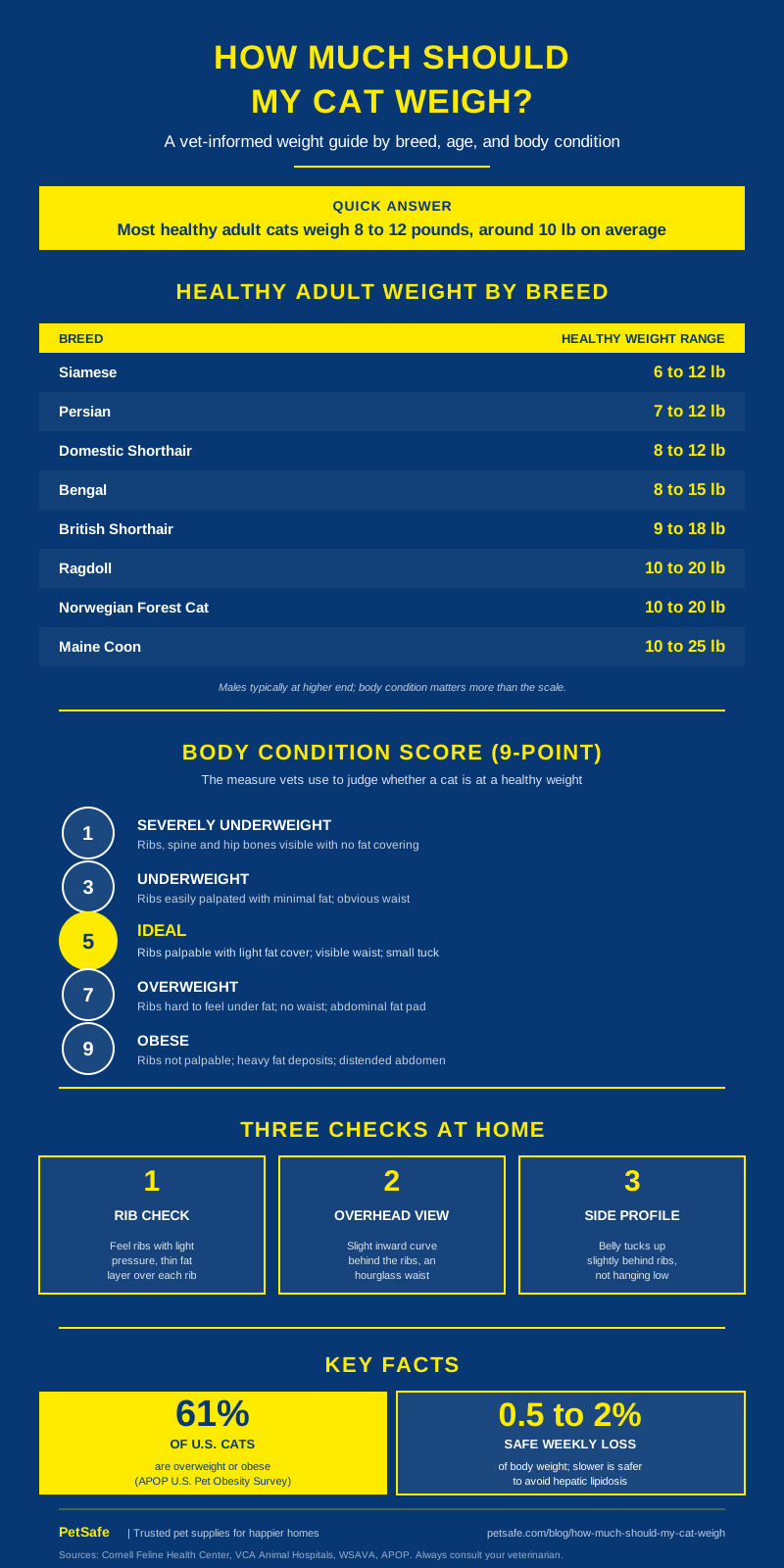
The ranges below reflect typical healthy adult weights for common cat breeds. Individual cats can fall above or below these ranges and still be healthy if their body condition is appropriate. Males tend to weigh at the higher end, females at the lower.
Small and lean breeds
- Singapura: 4 to 8 pounds
- Devon Rex: 6 to 9 pounds
- Siamese: 6 to 12 pounds
- Cornish Rex: 6 to 10 pounds
Small and lean breeds have narrow builds and light musculature. Owners sometimes assume these cats are underweight when they are simply built that way. Body condition, not the scale, is what matters.
Medium and mixed breeds
- Domestic Shorthair: 8 to 12 pounds
- Domestic Longhair: 8 to 15 pounds
- American Shorthair: 8 to 15 pounds
- Persian: 7 to 12 pounds
- Bengal: 8 to 15 pounds
Most cats in U.S. households fall into the domestic shorthair or domestic longhair category, and these cats typically top out around 12 pounds when lean. Persians and Bengals have distinct body shapes but similar overall size targets.
Large breeds
- British Shorthair: 9 to 18 pounds
- Ragdoll: 10 to 20 pounds
- Norwegian Forest Cat: 10 to 20 pounds
- Maine Coon: 10 to 25 pounds
Large breeds mature slowly and can keep growing until 18 to 24 months or later, especially Maine Coons. A 20-pound Maine Coon or Ragdoll can be perfectly lean; the same weight on a domestic shorthair almost certainly means obesity. When in doubt, check body condition first.
Cat weight by age (kitten to senior)
Kittens grow quickly and predictably in their first six months, then more slowly through their first year. Adult and senior cats should hold a stable weight barring pregnancy, illness, or a diet change.
Kitten growth month by month
A rough rule of thumb is that healthy kittens gain about one pound per month for their first four to five months. Typical weights by age:
- 1 month: about 1 pound
- 2 months: about 2 pounds
- 3 months: about 3 pounds
- 4 months: about 4 pounds
- 6 months: about 5 to 6 pounds
- 12 months: about 8 to 12 pounds (adult weight for most breeds)
Large-breed kittens grow more slowly and keep gaining beyond 12 months. A Maine Coon may not reach full adult weight until 18 to 24 months of age or older. If your kitten's weight is drifting far off this pattern in either direction, ask your veterinarian to check for parasites, feeding issues, or other concerns.
Adult and senior cats
Adult cats between 1 and 7 years old should hold a stable weight if their diet and activity level stay consistent. Slow weight creep of even a pound or two matters in a species that averages 10 pounds; a 12-pound cat is 20 percent above a 10-pound baseline. Senior cats, especially those 10 years and older, sometimes lose weight due to dental disease, kidney disease, hyperthyroidism, or diabetes, so weight loss in an older cat always warrants a veterinary check.
Body Condition Score: a better measure than the scale
Veterinarians use Body Condition Score, or BCS, to assess whether a cat carries an appropriate amount of body fat and muscle for its frame. The 9-point scale is maintained by the World Small Animal Veterinary Association and used across the profession [3]. A score of 5 out of 9 is ideal for cats.
- 1 to 3 out of 9: underweight; ribs, spine, and hip bones are visible or easily felt with little fat covering
- 4 to 5 out of 9: ideal; ribs are palpable with slight fat covering, and there is a visible waist and a small abdominal tuck
- 6 out of 9: overweight; ribs are harder to feel, waist is less defined, and a small fat pad hangs from the belly
- 7 to 9 out of 9: obese; ribs cannot be felt without significant pressure, waist is absent, and there is prominent abdominal fat
How to check your cat's body condition at home
Three simple checks give you most of what a veterinarian looks for:
- Rib check: Run your fingers gently along your cat's sides. You should feel each rib with a thin layer of fat over it, similar to feeling the back of your hand through a light glove. If ribs are hard to feel, your cat is likely overweight. If ribs feel sharp with no cushioning, your cat is likely underweight.
- Overhead view: Look at your standing cat from directly above. You should see a slight inward curve behind the ribs, sometimes called the "hourglass waist." A straight-sided or bulging outline suggests overweight.
- Side profile: Look at your cat from the side. A healthy cat's belly should tuck up slightly behind the ribs. A hanging belly, especially one that swings when your cat walks, typically indicates overweight. Note that most spayed and neutered cats have a small, loose primordial pouch of skin on the belly that swings even in lean cats; this is normal and not the same as fat [2].
How to tell if your cat is overweight
Cats are considered overweight at 10 to 20 percent above ideal body weight and obese at more than 20 percent above [2]. For a cat whose ideal is 10 pounds, that means 11 pounds is edging into overweight territory and 12 pounds or more is clearly overweight. On an average-sized cat, one pound of extra weight is roughly the equivalent of a 15-pound gain on an adult person, which is why even small changes on the scale matter.
Beyond the scale and body condition checks, several behavioral cues suggest a cat is carrying too much weight: difficulty jumping onto counters or the bed, trouble grooming areas near the tail base, faster breathing after mild exertion, reduced play interest, and a preference for lying stretched out flat because sitting curled up is uncomfortable. Any of these signs paired with a body condition score above 5 out of 9 warrants a conversation with your veterinarian.
Health risks of feline obesity
Feline obesity is not a cosmetic concern; it is a medical one. Carrying excess weight raises the risk of several serious conditions and shortens lifespan.
Feline obesity is "the most frequently observed nutritional disorder among domestic cats," according to the Cornell Feline Health Center. Once identified, it should be addressed rather than accepted as normal [1].
The most well-documented risks of feline obesity include:
- Diabetes mellitus: obese cats are up to four times more likely to develop diabetes than cats at an ideal body condition [1].
- Osteoarthritis and joint disease: extra weight strains hips, knees, and elbows and accelerates cartilage wear.
- Hepatic lipidosis: if an overweight cat stops eating for even a couple of days, the liver can mobilize fat too quickly and develop this life-threatening condition.
- Feline lower urinary tract disease: obese cats have higher rates of bladder inflammation and urinary blockages.
- Cardiovascular strain and high blood pressure: the heart works harder in an overweight body.
- Reduced mobility and self-grooming: cats that cannot reach their hindquarters or tail base often develop skin and coat problems.
- Shortened lifespan: per VCA Animal Hospitals, a 2.8-fold increase in mortality has been observed in obese cats 8 to 12 years old, compared with lean cats of the same age [2].
How to help your cat reach a healthy weight safely
Weight loss in cats is very different from weight loss in humans or dogs. Cats cannot lose weight quickly without risking hepatic lipidosis, so any plan should be slow, measured, and supervised by your veterinarian.
Safe rate of weight loss
The safe target for feline weight loss is roughly 0.5% to 2% of current body weight per week, and most veterinary guidance recommends staying at the lower end [4][5]. For a 15-pound cat aiming for 12 pounds, that means around one to two ounces of loss per week, and a total weight-loss timeline of several months, not weeks. Faster loss is dangerous. Never withhold food from a cat or attempt an extended fast; even 24 to 48 hours without eating can begin to trigger hepatic lipidosis in an overweight cat.
Portion control and feeding routine
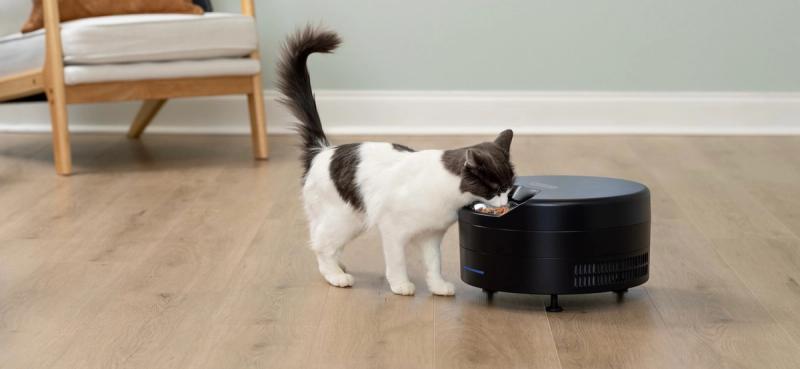
Weight loss almost always comes down to a modest, measured reduction in daily calories paired with more consistent feeding structure. Your veterinarian can calculate an appropriate daily calorie target for your cat's ideal weight, and prescription weight-loss diets may be recommended if calorie density needs to drop significantly. Portion control is easier with measured meal feeding, and a programmable, portion-control feeder can hold a diet schedule steady even when nobody is home. Our guide to how often to feed a cat covers meal frequency by life stage and how to convert daily calories into per-meal portions. Because obesity also raises urinary tract risk, a cat water fountain that encourages higher daily water intake is worth adding.
When to see your veterinarian
Contact your veterinarian when: your cat's weight has changed by more than a pound in either direction over a few weeks without a diet change; you are starting a weight-loss plan and need a target and timeline; your cat is refusing food, especially if overweight; or you notice any behavioral cues of excess weight such as trouble jumping or grooming. Regular annual or semiannual wellness visits should include a weight and body condition check, and any concerning trend is easier to catch early than late.
Frequently asked questions
How much should my cat weigh?
Most healthy adult domestic cats weigh between 8 and 12 pounds, with about 10 pounds a common average. Purebreds vary widely, and ideal weight depends on breed, frame, and body condition rather than a single number.
What is the average weight of an indoor cat?
Indoor cats typically weigh 8 to 12 pounds. Because indoor cats are usually less active than outdoor cats and are often spayed or neutered, they tend to sit at the higher end of the range and are at particular risk of gradual weight creep.
How much should a Maine Coon weigh?
Adult Maine Coons typically weigh 10 to 25 pounds, with males often reaching 15 to 20 pounds when fully mature at 18 to 24 months of age. A lean Maine Coon well above 15 pounds can be perfectly healthy.
How much should a kitten weigh by age?
Healthy kittens gain roughly one pound per month for their first four to five months. A 1-month kitten weighs about 1 pound, a 3-month kitten about 3 pounds, a 6-month kitten about 5 to 6 pounds, and most kittens reach adult weight of 8 to 12 pounds by their first birthday.
What is a body condition score for cats?
Body Condition Score is a 9-point scale used by veterinarians to measure how much body fat a cat carries relative to its frame. A score of 5 out of 9 is ideal. Scores of 6 to 9 indicate overweight or obesity, and scores of 1 to 3 indicate underweight.
Is my cat one pound overweight a big deal?
Yes, more than you might think. On a cat whose ideal weight is 10 pounds, one extra pound is 10 percent above ideal, roughly the equivalent of a 15-pound gain on an average adult person. Small changes on the scale represent large proportional changes in a small animal.
How can I help my cat lose weight safely?
Work with your veterinarian on a target ideal weight and daily calorie plan. Feed measured meals rather than free-feeding, use programmable, portion-control feeders if you cannot be home for meals, add play and enrichment, and weigh your cat weekly. Never attempt rapid weight loss or extended fasting.
How fast should a cat lose weight?
Safely, no more than 0.5% to 2% of current body weight per week, and most veterinary guidance recommends the lower end. Faster loss risks hepatic lipidosis, a serious liver condition that can be life-threatening in cats.
Why is my cat losing weight without trying?
Unexplained weight loss in a cat is always a reason to see a veterinarian. Common causes include dental disease, hyperthyroidism, chronic kidney disease, diabetes, gastrointestinal disease, and cancer. Older cats are especially prone to conditions that cause gradual weight loss.
How often should I weigh my cat?
Once a month is enough for a healthy adult cat at a stable weight, and can be done at home with a digital scale by weighing yourself with and without your cat. Cats on a weight-loss plan or with a chronic condition should be weighed weekly, and kittens should be weighed at least monthly to confirm normal growth.
Citations and sources
- Cornell Feline Health Center. "Obesity." vet.cornell.edu
- VCA Animal Hospitals. "Obesity in Cats." vcahospitals.com
- World Small Animal Veterinary Association. "Body Condition Score, Cat." wsava.org
- Association for Pet Obesity Prevention. "U.S. Pet Obesity Prevalence Survey." petobesityprevention.org
- American Animal Hospital Association. "2021 AAHA Nutrition and Weight Management Guidelines." aaha.org
- PetMD. "What's the Average Healthy Cat Weight?" petmd.com
About the author
PetSafe® Guest content is developed by our in-house pet care team, drawing on veterinary literature, industry consensus statements, and decades of experience helping pet parents build safer, happier lives with their pets. Nutrition, weight, and health guidance in this article is general education and does not replace veterinary care for your individual cat.
Last updated: August 11, 2026


Get Email Updates
Subscribe to the latest news, promotions, & more from PetSafe® brand.
Sign up today for the latest news, promotions, and more from PetSafe® brand.