
October 8, 2026
PetSafe® Expert
PetSafe® Guest
How Much Should My Dog Weigh? A Healthy Weight and Body Condition Guide
Key Points
- There is no single right number. A healthy weight depends on your dog's breed, frame, and age, from toy breeds under about 12 pounds to giant breeds over 100.
- The most reliable measure is the 9-point Body Condition Score. A score of 4 or 5 out of 9, meaning ribs you can feel easily, a visible waist, and a tucked belly, is ideal.
- A breed weight chart shows the breed standard, not your individual dog's healthy weight. Use it for context, then confirm with body condition.
- Extra weight is common and serious. A large clinical survey found most dogs carry more weight than is healthy, and lean dogs tend to live longer.
- If your dog needs to slim down, aim for a safe pace of 1 to 2 percent of body weight per week, and involve your veterinarian before you start.
Table of Contents
- Quick answer: how much should my dog weigh?
- The 9-point Body Condition Score
- Dog weight by breed size
- What is the average dog weight?
- Healthy weight by life stage
- How to tell if your dog is overweight
- How to find your dog's ideal weight
- Health risks of extra weight
- How to help your dog lose weight safely
- When to see your veterinarian
- Frequently asked questions
- Citations and sources
Quick Answer: How Much Should My Dog Weigh?
There is no universal healthy weight for dogs, because the species ranges from a 4-pound Chihuahua to a 150-pound Newfoundland. A healthy weight depends on breed, frame, sex, and age. The best way to answer the question for your own dog is not a chart but a hands-on check called the Body Condition Score. On the standard 9-point scale, a score of 4 or 5 out of 9 is ideal: you can feel the ribs easily under a thin layer of fat, you can see a waist when you look down from above, and you can see the belly tuck up from the side when you look from the side. [3][4]
The 9-Point Body Condition Score
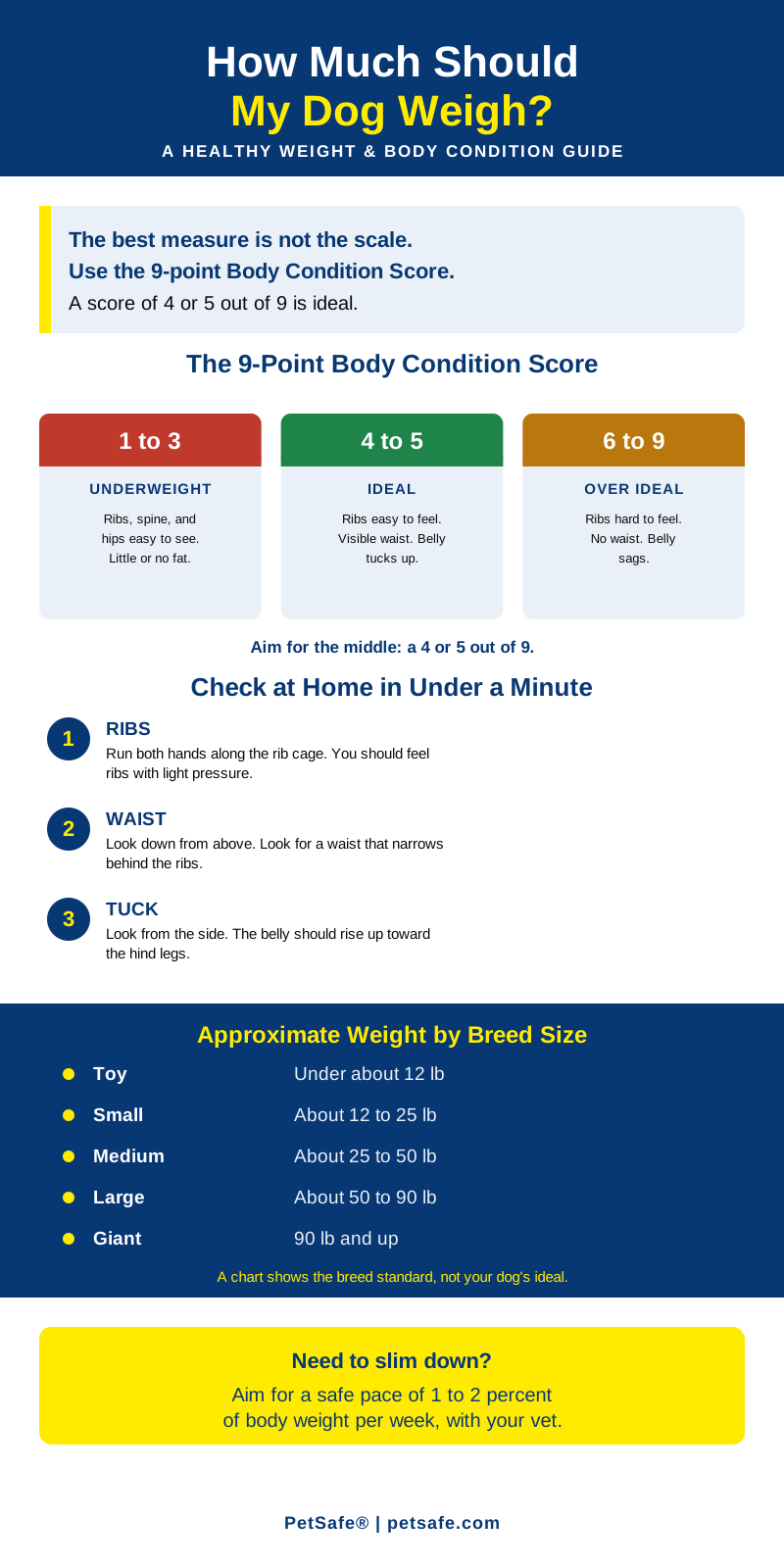
Body Condition Score, often shortened to BCS, is the tool veterinarians use to judge whether a dog is at a healthy weight. It rates the amount of fat on the body using both sight and touch, so it works for a Greyhound and a Bulldog alike, even though those two dogs could weigh the same and look nothing alike. The 9-point scale is the version most U.S. veterinary references use, and it is maintained by the World Small Animal Veterinary Association. [3][4]
What Each Score Means
- 1 to 3, underweight: ribs, spine, and hip bones are easy to see with little or no fat covering them. At the low end the dog looks bony from a distance.
- 4 to 5, ideal: ribs are easy to feel with only a thin layer of fat over them, the waist is clearly visible from above, and the belly is tucked up when viewed from the side.
- 6 to 7, overweight: ribs are hard to feel under a layer of fat, the waist is hard to see, and the belly has little or no tuck.
- 8 to 9, obese: ribs cannot be felt without firm pressure, there is no waist, the belly sags, and fat deposits form over the lower back and the base of the tail.
A useful shortcut from VCA Animal Hospitals: at an ideal weight, your dog's ribs should feel roughly like the back of your hand when you run your fingers across the knuckles, present but not sharp. If the ribs feel like your bony knuckles, the dog is too thin. If you have to press to find them, like feeling the ribs through the palm of your hand, the dog is carrying too much. [5]
The Three-Check Method: Ribs, Waist, and Tuck
You can score your own dog at home in under a minute. Run both hands along the rib cage using light pressure. Then stand over your dog and look down at the outline behind the rib cage. Finally, look at your dog from the side. A dog in ideal condition has ribs you can feel without pressing, a waist that narrows behind the ribs when seen from above, and a belly that rises from the chest toward the hind legs when seen from the side. Coat length, muscle, and breed shape can all change how a dog looks, so touch matters more than a glance. [3]
Why Body Condition Beats the Scale
A number on the scale only tells you how heavy your dog is, not how much of that weight is fat. Two dogs of the same breed and height can have very different healthy weights depending on their frame and muscle. That is why veterinary nutrition research settled on body condition, sometimes paired with a muscle condition assessment, as a better target than weight alone. Weigh your dog to track change over time, but use body condition to decide what a healthy weight looks like for that individual dog. [4]
Dog Weight by Breed Size
Breed charts are helpful for context, especially if you know your dog's breed and want a ballpark. The ranges below are approximate size bands drawn from published breed standards, and individual dogs vary. Treat them as a starting point, then confirm with body condition.
- Toy breeds, under about 12 pounds: Chihuahua, Pomeranian, Yorkshire Terrier, Maltese, Papillon.
- Small breeds, about 12 to 25 pounds: French Bulldog, Boston Terrier, Miniature Schnauzer, Pug, Cavalier King Charles Spaniel.
- Medium breeds, about 25 to 50 pounds: Beagle, Cocker Spaniel, Border Collie, Australian Shepherd, Bulldog.
- Large breeds, about 50 to 90 pounds: Labrador Retriever, Golden Retriever, German Shepherd, Boxer, Doberman Pinscher.
- Giant breeds, 90 pounds and up: Rottweiler, Great Dane, Newfoundland, Mastiff, Saint Bernard.

Breed-Standard Weight Is Not the Same as Healthy Weight
A breed standard describes the ideal show dog, not the dog on your couch. A Labrador Retriever standard might list 55 to 80 pounds, but a small-framed female could be lean at 55 and a large-framed male could be lean at 80. The chart tells you the range the breed usually falls in. Body condition tells you where your particular dog belongs inside that range. If the two disagree, trust the hands-on check. [4]
Mixed-Breed Dogs
Most dogs are not purebred, and no chart can predict the healthy weight of a one-of-a-kind mix. This is exactly where body condition earns its keep. Whatever your dog's parentage, the ribs-waist-tuck check gives you a reliable read, and a DNA test or your veterinarian's guess at the likely breed mix can help you set expectations for adult size.
What Is the Average Dog Weight?
Because dogs span such an enormous size range, an overall average weight is not very useful. It is more helpful to think in size bands: many small companion dogs land under 25 pounds, a large share of popular family breeds fall in the 40 to 70 pound range, and giant breeds climb well past 100. The more important point is that average is not the same as ideal. Plenty of dogs are heavier than average and still healthy, and plenty sit at a typical weight while carrying too much fat. Use average figures for rough context only, then come back to body condition for the real answer.
Healthy Weight by Life Stage
Puppies
Puppies should grow steadily along a healthy curve, not race to a target number. Keeping a puppy lean matters even more than keeping an adult lean, because extra weight during growth puts added strain on developing joints. Large and giant breed puppies are especially sensitive, since they grow for many months and their skeletons take longer to mature. Follow your breeder's or veterinarian's growth guidance, feed a diet formulated for your puppy's expected adult size, and check body condition as they grow rather than fixating on the scale.
Adults, and How Spay or Neuter Surgery Changes Needs
Most dogs reach their adult frame somewhere between about 12 and 24 months, with smaller breeds finishing sooner and giant breeds later. After spay or neuter surgery, a dog's calorie needs typically drop, so a portion that kept them lean before surgery can start to add weight afterward. This is a common tipping point. Ask your veterinarian to recheck body condition a few weeks after surgery and adjust the daily amount accordingly.
Seniors
Older dogs bring two opposite challenges. Some slow down and gain weight, while others lose muscle even when the scale barely moves, a change that a weight reading alone will miss. That is why body condition is best paired with a look at muscle over the spine, skull, and hips as dogs age. Unexplained weight loss in a senior dog is never something to wait out. It is a reason to book a veterinary visit.
How to Tell If Your Dog Is Overweight
You do not need a scale to spot a weight problem. Watch for these signs at home:
- You cannot easily feel the ribs, or you have to press to find them.
- There is no visible waist when you look down from above; the outline is straight or bulges outward.
- The belly hangs level with or below the chest instead of tucking up.
- Fat pads appear over the lower back or at the base of the tail.
- Your dog tires quickly on walks, is slow to rise, or pants more than expected.
One of the biggest hurdles is perception. In a large clinical survey, a striking share of dogs scored as overweight or obese by veterinarians were considered a normal weight by the people who loved them, simply because a heavier dog has started to look normal. Scoring body condition every month keeps you honest and catches creeping weight early. [1]
How to Find Your Dog's Ideal Weight
If your dog's body condition sits above 5 out of 9, the next question is what a realistic target weight looks like. Rather than guessing, veterinarians estimate a target by combining your dog's current weight with the body condition score, then set a daily calorie plan to reach it. The calorie plan is built from your dog's resting energy needs, a standard calculation based on ideal body weight in kilograms, and adjusted for activity and the goal of gradual loss. [2]
Because the right target depends on frame and muscle, this is a number your veterinary team should confirm rather than one to lock in from a website. Bring your dog's current weight and your at-home body condition score to the appointment, and use the target they set as the finish line while you track progress with monthly weigh-ins.
Health Risks of Extra Weight
Carrying extra weight is not a cosmetic issue. It shortens lives and lowers their quality. A landmark 14-year study of Labrador Retrievers found that dogs kept lean throughout life lived a median of about 1.8 years longer than their littermates fed more freely, and they developed age-related conditions, especially osteoarthritis, later in life. [6] A much larger study of more than 50,000 dogs across a dozen breeds found that overweight dogs had shorter lifespans in every breed studied, with the gap reaching more than two years in some. [7] Extra weight is also linked to joint disease, breathing difficulty, and a range of chronic conditions. The encouraging flip side is that weight is one of the few health risks you can directly control.
How to Help Your Dog Lose Weight Safely
The Safe Pace: 1 to 2 Percent a Week
Slow and steady wins. Veterinary weight-management guidance sets a safe loss rate of about 1 to 2 percent of body weight per week for dogs. Faster is not better and can backfire. Reassess body condition once a month and adjust the plan with your veterinarian if the numbers stall. [2]
Measure Every Meal
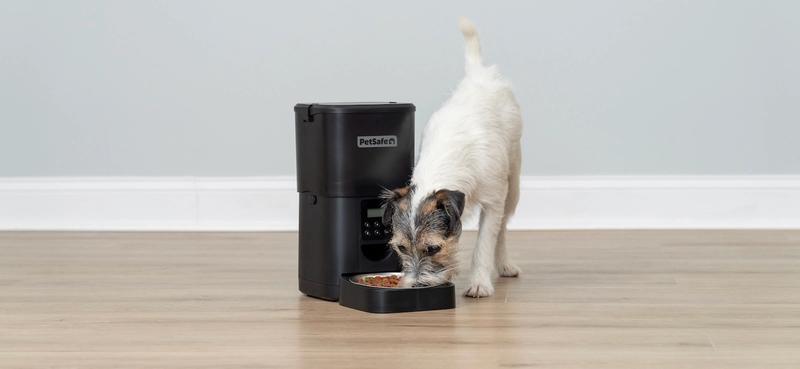
Eyeballing portions is the quiet reason many diets fail. Use a measuring cup or, better, a kitchen scale, and feed the amount your veterinarian recommends for the target weight, not the current one. A programmable automatic feeder can portion meals consistently even when your schedule is unpredictable, which removes a lot of guesswork and the temptation to top up the bowl.
Rethink Treats
Treats add up fast. A good rule from veterinary nutrition guidance is to keep treats to less than 10 percent of your dog's daily calories, and to count them as part of the daily total rather than as extras. Break treats into smaller pieces, swap some for a portion of the daily kibble, and lean on low-calorie options such as small pieces of dog-safe vegetables. Turning food into a game with treat-dispensing and puzzle dog toys slows eating and adds mental work, so a small amount of food goes further. [2]
Add Daily Movement
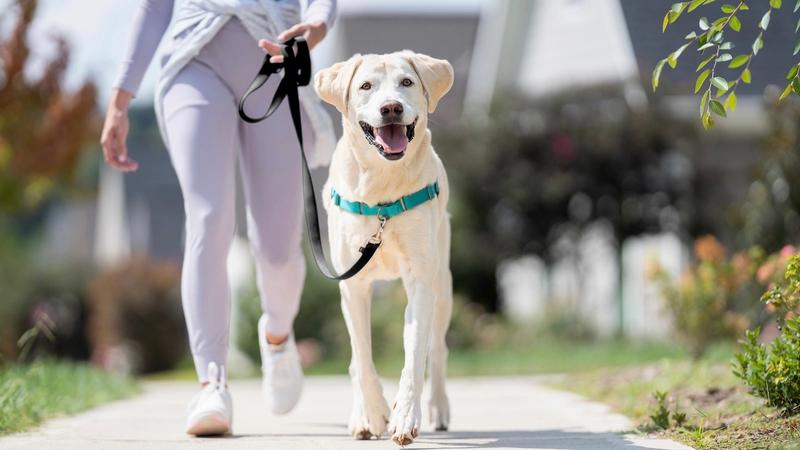
Portion control does most of the heavy lifting, but activity supports it and improves mood, joints, and behavior. Build up gradually, especially for a dog that is out of shape, and keep sessions comfortable rather than exhausting. For a full breakdown of how much your dog needs and how to start safely, see our guide to how much exercise a dog needs. A UK study of more than 11,000 dogs found that dogs who were walked more often and for longer were less likely to be overweight. [8]
Keep Fresh Water Available
Hydration supports every part of a weight-loss plan, and many dogs drink more when the water is fresh and moving. A pet fountain keeps water circulating and appealing, which is a small, easy win while your dog adjusts to smaller meals.
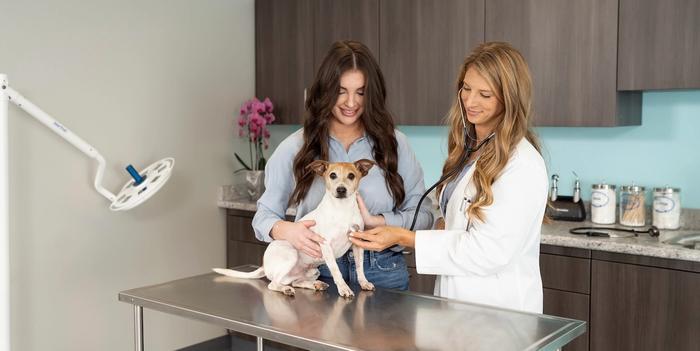
When to See Your Veterinarian
Weight is a health signal, so loop in your veterinary team when:
- Your dog loses or gains weight without a clear reason.
- Body condition sits at 7 or higher, or at 3 or lower.
- You are about to start a weight-loss plan and want a safe target and calorie amount.
- A puppy is drifting off its expected growth curve.
- A senior dog is losing muscle or weight.
Sudden or unexplained weight loss in particular can point to dental disease, kidney or heart problems, diabetes, or other conditions that are far easier to treat early. [4]
Frequently Asked Questions
How much should my dog weigh?
There is no single right number. A healthy weight depends on breed, frame, and age, from toy breeds under about 12 pounds to giant breeds over 100. The most reliable measure is the 9-point Body Condition Score: a 4 or 5 out of 9, with ribs you can feel easily, a visible waist, and a tucked belly, is ideal.
How do I know if my dog is overweight?
You cannot easily feel the ribs, there is no waist when you look down from above, and the belly does not tuck up from the side. A quick check: ideal ribs feel like the back of your hand across the knuckles. If you have to press to find them, your dog is likely carrying too much.
What is a healthy body condition score for a dog?
A 4 or 5 on the 9-point scale, which corresponds to about a 3 on the parallel 5-point scale. Scores of 1 to 3 are underweight, and 6 to 9 range from overweight to obese.
What is the average weight of a dog?
Because dogs range from a few pounds to well over 100, an overall average is not very useful. Think in size bands instead, and remember that average is not the same as ideal. Body condition, not a chart, tells you what is healthy for your dog.
How fast should an overweight dog lose weight?
About 1 to 2 percent of body weight per week is the safe pace veterinary guidance recommends. Faster loss can cause problems, so reassess body condition monthly and adjust the plan with your veterinarian.
Does spaying or neutering make a dog gain weight?
Calorie needs usually drop after surgery, so the same portion that kept your dog lean before can start to add weight afterward. Have your veterinarian recheck body condition a few weeks after the procedure and adjust the daily amount.
How much should my puppy weigh?
Follow your breeder's or veterinarian's growth curve rather than a single target, and keep your puppy lean while it grows. Overweight puppies, especially large and giant breeds, face higher joint strain during development.
Why is my senior dog losing weight?
Unexplained weight loss in an older dog is a reason to see your veterinarian promptly. Possible causes include dental disease, kidney or heart disease, diabetes, and other conditions that respond best to early treatment.
How many treats can I give my dog?
Keep treats to less than 10 percent of your dog's daily calories, and count them toward the daily total. Break them into smaller pieces and use low-calorie options so your dog still gets the fun without the extra weight.
Is a dog breed weight chart accurate?
A breed chart shows the breed-standard range, not your individual dog's healthy weight. Use it for context, then confirm with body condition, which accounts for your dog's frame, muscle, and body fat.
Can exercise alone help my dog lose weight?
Exercise helps and improves overall health, but portion control does most of the work in a weight-loss plan. The best results come from pairing measured meals with daily activity.
Citations and Sources
- Association for Pet Obesity Prevention. 2022 U.S. Pet Obesity Prevalence Survey. petobesityprevention.org
- American Animal Hospital Association. 2014 AAHA Weight Management Guidelines for Dogs and Cats. aaha.org
- World Small Animal Veterinary Association. Body Condition Score chart. wsava.org
- PetMD. Calculating Your Dog's Healthy Weight. petmd.com
- VCA Animal Hospitals. Body Condition Scores. vcahospitals.com
- Kealy RD, Lawler DF, Ballam JM, et al. Effects of diet restriction on life span and age-related changes in dogs. Journal of the American Veterinary Medical Association, 2002. pubmed.ncbi.nlm.nih.gov
- Salt C, Morris PJ, Wilson D, Lund EM, German AJ. Association between life span and body condition in neutered client-owned dogs. Journal of Veterinary Internal Medicine, 2019. onlinelibrary.wiley.com
- German AJ, et al. Overweight dogs exercise less frequently and for shorter periods. Journal of Nutritional Science, 2017. ncbi.nlm.nih.gov


Get Email Updates
Subscribe to the latest news, promotions, & more from PetSafe® brand.
Sign up today for the latest news, promotions, and more from PetSafe® brand.