September 12, 2012
PetSafe® Expert
PetSafe® Guest
How to Train a Cat: A Complete Cat Training Guide
Cats have a reputation for being untrainable, aloof, and impossible to boss around. The truth is very different. Cats are smart, motivated learners, and with the right approach you can teach your cat to come when called, sit on cue, ride in a carrier without a fight, and give up habits like scratching the couch. This guide walks you through how to train a cat step by step, using safe, reward-based methods that work for kittens, adults, and even shy rescue cats. No special talent required, just a handful of treats, a few minutes a day, and a little patience.
Key points
- Yes, you can train a cat. Cats learn through positive reinforcement, the same science used to train dogs and dolphins.
- Skip punishment. Spray bottles, yelling, and scruffing teach fear, not good behavior, and can make problems worse. [1][2]
- Use a marker and a reward. A clicker or a short word like "yes," paired with a tiny high-value treat, tells your cat exactly what earned the reward.
- Keep sessions short. A few minutes, several times a day, ideally before meals, works far better than one long stretch.
- Watch the treats. Keep them to no more than about 10% of your cat's daily calories, and subtract them from meals. [4]
- Any cat can learn. Kittens, adults, and senior or rescue cats can all be trained with patience and the right rewards.
In this article
- Can you really train a cat?
- How cats learn: the science made simple
- What you need before you start
- The five-step method for teaching any skill
- Basic skills and fun tricks to teach your cat
- How to stop unwanted behavior without punishment
- Litter box training, the short version
- Life skills: carrier, harness, and cat door training
- How to train a kitten
- Training adult, senior, and rescue cats
- Common cat training mistakes to avoid
- Frequently asked questions
Can You Really Train a Cat?
Yes, you can train a cat, and it is easier than most people think. The belief that cats are untrainable usually comes from expecting them to behave like dogs. Dogs have been bred over thousands of years to work alongside people and often train for praise alone. Cats are more independent and tend to work for resources they value, such as food, play, and access to favorite spots. Once you find the reward your cat cares about and deliver it at the right moment, training clicks into place.
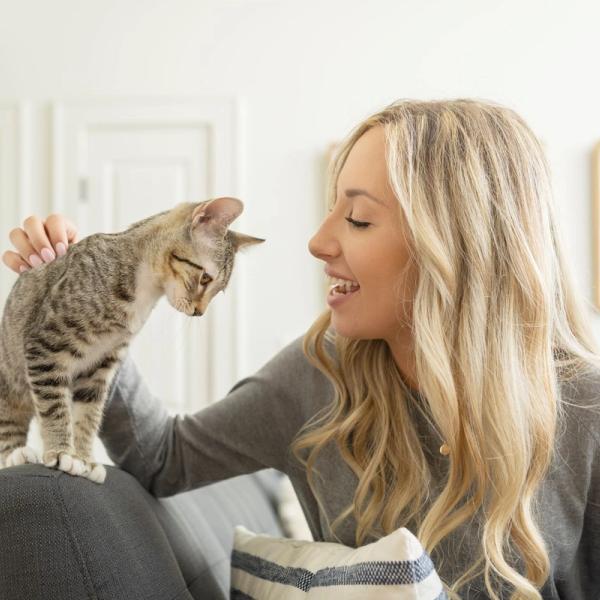
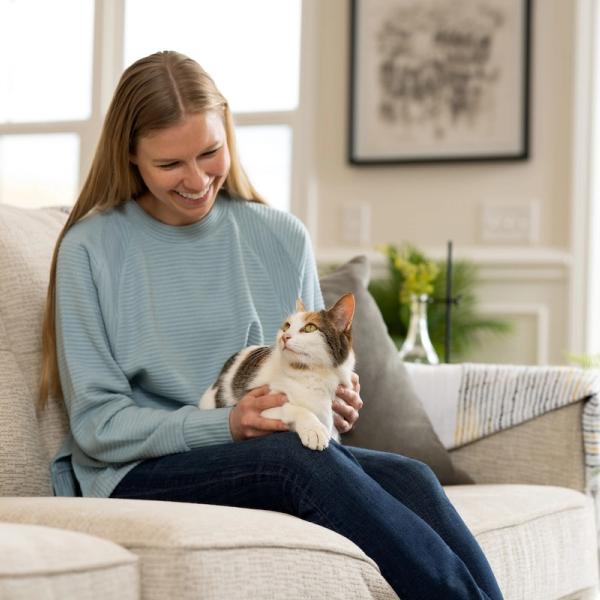
Cats are also more attached to us than their aloof reputation suggests. In one study of cat behavior, about two thirds of cats showed a secure attachment to their pet parent, a pattern very similar to what researchers see in dogs and even human infants. [3] That bond is part of what makes training work, and training in turn strengthens it.
How is training a cat different from training a dog?
You use the same science for both, positive reinforcement, but the motivation differs. A dog may repeat a behavior just to please you, while a cat asks a simpler question: what is in it for me? That means three things when you train your cat. Keep sessions shorter, since a cat's attention span is brief. Pay in a currency your cat values, usually a small, extra-tasty treat. And never rely on force or intimidation, which backfires badly with cats. Work with your cat's natural instincts, reward the behavior you want the instant it happens, and your cat will happily play along.
How Cats Learn: The Science Made Simple
All animal training, from cats to dogs to dolphins, rests on a principle called operant conditioning: behaviors that are followed by something good happen more often, and behaviors that lead to nothing tend to fade away. Cat training simply puts that principle to work. When your cat does something you like and immediately earns a reward, you have just made that behavior more likely next time. Do that consistently and your cat learns quickly.
Positive reinforcement is the method that works
Positive reinforcement means adding something your cat wants, such as a treat, praise, or play, right after a behavior you want to encourage. Leading veterinary behavior organizations recommend reward-based methods only, noting that fear-based approaches harm both a cat's welfare and the bond between a cat and its pet parent. [1] Reward-based training is not just kinder. It is more effective and longer lasting, because your cat chooses to participate instead of shutting down.
Why punishment backfires
It is tempting to reach for a spray bottle or a loud "no" when a cat misbehaves, but punishment does not teach a cat what to do instead. Veterinary behavior experts are clear that physical punishment should never be used with cats, because it creates fear and stress, can trigger anxiety or aggression, and damages your relationship. [2] A cat squirted with water does not learn that the counter is off limits. It learns that you are scary and unpredictable, and it simply waits until you leave the room. What works instead is a two-part approach: make the unwanted spot less appealing while making the right choice more rewarding, so your cat willingly picks the option you want.
What You Need Before You Start
You need very little gear to start training a cat. A few simple tools and the right setup make all the difference.
A marker: a clicker or a word
A marker is a distinct signal that tells your cat the exact instant it did the right thing, a fraction of a second before the treat arrives. Many people use a clicker, a small handheld tool that makes a consistent click, because the sound is quick, precise, and always the same. You can also use a short word like "yes," as long as you say it the same way every time. The marker's real job is timing: it bridges the tiny gap between the behavior and the treat so your cat knows precisely what earned the reward. Before you train, spend a few sessions charging the marker: click, then immediately give a treat, and repeat ten to twenty times until your cat perks up at the sound.
High-value treats and the 10% rule
Find a treat your cat will do almost anything for. For many cats that means a lick of a soft treat, a morsel of cooked chicken, or a few crumbs of a favorite commercial treat, broken into pea-sized pieces so you can reward often without overfeeding. Keep treats to no more than about 10% of your cat's daily calories, and subtract training treats from meal portions so your cat stays at a healthy weight. [4] If your cat is not very food motivated, try training right before mealtime, or reward with a few seconds of a favorite wand-toy game instead.
A quiet space and short sessions
Start in a calm room with no other pets, no television, and nothing to distract your cat. Keep sessions short, about one to five minutes, and train several times a day rather than in one long stretch. Always end while your cat is still interested and succeeding, so it looks forward to the next session. Training just before a meal, when your cat is a little hungry and eager, tends to work best.
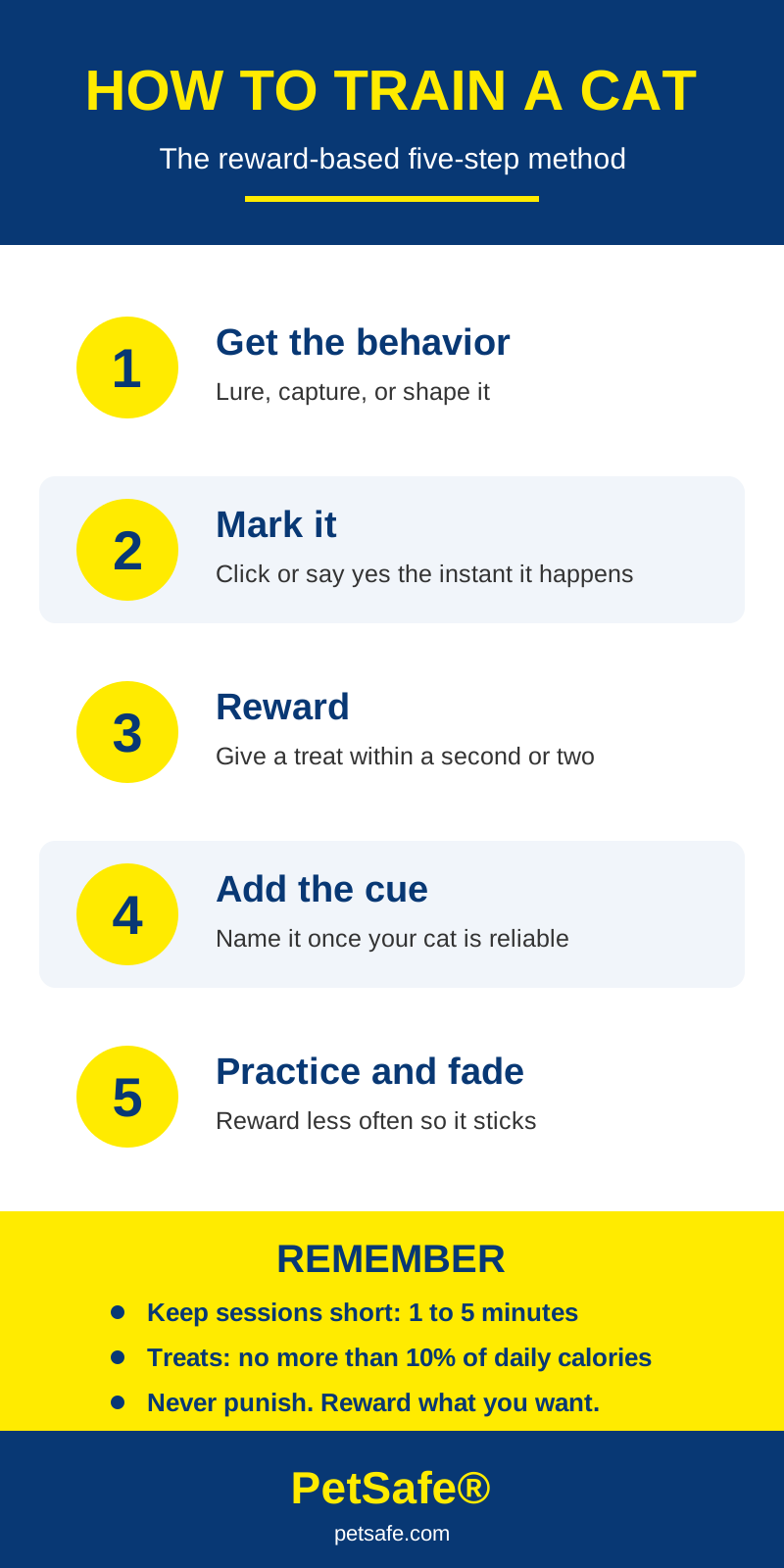
The Five-Step Method for Teaching Any Skill
Almost every cue and trick follows the same simple pattern. Learn it once and you can teach your cat nearly anything.
- Get the behavior. Encourage or wait for the action in one of three ways: lure it by guiding your cat with a treat, capture it by rewarding a behavior your cat offers on its own, or shape it by rewarding small steps toward the goal.
- Mark it. The instant the behavior happens, click or say "yes" to pinpoint the exact moment.
- Reward immediately. Follow the marker with a treat within a second or two, so your cat connects the reward to the right action.
- Add the cue. Once your cat reliably offers the behavior, start saying the cue word or giving the hand signal just before it happens, so the cue comes to predict the behavior.
- Practice and fade the treats. Repeat until the behavior is solid, then reward every other time, then only now and then, so it sticks without a treat for every repetition.
One especially useful skill is target training: teaching your cat to touch its nose to a target such as your fingertip or the end of a stick. Because you can use a target to guide your cat onto a scale, into a carrier, or up onto a perch, it becomes a building block for dozens of other behaviors.
Basic Skills and Fun Tricks to Teach Your Cat
Once your cat understands the marker-and-reward game, you can teach a whole repertoire. Here are popular skills to start with, roughly from easiest to hardest.
Name recognition and come when called
Say your cat's name in a happy tone, then reward the moment it looks at you or moves toward you. Practice from short distances and gradually increase them. A reliable recall is one of the most useful things you can teach, since it can help you find a hiding cat or call it away from trouble.
Sit
Hold a treat just above your cat's nose and slowly move it back over its head. As the nose follows the treat up, the bottom naturally lowers into a sit. Mark and reward the instant your cat sits. After several repetitions, add the cue word "sit" just before your cat does it.
High five, spin, and beyond
Once sit is solid, many cats enjoy learning to touch a paw to your hand for a high five, spin in a circle, or hop onto a designated perch. Each one uses the same five-step method: lure or shape the movement, mark the moment it happens, reward, then add a cue. Tricks are more than showing off. They give indoor cats valuable mental exercise and burn energy that might otherwise turn into mischief.
How to Stop Unwanted Behavior Without Punishment
Most so-called bad cat behavior is really normal cat behavior happening in a spot you would rather it did not. The fix is almost always the same: give your cat an acceptable outlet, make that outlet rewarding, and make the off-limits option less appealing, all without frightening your cat. Veterinary guidelines describe five pillars of a healthy feline environment, including safe spaces and plenty of outlets for play and natural predatory behavior, and meeting those needs prevents many problems before they start. [8]
Keeping cats off counters
Cats jump on counters because they like height and they find interesting things up there, like food. Clear the counters of anything rewarding, give your cat a tall perch or cat tree nearby as a legal high spot, and reward it generously for using that instead. The aim is to make the perch the best seat in the kitchen while the counter becomes a boring, unrewarding place to be.
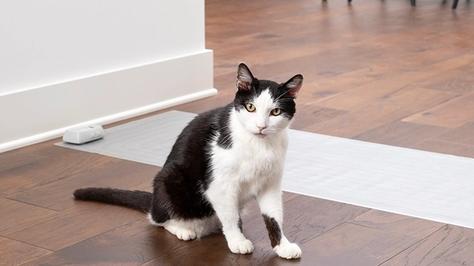
A surface deterrent can handle the second half of that job for you, making the counter itself unappealing so the lesson holds even when you are not in the room. Because a deterrent like this is impersonal and perfectly consistent, your cat learns that the counter is off limits rather than learning to fear you, which is the trap that spray bottles and other hands-on corrections fall into. One purpose-built option is the ScatMat® indoor training mat, a thin, flexible mat you lay over the area you want to protect. It is adjustable, from a tone-only mode to several low static levels, so you can start with the gentlest setting, and a built-in safety timeout means it pauses on its own rather than correcting a cat that lingers, delivering only a safe, startling cue instead of anything harmful. You place the ScatMat training mat on the counter while your cat is learning, keep rewarding the perch, and once the new habit is solid you can simply remove it. For other off-limits spots around the house, it is one of several pet-proofing deterrents that work the same way.
Redirecting scratching to the right place
Scratching is a healthy, necessary behavior that lets cats stretch, mark territory, and care for their claws, so the goal is never to stop it but to redirect it. Place a sturdy scratching post or pad right next to the furniture your cat targets, since cats scratch where it matters to them, and reward your cat every time it uses the post. Making the furniture temporarily less attractive with a safe deterrent can speed the switch while the post becomes the obvious better choice. Offer both upright and horizontal options, because cats have individual preferences.
Stopping play biting and rough play
Kittens and cats often bite during play because they are practicing hunting skills. Never use your hands or feet as toys, since that teaches your cat that skin is fair game. Redirect the energy to a wand toy or a kick toy your cat can grab, bite, and catch. If your cat bites during play, calmly stop the game for a moment, then resume with a toy. Your cat quickly learns that teeth on skin ends the fun, while teeth on toys keeps it going.
How to teach a cat "no"
Rather than punishing, interrupt the unwanted behavior gently, for example with a soft sound or by calmly stepping between your cat and the object, then immediately redirect your cat to something acceptable and reward that choice. Cats do not understand scolding, and yelling or squirting water only teaches them to fear you and to misbehave when you are not looking. Consistently rewarding the behavior you do want is the fastest way to get less of the behavior you do not.
Litter Box Training, the Short Version
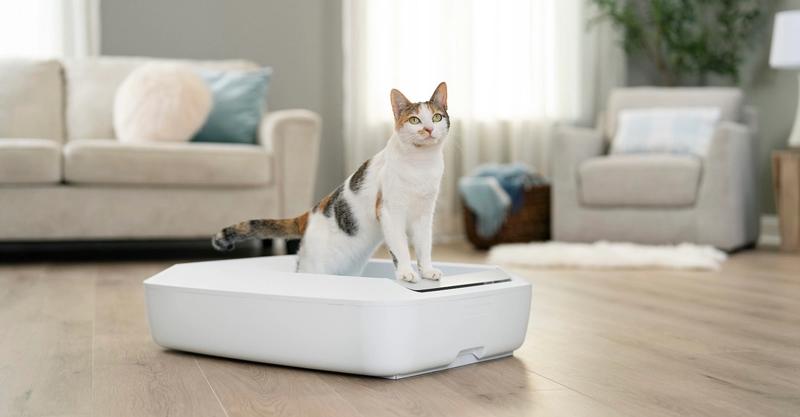
Most cats take to a litter box with very little effort, because burying waste is a natural instinct. Offer a clean, appropriately sized box in a quiet, low-traffic spot, use a soft, unscented litter, and provide one box per cat plus one extra. Gently place your cat in the box after meals and naps, and never scold for an accident, which only creates fear and can make the problem worse. If your cat suddenly stops using a box it used reliably before, that often signals a medical issue or stress, so check with your veterinarian. For a full walkthrough, including how to introduce a nervous cat to a new box or an automatic litter box, see our dedicated litter box training guide.
Life Skills: Carrier, Harness, and Cat Door Training
Beyond tricks, the most valuable training targets the real-world situations that stress cats out. A little preparation turns dreaded events into routine ones.

Carrier training
A cat that sees its carrier as a safe den, rather than a trap that only appears before a vet visit, makes travel far less stressful for everyone. Leave the carrier out at home as a permanent piece of furniture, with a soft blanket and the occasional treat tossed inside, so your cat explores it freely. Feed meals near it and then inside it, and reward your cat for stepping in. Veterinary guidelines describe this kind of positive-reinforcement carrier training as the gold standard for reducing travel and clinic stress, and it can even help exams go more smoothly. [5]
Harness and leash training
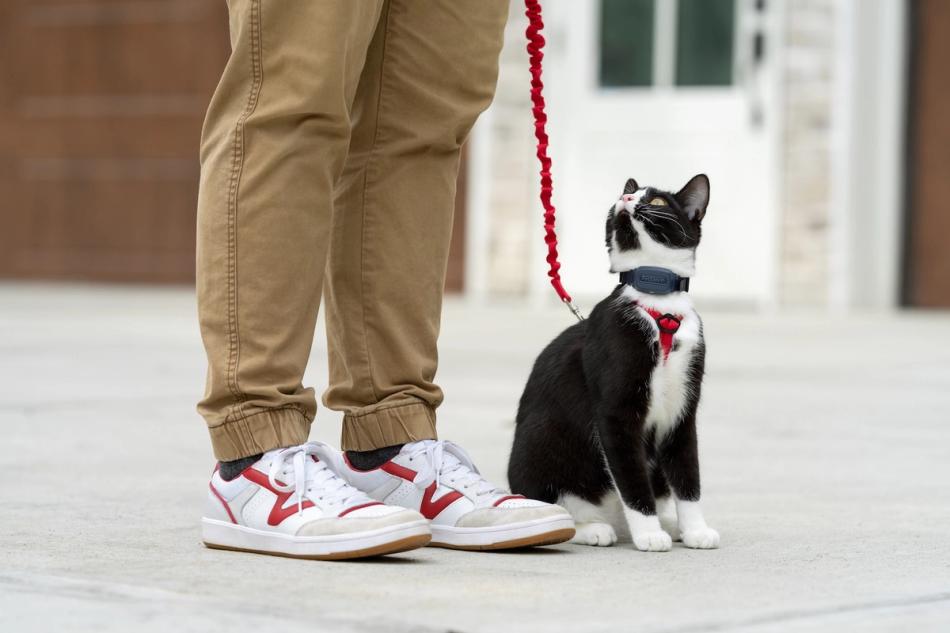
Some cats enjoy supervised time outdoors on a harness and leash. Choose a well-fitted cat harness, never just a collar, and introduce it slowly indoors: let your cat sniff it, reward calm interest, then build up to wearing it for short, treat-filled sessions before you ever attach a leash. Practice indoors first, and only venture outside once your cat is relaxed and confident in the gear. Go at your cat's pace, and accept that not every cat takes to a harness, which is perfectly fine.
Cat door and containment training
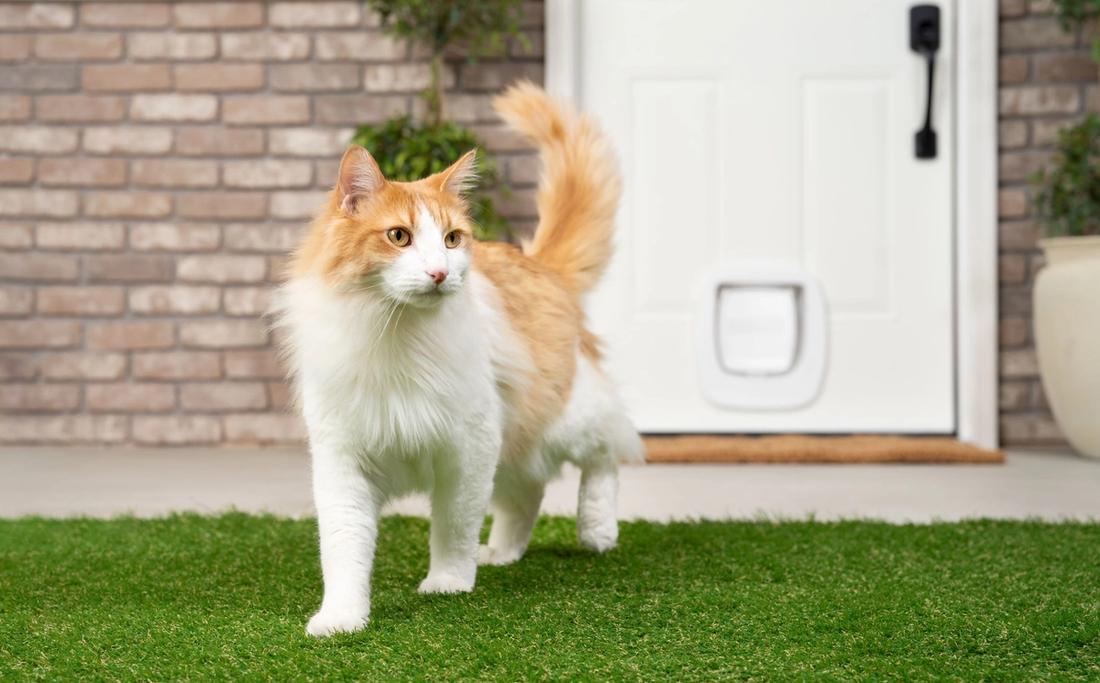
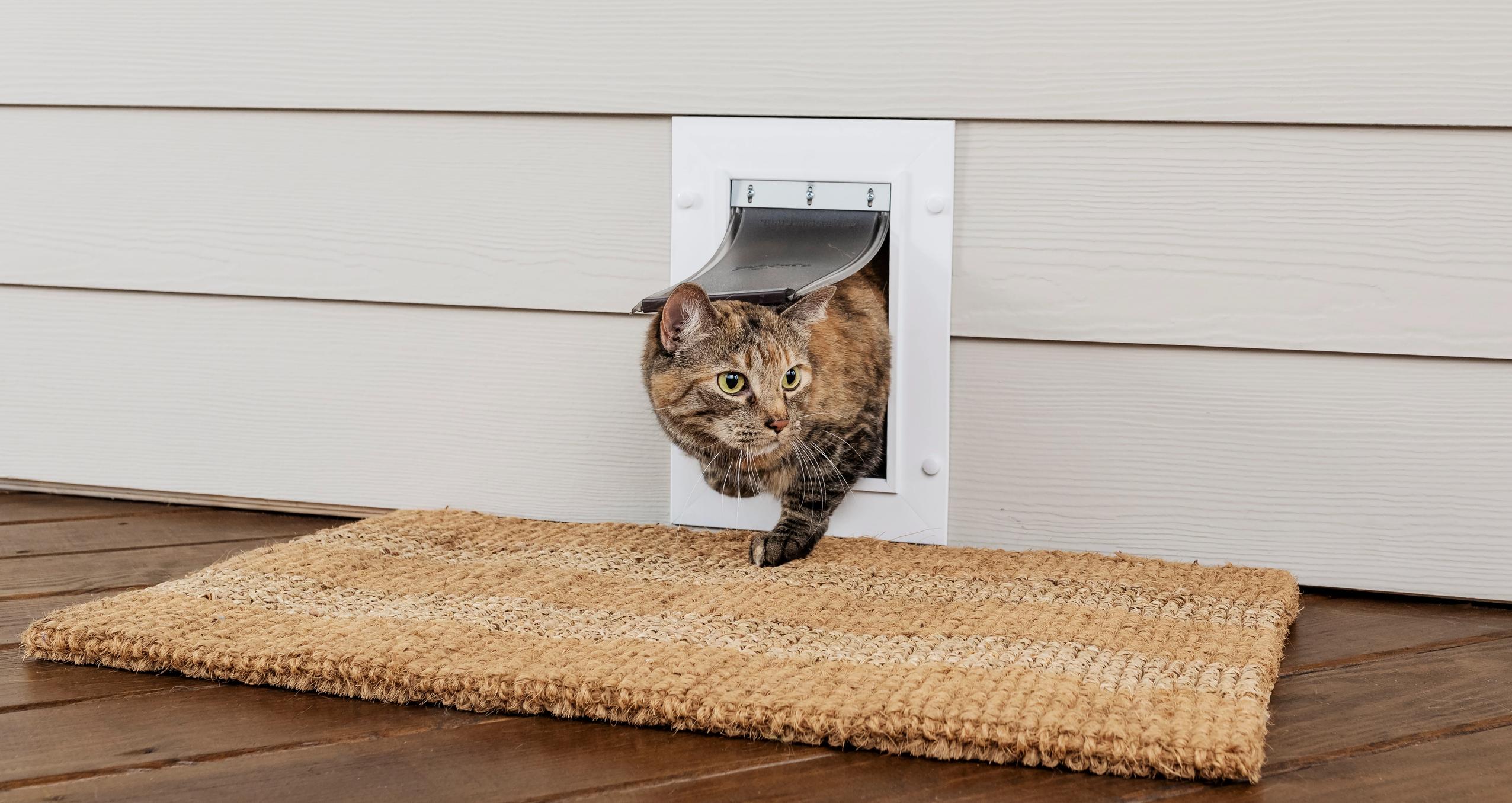
Teaching a cat to use a cat door follows the same reward-based pattern. Prop the flap open at first so your cat can pass through with no resistance, luring it through with a treat and rewarding each success, then lower the flap in stages as your cat gains confidence. That same patient, step-by-step approach helps a cat get comfortable with almost any new setup, from a pet gate to a containment system, by pairing each small step with a reward instead of forcing the issue.
How to Train a Kitten
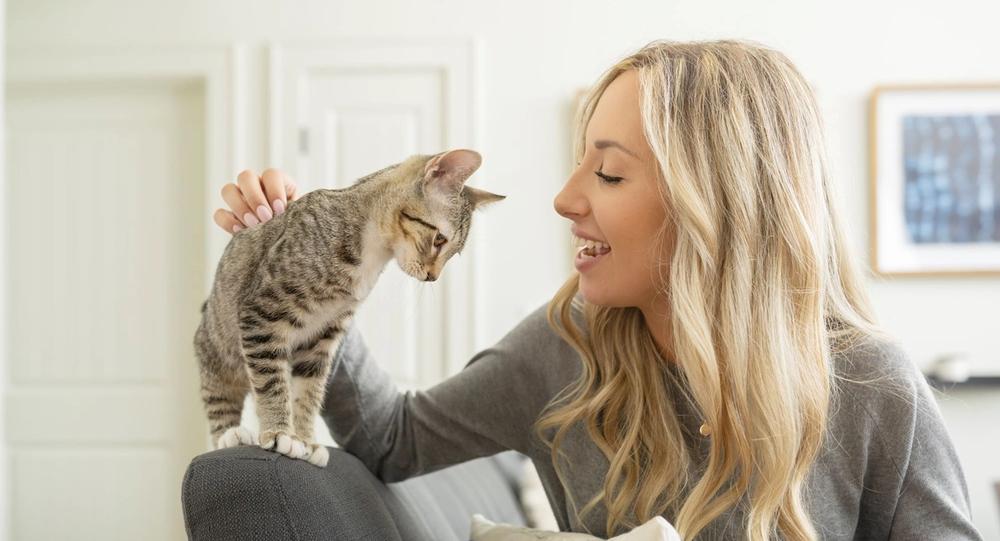
Kittens are curious, energetic sponges, which makes them wonderful students. The same reward-based methods apply, with a few kitten-specific notes.
Make the most of the socialization window
A kitten's main socialization window, when it most readily accepts new people, animals, handling, and experiences, falls roughly between two and seven weeks of age. [6] Because most kittens go home after that peak, keep offering gentle, positive exposure to handling, new sounds, car rides, and visitors well into kittenhood to raise a confident, friendly adult. Pair every new experience with treats and praise. If you are just bringing a kitten home, our new kitten checklist covers the supplies and setup that make early training easier.
First skills for kittens
Start with the basics that pay off for life: coming to its name, tolerating gentle handling of paws, ears, and mouth for grooming and vet care, using the litter box, and settling calmly in a carrier. Keep sessions to just a minute or two, since kittens have even shorter attention spans than adults.
Redirect kitten biting and scratching early
Kitten play biting and scratching are normal, but the habits you allow now can stick, so redirect them to toys and scratching posts from day one and never let your kitten play with bare hands. Plenty of interactive play each day drains the energy that would otherwise turn into ankle ambushes.
At what age are kittens the naughtiest?
Many pet parents find kittens most rambunctious around three to four months, when coordination and hunting instincts surge, with a second lively adolescent phase often around ten to twelve months. This is normal, healthy behavior, not defiance. Channel it with daily interactive play, climbing spaces, and short training sessions rather than punishment, and your kitten will grow out of the wildest phase.
Training Adult, Senior, and Rescue Cats
You are never too late to start. Cats of any age can learn.
You can teach an old cat new tricks
Adult and senior cats learn the same way kittens do, through positive reinforcement, and training is superb mental enrichment that keeps older cats sharp and engaged. Senior cats may simply need shorter sessions and easier physical goals, especially if stiff or aching joints make jumping or sitting uncomfortable. In one study, even shelter cats that received brief clicker-training sessions became more active, more exploratory, and more comfortable approaching people, showing how quickly reward-based training can build confidence. [7]
Helping a new or rescue cat settle in with the 3-3-3 rule
A newly adopted cat needs time to decompress before any real training begins. A helpful general guideline is the 3-3-3 rule: roughly the first 3 days to feel overwhelmed and often hide, about 3 weeks to start learning your routine and relaxing, and around 3 months to feel truly at home and bonded. These are rough guideposts, not a schedule, and some cats take longer. Give a new cat a quiet safe room, let it come to you, and keep early interactions calm and positive. Once your cat is eating well and exploring confidently, you can begin gentle training to build trust.
Building trust with a fearful cat
With a shy or fearful cat, let choice do the work. Never force interaction or corner your cat. Sit nearby, toss treats, and reward any brave, calm behavior, so your cat learns that approaching you pays off and nothing bad happens. Patience here builds the foundation that makes all other training possible.
Common Cat Training Mistakes to Avoid
- Using punishment. Spray bottles, yelling, and scruffing create fear and make behavior worse, not better. [2]
- Rewarding too late. If the treat comes more than a second or two after the behavior, your cat cannot connect the two. A marker fixes this.
- Sessions that run too long. A tired or bored cat stops learning. Keep it to a few minutes and end on a win.
- Accidentally rewarding the wrong thing. Feeding a meowing cat to quiet it, or petting a cat right after it jumps on the counter, teaches the very behavior you dislike.
- Skimping on the reward. A treat your cat finds boring will not motivate it. Save the good stuff for training.
- Giving up too soon. Cats learn at their own pace. Consistency over days and weeks, not a single session, is what makes a behavior stick.
Frequently Asked Questions
Can you train a cat?
Yes. Cats learn through positive reinforcement, which means rewarding a behavior to make it happen more often. Using a marker such as a clicker or the word "yes," paired with a small treat, you can teach a cat to sit, come when called, use a carrier, and drop unwanted habits. It works with any breed, age, or personality.
Is it easy to train a cat?
Cats are easier to train than their reputation suggests. They simply learn differently than dogs. Because cats work for rewards like food and play rather than praise, training goes smoothly once you find a reward your cat values and deliver it the instant it does the right thing. Keep sessions short and positive, and most cats pick up a first behavior quickly.
Can you train a cat like a dog?
You use the same science, positive reinforcement, but a different motivation. Dogs often work to please you, while cats work for resources such as food, play, and safety. So reward the exact moment your cat does what you want, keep sessions shorter than you would for a dog, and never use force or intimidation.
What is the 3-3-3 rule for cats?
The 3-3-3 rule is a general guideline for helping a newly adopted cat settle in: about 3 days to decompress and often hide, about 3 weeks to learn your routine and relax, and about 3 months to feel fully at home. Every cat is different, and some take longer, which is completely normal.
What is the easiest way to train a cat?
Start with one easy behavior your cat already offers, such as sitting. The moment it happens, mark it with a clicker or the word "yes," then immediately give a tiny, high-value treat. Train for just a few minutes before a meal, keep it positive, and stop while your cat is still interested. Consistency beats long sessions.
How do you teach a cat "no"?
Skip punishment. Instead, gently interrupt the unwanted behavior, redirect your cat to an acceptable alternative, and reward that choice. If your cat scratches the couch, guide it to a scratching post and reward it there. Yelling or spray bottles only teach a cat to fear you and to misbehave when you are not watching.
How do you teach a cat to sit?
Hold a small treat just above your cat's nose and slowly move it back over its head. As the nose follows the treat up, the bottom lowers into a sit. The instant your cat sits, mark with "yes" or a click and give the treat. After several repetitions, add the cue word "sit" just before it happens.
How long does it take to train a cat?
It depends on the cat and the skill, but simple behaviors like sit or targeting often come together in a handful of short sessions, sometimes within a few days. Bigger changes, such as carrier comfort or leaving the counters alone, may take a few weeks of consistent practice. Short daily sessions work faster than occasional long ones.
At what age are kittens the naughtiest?
Kittens are usually at their most rambunctious around 3 to 4 months, when coordination and hunting instincts surge, with a second lively adolescent phase often around 10 to 12 months. It is normal, healthy behavior that needs an outlet. Channel it with daily play, climbing spaces, and short training sessions rather than punishment.
Can older cats be trained?
Yes, you can absolutely teach an older cat new tricks. Adult and senior cats learn the same way through positive reinforcement. They may just need shorter sessions and easier physical goals. Training is also excellent mental enrichment that keeps older cats engaged and strengthens your bond, so it is well worth starting at any age.
Citations and sources
- American Veterinary Society of Animal Behavior. Position Statement on Humane Dog Training. avsab.org
- American Association of Feline Practitioners. Positive Reinforcement Behavior Modification. catvets.com
- Oregon State University. Cats, Like Children and Dogs, Develop Attachments to Their Caregivers, Study Shows. oregonstate.edu
- World Small Animal Veterinary Association. Feeding Treats to Your Cat. wsava.org
- American Association of Feline Practitioners and International Society of Feline Medicine. 2022 Cat Friendly Veterinary Interaction Guidelines. nih.gov
- VCA Animal Hospitals. Socialization and Fear Prevention in Kittens. vcahospitals.com
- Grant RA and Warrior JR. Clicker Training Increases Exploratory Behaviour and Time Spent at the Front of the Enclosure in Shelter Cats. Applied Animal Behaviour Science. sciencedirect.com
- American Association of Feline Practitioners and International Society of Feline Medicine. Feline Environmental Needs Guidelines. nih.gov
Last modified: October 28, 2026


Get Email Updates
Subscribe to the latest news, promotions, & more from PetSafe® brand.
Sign up today for the latest news, promotions, and more from PetSafe® brand.