August 26, 2026
PetSafe® Expert
PetSafe® Guest
How to Train a Puppy: A Step-by-Step Guide for New Owners
Training a puppy means teaching the habits and manners your dog will use for life, and it starts the day your puppy comes home. The most effective and humane approach is reward-based training: you reward the behavior you want, and your puppy learns to repeat it. Focus first on house training, crate training, a few simple cues, gentle leash skills, and bite control, all built on a consistent daily routine. This guide walks you through each one, step by step.
Key points
- Start training the day your puppy comes home, and keep sessions short, positive, and frequent.
- Use reward-based training. Leading veterinary behavior experts recommend reward-based methods for all dog training and find no need for aversive techniques [1] [2].
- Potty training and crate training are the two biggest jobs. Both rely on a consistent schedule, supervision, and rewarding success, never punishment [6] [7].
- Teach the first cues in this order of usefulness: name and attention, sit, come, and settle.
- Socialization matters as much as obedience. The most important window is roughly the first three months of life [5].
Table of contents
- When should you start training your puppy?
- Puppy training fundamentals: reward-based training
- The first things to teach your puppy
- How to potty train a puppy
- How to crate train a puppy
- Leash training and loose-leash walking
- How to stop puppy biting and nipping
- Socializing your puppy
- Managing common problems: jumping and chewing
- Puppy training schedule by age
- Keeping training consistent across your household
- Frequently asked questions
When should you start training your puppy?
Start the day your puppy comes home. Puppies begin learning immediately, and the early weeks are the prime window for building good habits, so there is no reason to wait. You do not need formal sessions at first. Simply rewarding the behavior you like, and calmly preventing the behavior you do not, teaches your puppy from the very first day [4].
The 3-3-3 rule and realistic expectations
Many new owners find the 3-3-3 rule a helpful way to set expectations for a puppy settling into a new home. As a general guide, it suggests about three days to decompress and feel less overwhelmed, about three weeks to start learning your routine, and about three months to feel fully at home and bonded. It is a rough guideline rather than a scientific rule, and many puppies adjust faster. The point is simple: give your puppy time, patience, and consistency while the two of you learn each other.
How long does puppy training take?
Training is ongoing, not a one-time event. Basic cues can start showing up within days, while reliable house training usually takes several months, and a young puppy is not fully dependable until around six months of age or later [9]. Think of the first year as laying a foundation you will keep reinforcing. Short, consistent, positive practice is what makes it stick.
Every interaction with your puppy is a training opportunity, whether you plan it or not, so make the good moments the ones you reward.
Puppy training fundamentals: reward-based training
Before teaching any specific skill, it helps to understand how puppies learn. Behavior that gets rewarded tends to happen more often, so reward-based training uses treats, praise, play, and attention to build the behavior you want.
What is positive reinforcement, and why not punishment?
Positive reinforcement means adding something your puppy values, like a small treat or enthusiastic praise, immediately after a behavior you want to see again. Current veterinary behavior guidance is clear on this: reward-based methods are recommended for all dog training, and there is no evidence that aversive techniques are necessary [1]. Veterinary organizations note there is no role for aversive training in a behavior plan, because it carries real risks to a dog's welfare and to the bond between you [2]. Reward-based training is not only kinder, it works, and it builds a puppy who is eager to try rather than afraid to fail.
Markers, clickers, luring, capturing, and shaping
A few simple techniques make reward-based training faster [3]. A marker is a sound or short word, such as a clicker or the word "yes," that you make at the exact instant your puppy does the right thing, followed immediately by a treat. The marker tells your puppy precisely which action earned the reward. Luring uses a treat at your puppy's nose to guide them into a position, such as moving it up and back to encourage a sit. Capturing means rewarding a good behavior your puppy offers on their own, like lying down calmly. Shaping rewards small steps toward a bigger goal. A treat pouch and a clicker, found among general training essentials, make this kind of practice easy to do throughout the day.
How long and how often should you train?
Keep sessions short. A few minutes, several times a day, suits a puppy's attention span far better than one long session. End while your puppy is still enjoying it and having success, and weave tiny training moments into everyday life, such as asking for a sit before meals or before going outside.
The first things to teach your puppy
Start with a short list of high-value skills. These build focus and a common language between you before you move on to anything fancy.
Name and attention
Say your puppy's name once in a happy voice, and the moment they look at you, mark and reward. Practiced often, this teaches your puppy that turning to you is always worthwhile, which is the foundation for everything else.
Sit
Hold a treat at your puppy's nose and slowly move it up and back over their head. As their nose follows and their bottom lowers, mark and reward the sit. After a few repetitions, add the word "sit" just as they begin to fold, then reward.
Come (recall)
A reliable recall can keep your puppy safe. Start in a quiet room, say your puppy's name and "come" in a cheerful voice, and reward generously the instant they reach you. Teaching a recall is largely a matter of reinforcing your puppy every time they choose to come to you, so make coming back the best decision they can make [8]. Practice on a long line before trying it anywhere off leash.
Settle
Reward your puppy for lying down calmly on a mat or bed. Capturing calm behavior teaches your puppy an "off switch," which is one of the most useful life skills a dog can have.
How to potty train a puppy
House training is one of the first and biggest jobs, and it rests on four things: consistency, supervision, a predictable schedule, and rewarding success [6]. Start the day your puppy comes home, and expect it to take time, since a young puppy has very little bladder control at first.
Step by step
- Take your puppy outside on a leash to the same spot every time.
- As they begin to go, say a calm cue such as "go potty" so they learn to associate the words with the action.
- The moment they finish, reward immediately with praise and a treat.
- Supervise closely indoors, and confine your puppy to a crate, pen, or small gated area whenever you cannot watch them.
- Clean any accident thoroughly with an enzymatic cleaner so your puppy is not drawn back to the same spot, and never punish an accident.
Potty schedule by age
Take your puppy out first thing in the morning, after every meal, nap, and play session, and last thing at night, plus regular breaks in between. A useful rule of thumb for how long a puppy can hold it is their age in months plus one, in hours, though younger puppies need much more frequent trips [9]:
- 8 to 10 weeks: Outside roughly every hour or two while awake, and right after meals, naps, and play.
- About 3 months: Able to wait around four hours between breaks.
- About 4 months: Able to wait around five hours.
- About 6 months: Usually dependable and able to wait longer, with continued supervision.
Pads, paper, and apartment options
If you live in an apartment or high-rise, cannot get outside quickly, or have a puppy who is not yet fully vaccinated, pad or paper training can bridge the gap. The trade-off is that teaching your puppy it is acceptable to go indoors can slow the transition to going only outside, and it may lengthen the overall timeline. If your goal is outdoor-only potty habits, going straight to outdoor training is usually the more direct route. Whichever you choose, stay consistent and reward success the same way.
How long does potty training take?
Most puppies take several months to become reliably house trained, and occasional accidents into the first year are normal [9]. Consistency is what shortens the process, so keep the schedule steady even on busy days.
Handling accidents
Accidents are part of the process and are never a reason to scold or punish. Punishment tends to teach a puppy to hide when they go rather than to go in the right place. If you catch your puppy in the act, calmly interrupt, take them to their spot, and reward them for finishing there.
How to crate train a puppy
A crate gives your puppy a safe den of their own and supports house training, because most puppies avoid soiling where they sleep. Used well, it is a comfort. Used poorly, it can cause stress, so the rule is simple: the crate is never a place of punishment [7].
Choosing and sizing the crate
Pick a crate just large enough for your puppy to stand up, turn around, and lie down comfortably. Too much space lets a puppy use one corner as a bathroom. A crate with a divider lets you expand the space as your puppy grows.
Making the crate a positive space
- Leave the door open at first and toss treats or a favorite chew inside so your puppy explores on their own.
- Feed meals in the crate to build a happy association.
- Add a comfortable bed, and once your puppy settles inside willingly, begin closing the door for a few seconds at a time.
- Build up the duration gradually, and pair the crate with a calm cue word.
Crate training at night
Place the crate near your bed so your puppy can hear and smell you, which reduces stress and lets you hear when they need a bathroom break. Take your puppy out for a potty break before bed, and expect to get up for overnight breaks with a young puppy. Keep those trips calm and businesslike, then settle your puppy back into the crate.
How long can a puppy stay in a crate?
Not long, especially at first. Puppies under six months of age should not stay in a crate for more than about three or four hours at a time, because they cannot control their bladder and bowels for longer than that [7]. The age-in-months-plus-one rule is a helpful maximum. A crate is a short-term tool and a resting place, not somewhere a puppy should spend the whole day.
Leash training and loose-leash walking
Leash skills take a little preparation before you ever set out on a walk. Rushing straight outside with an unaccustomed puppy is the fastest way to create pulling and frustration.
Introducing the collar or harness
Let your puppy get used to wearing a well-fitted collar or harness indoors first, rewarding calm acceptance. A properly fitted harness, especially a front-clip design, gives you gentle control and takes pressure off a puppy's neck, which is why many trainers prefer a harness for walking. You can find suitable options among no-pull walking gear. Check the fit regularly, since a growing puppy outgrows equipment quickly.
Loose-leash walking, step by step
- Indoors or in the yard, attach the leash and let your puppy get comfortable moving around with it on.
- Reward your puppy for staying near you and for any slack in the leash.
- When your puppy pulls, stop moving or change direction, so pulling never gets them where they want to go.
- The moment the leash loosens again, reward and continue. Short, upbeat sessions build a habit of walking with you rather than dragging you along.
How to stop puppy biting and nipping
Mouthing and nipping are normal puppy behavior, driven by play, exploration, and teething. The goal is to teach bite control, not to punish. When your puppy's teeth touch your skin, calmly redirect them to an appropriate chew toy. If they keep mouthing, end the game for a moment by standing up and withdrawing your attention, which teaches that teeth on skin make the fun stop. Provide plenty of safe chew toys to soothe teething gums, and give your puppy enough rest, since an overtired puppy tends to get nippier. Avoid any physical correction, which can frighten a puppy or make mouthing worse.
Socializing your puppy
Socialization is every bit as important as obedience, and its timing is urgent. The primary window for socialization is roughly the first three months of life, and positive experiences during this period shape your dog's temperament for years to come [5]. Because that window closes before the vaccine series is finished, the modern guidance is to socialize thoughtfully and safely rather than to wait.
Give your puppy positive, low-key introductions to new people, sounds, surfaces, and calm, healthy, vaccinated dogs, and let your puppy set the pace. Well-run puppy classes are a great option and can begin early with the right initial vaccines in place. For the full picture on setting up your puppy's first weeks, including supplies, the first vet visit, and vaccination timing, see our companion new puppy checklist. PetSafe® gathers first-year basics in one place in the New Puppy Shop.
Managing common problems: jumping and chewing
Two habits come up for nearly every new owner. For jumping up, the reliable fix is to give attention only when all four paws are on the floor. Turn away when your puppy jumps, and reward them the instant they have their feet down or offer a sit. Everyone in the household has to do this the same way, or the behavior will stick.
For chewing, remember that puppies explore and teethe with their mouths, so the answer is management plus redirection. Keep tempting items out of reach, offer a rotation of appropriate chew toys, and calmly swap a forbidden item for an approved one. A tired, enriched puppy chews far less than a bored one, so build in play, sniffing, and short training games [10]. Training treats, chews, and marker tools from the training essentials range give your puppy healthy outlets and make reward-based practice easy.
Puppy training schedule by age
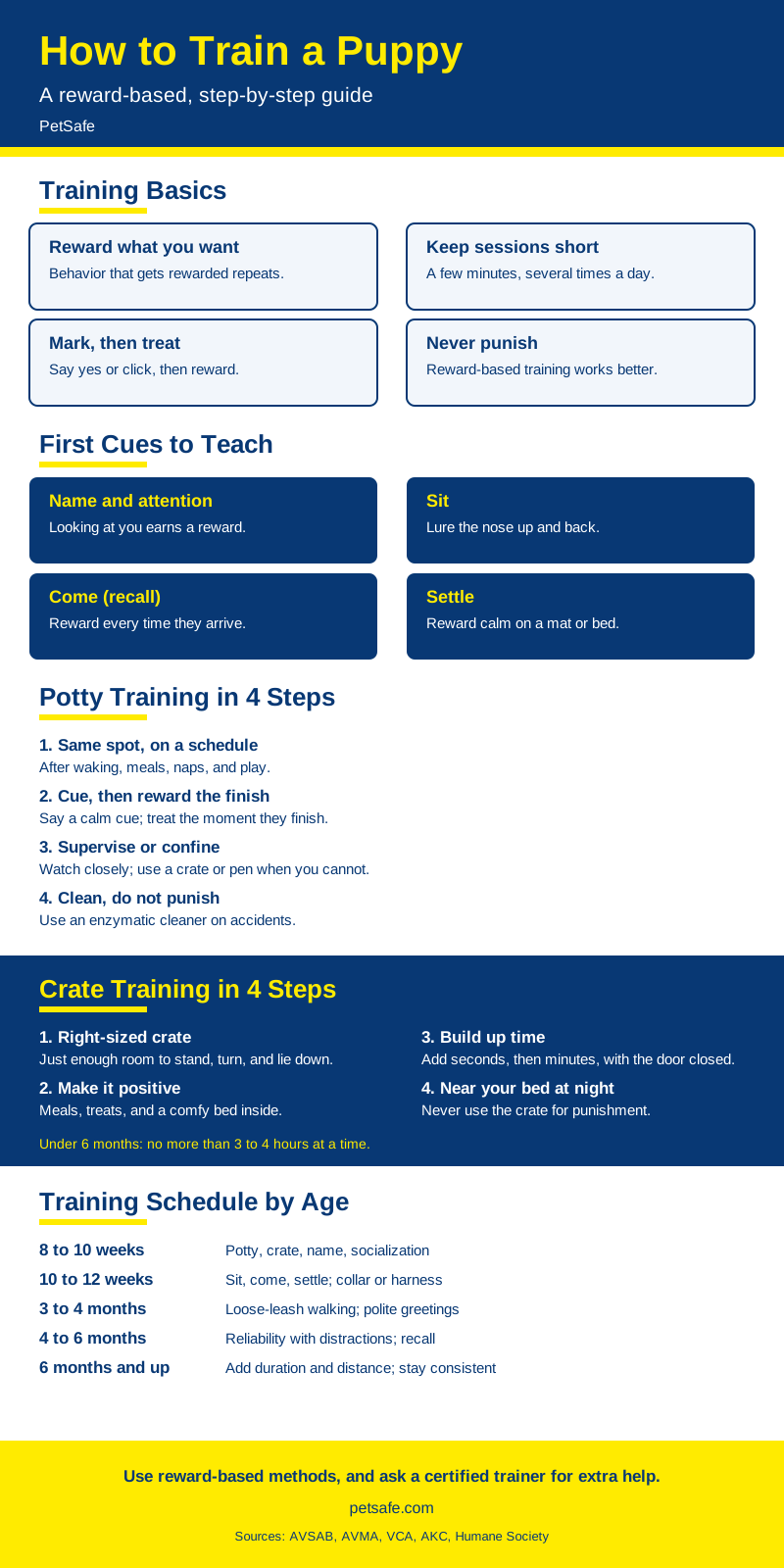
Knowing what to prioritize and when keeps training on track. Use this as a flexible roadmap rather than a rigid rulebook [4].
- 8 to 10 weeks: Start house training and crate training, teach name and attention, begin gentle handling, and prioritize positive socialization.
- 10 to 12 weeks: Add sit, come, and settle, keep reinforcing potty and crate routines, and introduce the collar or harness indoors.
- 3 to 4 months: Practice loose-leash walking, work on polite greetings to prevent jumping, and continue socialization as your puppy explores more of the world.
- 4 to 6 months: Build reliability on cues in more distracting settings, extend recall practice on a long line, and address teething with plenty of chews.
- 6 months and beyond: Keep reinforcing everything, add duration and distance to cues, and maintain the calm, consistent routine that got you here.
Keeping training consistent across your household
Puppies learn fastest when everyone uses the same rules, the same cue words, and the same rewards. Sit down with your household and agree on the details before your puppy arrives: which cues you will use, where your puppy sleeps, whether furniture is allowed, and how everyone will respond to jumping or nipping. Mixed messages slow a puppy down and cause confusion, while a united, consistent approach helps your puppy succeed. Remember too that every puppy is an individual. Some are motivated most by food, others by toys or praise, so pay attention to what your puppy loves and use it as their reward.
Frequently asked questions
When should I start training my puppy?
Start the day your puppy comes home. Puppies begin learning immediately, and the early weeks are the prime window for building good habits. You do not need formal sessions at first: simply reward the behavior you want and calmly prevent the behavior you do not [4].
What is the first thing I should train my puppy?
Begin with name recognition and attention, so your puppy learns that looking to you is rewarding. From there, add sit, come, and settle. Alongside these cues, start house training and crate training right away, since those are the biggest early priorities.
What is the 3-3-3 rule with puppies?
The 3-3-3 rule is a general guideline for a dog settling into a new home: about three days to decompress, about three weeks to learn your routine, and about three months to feel fully at home and bonded. It sets expectations rather than stating a scientific fact, and many puppies adjust faster.
What training method is best for puppies?
Reward-based, positive-reinforcement training. Veterinary behavior experts recommend reward-based methods for all dog training and find no evidence that aversive techniques are necessary [1] [2]. Rewarding the behavior you want is both kinder and more effective than punishment.
How do I potty train my puppy?
Take your puppy out on a schedule, after waking, meals, and play, and always to the same spot. Use a calm cue as they go, reward immediately when they finish, supervise closely indoors, and confine your puppy when you cannot watch. Clean accidents with an enzymatic cleaner and never punish [6].
How long does it take to potty train a puppy?
Most puppies take several months to become reliably house trained, and occasional accidents into the first year are normal. A young puppy is usually not fully dependable until around six months of age. Consistency shortens the process [9].
How do I crate train my puppy?
Make the crate positive: leave the door open, toss in treats and a chew, feed meals inside, and add a comfortable bed. Build up time gradually, place the crate near your bed at night, and never use it for punishment [7].
How long can a puppy stay in a crate?
Puppies under six months of age should not be crated for more than about three or four hours at a time, because they cannot control their bladder and bowels for longer. A helpful maximum is the puppy's age in months plus one, in hours [7].
How do I stop my puppy from biting?
Redirect your puppy to a chew toy when their teeth touch skin, and if mouthing continues, briefly end the game and withdraw your attention so teeth on skin make the fun stop. Provide teething chews, ensure enough rest, and avoid any physical correction.
How do I leash train my puppy?
Let your puppy get used to a well-fitted collar or harness indoors first, then attach the leash and reward them for staying near you with a loose leash. When they pull, stop or change direction, and reward the moment the leash loosens again. A front-clip harness gives gentle control.
How long should puppy training sessions be?
Short. A few minutes, several times a day, fits a puppy's attention span far better than one long session. End while your puppy is still succeeding and enjoying it, and fold quick training moments into everyday life.
When can I start socializing my puppy?
Right away, in safe and positive settings. The most important socialization window is roughly the first three months of life, so introduce your puppy to new people, sounds, and calm, healthy, vaccinated dogs early, and consider a well-run puppy class [5].
Citations and sources
- American Veterinary Society of Animal Behavior, Position Statement on Humane Dog Training. avsab.org
- American Veterinary Medical Association, Veterinary behaviorists: No role for aversive dog training practices. avma.org
- VCA Animal Hospitals, Puppy Behavior and Training: Training Basics. vcahospitals.com
- American Kennel Club, Puppy Training Timeline: Teaching Good Behavior. akc.org
- American Veterinary Society of Animal Behavior, Position Statement on Puppy Socialization. avsab.org
- American Kennel Club, How to Potty Train a Puppy. akc.org
- Humane World for Animals, Crate Training 101. humaneworld.org
- Karen Pryor Clicker Training, Training a Steadfast Recall. clickertraining.com
- American Kennel Club, Puppy Potty Training Timeline. akc.org
- ASPCA, General Dog Care. aspca.org
Author
Written by PetSafe® Guest
PetSafe® Guest contributors are pet experts, trainers, veterinarians, and brand partners who share their knowledge with the PetSafe® community. Articles published under this byline are reviewed by the PetSafe® editorial team before publication.
Last Modified: August 17, 2026


Get Email Updates
Subscribe to the latest news, promotions, & more from PetSafe® brand.
Sign up today for the latest news, promotions, and more from PetSafe® brand.