September 15, 2026
PetSafe® Expert
PetSafe® Guest
Dog Collars vs. Harnesses vs. Head Halters: A Complete Walking-Gear Guide
Choosing between a dog harness and a dog collar is one of the first decisions every pet parent faces, and the honest answer is that there are three options, not two. A flat collar, a harness, and a head halter each guide your dog differently, and the best pick depends on your dog's size, breed, and behavior on the leash. This guide covers how each works, which dogs it suits, and how to fit it safely.
Key points
- The core difference is where the pressure goes. A collar concentrates force on the neck, a harness spreads it across the chest, and a head halter guides the head.
- Match the tool to the dog and the behavior. Calm walkers do well on a flat collar, pullers benefit from a front-clip harness or head halter, and short-nosed or small dogs are usually safest in a harness.
- Any walking tool is a training aid, not a shortcut. Pairing the right gear with reward-based training is what creates a dog who walks nicely.
- Most dogs do best with both: a flat collar for identification at all times, plus a dedicated tool for the leash.
Table of contents
- Collar, harness, or head halter: the quick version
- Dog collars: how they work and when to use one
- Dog harnesses: how they work and when to use one
- Head halters: how they work and when to use one
- Which walking tool is best for your dog?
- Safety: where the pressure goes matters
- How to size and fit each option
- When your dog needs both a collar and a harness
- Training comes first
- Walking gear compared: which tool fits your dog
- How to help your dog adjust
- Frequently asked questions
Collar, harness, or head halter: the quick version
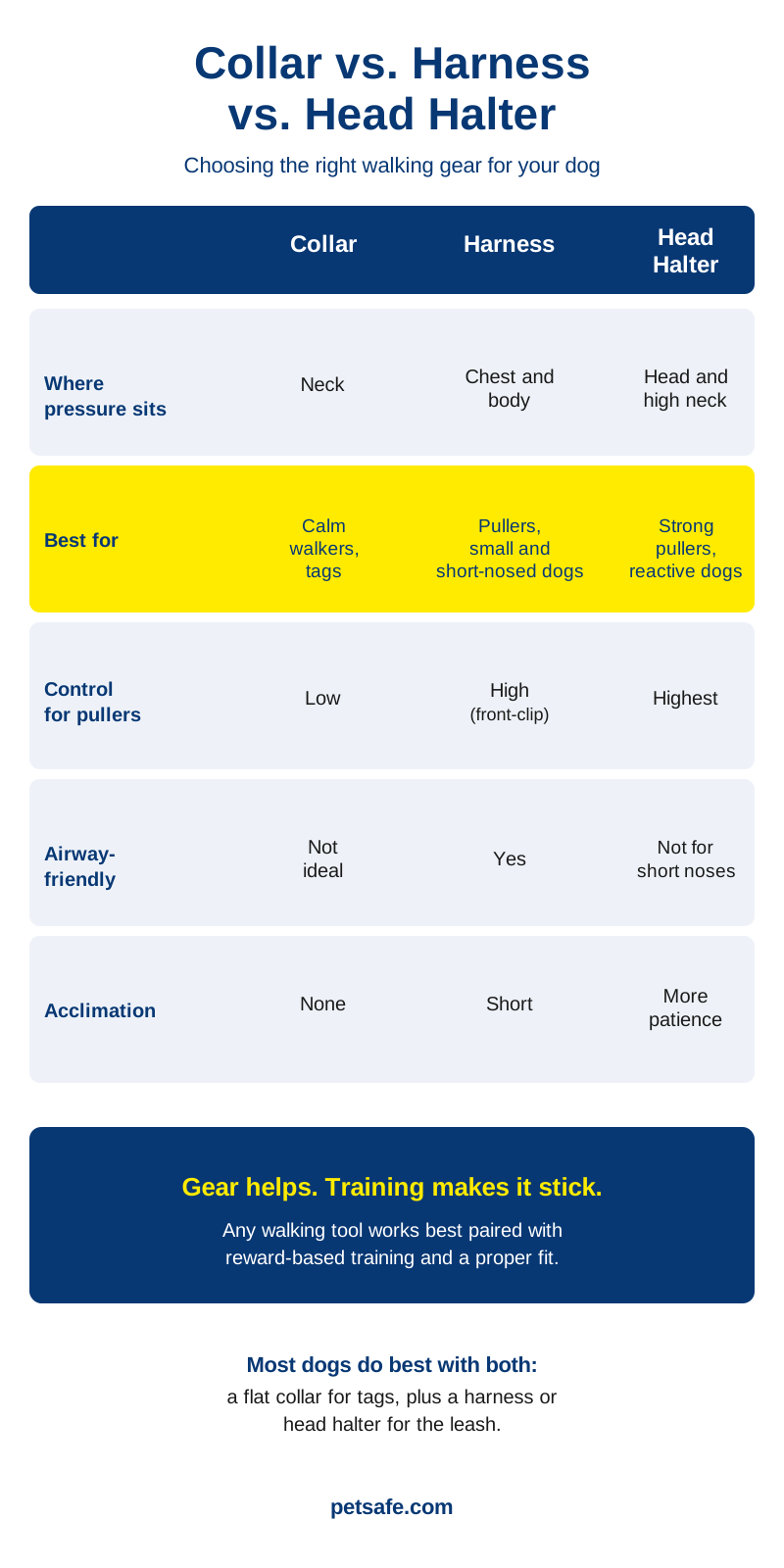
All three tools attach to a leash, but they apply pressure in very different places, which drives almost everything else.
- Collar: sits around the neck and holds your dog's identification and license tags. Best for dogs who already walk politely on a loose leash.
- Harness: wraps around the chest and shoulders and keeps leash pressure off the neck. A front-clip design also helps discourage pulling. Best for pullers, small dogs, and short-nosed breeds.
- Head halter: rests over the muzzle and high on the neck and steers the head, giving the most control over a strong or reactive dog. Best for determined pullers, with a little acclimation.
If your dog pulls, reacts, or has a delicate airway, the decision tilts away from a plain collar. If your dog walks calmly and you just need a place for tags, a collar may be all you need.
Dog collars: how they work and when to use one
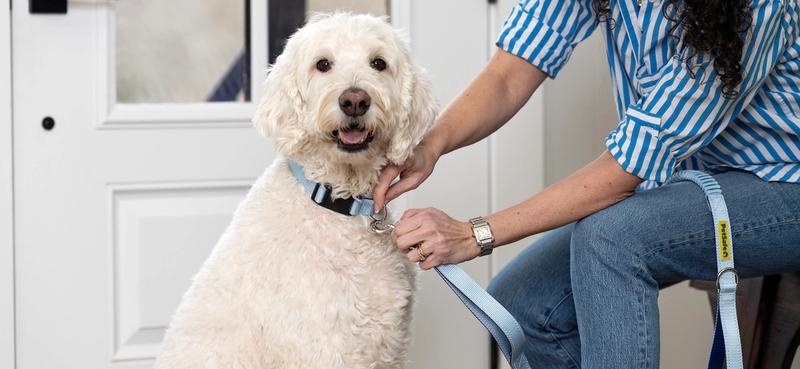
A collar is the most familiar piece of dog gear, and for many dogs it is the right everyday choice. It is the simplest way to keep identification and rabies tags on your dog, and for a dog who already walks on a loose leash, a flat collar is comfortable and low profile.
There are a few common styles. A flat or buckle collar is the standard for everyday wear and tags. A martingale, or limited-slip, collar tightens gently to a controlled point and suits dogs whose heads are narrower than their necks, since it stops them backing out. You can browse everyday dog collars to compare styles.
A collar has limits, though. Because all the leash force lands on the neck, it is not the best tool for a hard puller, and it is a poor fit for short-nosed breeds or any dog with a sensitive airway. Escape artists like Greyhounds and Whippets, whose heads slip out of flat collars, are better served by a martingale collar or a secure harness [5].
Dog harnesses: how they work and when to use one
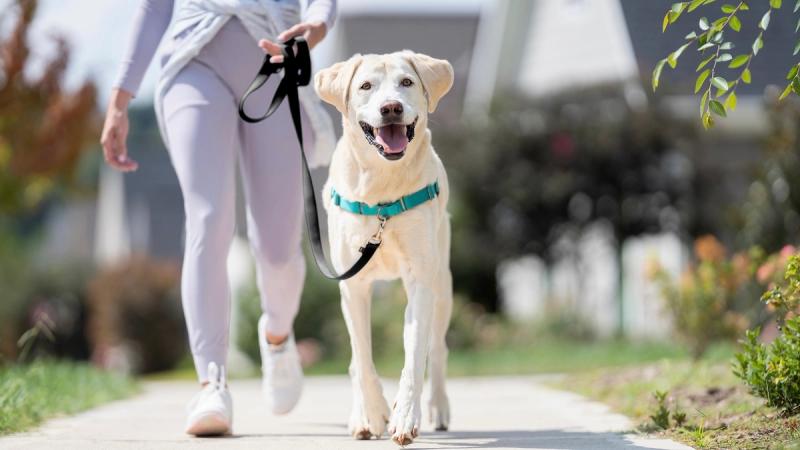
A harness moves the connection point from the neck to the chest and shoulders, spreading pressure across a larger, sturdier part of the body. That makes it a comfortable, lower-risk choice for many dogs, which is why so many pet parents reach for one first. You can compare styles across our range of no-pull harnesses.
Harnesses come in two main configurations. A back-clip harness attaches between the shoulder blades and is comfortable and easy to use, though it does little to discourage pulling and can give a determined dog something to lean into. A front-clip, or no-pull, harness attaches at the chest, so when your dog surges ahead the leash gently turns them back toward you. That redirection is what makes front-clip designs so effective for pullers.
Fit matters more with a harness than people expect. A well-fitted harness sits clear of the shoulder joint so it does not rub or limit your dog's stride, so careful measuring is worth it. Harnesses are also the standard recommendation for dogs with a collapsing trachea or other airway concerns, since they keep leash tension off the throat [4].
Head halters: how they work and when to use one
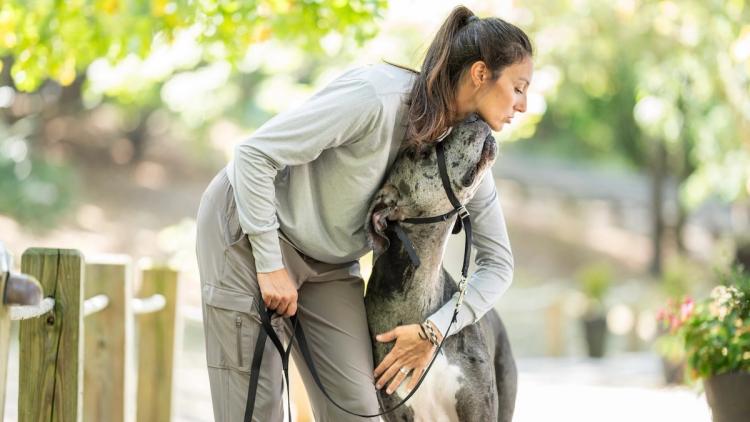
A head halter is the option most pet parents know least about, and it offers the most control of the three. It uses two soft loops, one resting loosely over the muzzle and one snug high on the neck behind the ears, with the leash attaching under the chin. Because dogs instinctively follow their noses, guiding the head guides the whole dog, and very little force is needed to redirect even a large puller [6].
That control makes a head halter a strong choice for determined pullers and for dogs who lunge or react, since steering the head helps you manage the moment calmly. It is worth clearing up the most common misconception right away.
A head halter is not a muzzle. Your dog can pant, drink, eat, and carry a toy while wearing one. It only limits the head's direction when there is tension on the leash [6].
The trade-off is that a head halter takes the most getting used to. Most dogs paw at the muzzle loop at first, so a gradual, reward-based introduction is essential, and it is meant for supervised walks and training, not all-day wear. It is also not the right fit for very short-nosed breeds.
Which walking tool is best for your dog?
There is no single best answer, only the best match for your dog. Use this guide to point yourself in the right direction, then confirm with your veterinarian if your dog has health concerns.
- Extreme puller, or a dog who lunges or reacts: a head halter, for the most control, introduced gradually.
- Moderate to strong puller, or a short-nosed dog: a front-clip no-pull harness, which redirects pulling without pressing on the neck.
- Calm, leash-trained, or very active dog: a back-clip harness for comfort and freedom of movement, or a flat collar.
- Escape artist or narrow-headed dog, such as a sighthound: a martingale collar or a snug, secure harness.
- Small, short-nosed, or a dog with a delicate airway: a harness, never a plain collar for the leash.
- Every dog, for identification: a flat collar with tags, worn in addition to whatever tool you use for walks.
Safety: where the pressure goes matters
The strongest reason to think carefully about walking gear is your dog's health. Leash force through a collar presses on the trachea and nearby structures. Research on dogs found that pressure applied through a collar significantly raised intraocular pressure, the pressure inside the eye, while the same pull through a harness did not [2]. That matters most for dogs with thin or weak corneas, glaucoma, or any condition worsened by pressure spikes, who are safer in a harness.
The concern is greater for short-nosed, or brachycephalic, breeds, whose airways are already compromised. More recent work found that a collar raised intraocular pressure in these dogs while a harness did not, and measured collar contact pressures high enough to be worth avoiding [3]. For any dog with a collapsing trachea, veterinary guidance is to keep the leash off the neck and use a harness, with the collar on for identification only [4].
None of this means a collar is dangerous for every dog. A well-fitted collar on a calm, loose-leash walker is a reasonable everyday choice. The point is to match the tool to the dog and keep sudden, hard neck pressure out of the equation.
How to size and fit each option
Even the right tool only works when it fits. A loose fit lets a dog wriggle free, and a tight one is uncomfortable or unsafe.
- Collar: use the two-finger rule. You should be able to slip two fingers between the collar and your dog's neck, no more and no less [5].
- Harness: measure your dog's chest girth at the widest point, adjust each strap so the harness sits snugly without pinching, and check that it clears the shoulder joint so it does not rub during a full stride.
- Head halter: the neck strap fits high and snug, just below the ears and above the throat, tight enough for only one finger underneath. The nose loop stays loose enough to slide but not slip off, and the side straps form a V, not an L, when sized right [6].
Whatever you choose, recheck the fit after the first few walks and watch for rubbing where the gear sits.
When your dog needs both a collar and a harness
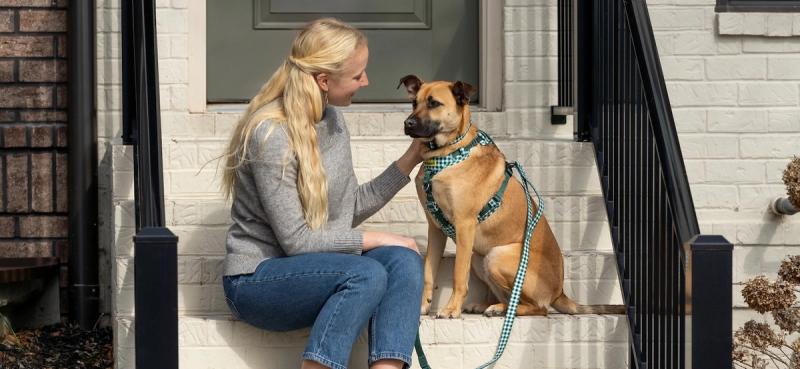
For most dogs, the answer is not collar versus harness at all, it is both. A flat collar is the always-on home for identification tags, worn even indoors in case your dog slips out a door. The harness or head halter comes out for walks and training, so your dog stays identifiable while the leash attaches to the best tool for how they behave.
Training comes first
Gear helps, but it does not replace teaching. The most reliable path to a dog who walks nicely is reward-based training, where you mark and reward the behavior you want, like a loose leash and check-ins, rather than relying on discomfort to suppress what you do not want. Leading veterinary behavior experts are clear that humane, reward-based methods are the recommended standard, with no need for aversive tools in a good plan [1].
Think of a front-clip harness or a head halter as a helper that manages pulling while your dog learns, not as the lesson itself. The right tool buys calmer walks today, and consistent practice makes them stick.
PetSafe® walking gear compared
PetSafe makes a tool for each point on that spectrum: the more your dog pulls or reacts, the more head control tends to help. You can see the full lineup across PetSafe harnesses, collars, and leashes, and the three below cover most needs.
Gentle Leader® Headcollar. This is the head-halter option, offering the most control for extreme pullers and for dogs who lunge or react. It gently redirects the head, so where the nose goes the body follows, with very little force. The Gentle Leader was co-developed by a veterinary behaviorist in 1982 and remains a widely recommended head halter [7]. It rides high on the neck and off the throat, needs the most patient introduction of the three, and is not suited to very short-nosed dogs.
Easy Walk® Harness. This is the front-clip no-pull harness, the fastest route to calmer walks for moderate to strong pullers. Its patented martingale loop tightens gently across the shoulders and turns your dog back toward you, while the chest strap rests low on the breastbone rather than the sensitive throat, so it does not cause coughing or choking. It fits short-nosed breeds, goes on with little acclimation, and is trusted by pet parents and trainers.
EasySport® Harness. This is the padded back-clip harness, built for active dogs and dogs who already walk well rather than as a no-pull tool. It has a padded body, an elastic neckline, reflective piping, a top control handle, and a center-back leash clip. It goes on quickly and suits dogs who need comfort and a little handling control.
How to help your dog adjust
A new harness usually needs only a short introduction, but a head halter deserves a patient one. Use desensitization and counter-conditioning, which simply means go slowly and pair the gear with good things [6]. Let your dog sniff the halter or harness while you offer treats, then over several short sessions progress to resting it on the nose or body and fastening it briefly, always with treats, ending before your dog gets frustrated. Once your dog is comfortable, attach the leash and take a few relaxed steps indoors before heading out.
On early walks with a head halter, keep moving when your dog paws at the loop and reward calm walking, and make sure the nose loop loosens when you release leash tension. If your dog seems stuck, recheck the fit first. With consistency, most dogs stop noticing the gear entirely.
Frequently asked questions
Is a harness or a collar better for a dog that pulls?
For a dog that pulls, a harness or a head halter is usually the better choice. A plain collar puts all the force on the neck and gives a puller something to lean into. A front-clip harness redirects pulling to the side, and a head halter offers even more control for very strong pullers.
Are harnesses better than collars for dogs?
It depends on the dog. A harness keeps pressure off the neck and is safer for pullers, small dogs, and short-nosed breeds. A flat collar is simpler and ideal for holding tags and for calm dogs who already walk on a loose leash. Many dogs do best wearing both, each for its own job.
Do dogs need both a collar and a harness?
For most dogs, yes. A flat collar is the always-on home for identification and license tags, worn even indoors. A harness or head halter comes out for walks and training. Splitting the two jobs means your dog is always identifiable while the leash attaches to the tool that best suits their behavior.
Is a head halter the same as a muzzle?
No. A head halter is not a muzzle. A dog wearing one can pant, drink, eat, and carry a toy. It only limits the direction of the head when there is tension on the leash, which is what gives you gentle control. It is a steering tool, not a way to hold the mouth shut.
What is the difference between a front-clip and a back-clip harness?
A back-clip harness attaches between the shoulder blades and is comfortable and easy to use, but does little to stop pulling. A front-clip harness attaches at the chest, so when your dog surges ahead the leash turns them back toward you. Front-clip designs are the better pick for dogs who pull.
What is the best walking option for a short-nosed dog?
Short-nosed, or brachycephalic, breeds are usually safest in a front-clip harness that keeps pressure off an already compromised airway. A head halter often does not fit their muzzle shape well, and a plain collar is best avoided for the leash. Keep a flat collar on for tags only.
What is safest for a dog with a collapsing trachea?
A harness is the standard recommendation for a dog with a collapsing trachea, because it keeps leash tension entirely off the neck and windpipe. The collar can stay on for identification, but it should not be the leash attachment point. Check with your veterinarian for guidance specific to your dog.
Why does my dog paw at the head halter, and how do I stop it?
Pawing is normal at first and almost always fades with a slow introduction. Pair the halter with treats over several short sessions, keep walking when your dog paws rather than stopping to soothe, and reward calm movement. Confirm the fit is correct, since a loose or misplaced loop makes pawing worse.
Can my dog wear a harness or head halter all day?
No. A harness and especially a head halter are meant for supervised walks and training, not all-day or unsupervised wear. Left on constantly, they can rub or become a hazard. A flat collar with tags is the piece designed for continuous wear.
Gentle Leader or Easy Walk harness: which should I choose?
Choose the Easy Walk harness if pulling is the main issue and you want quick results with an easy introduction. Choose the Gentle Leader head halter if your dog is a very strong puller or lunges and reacts, and you want maximum control. Both keep pressure off the throat.
Citations and sources
- American Veterinary Society of Animal Behavior, Position Statement on Humane Dog Training, reported by the American Veterinary Medical Association. avma.org
- Pauli AM, et al. Effects of the Application of Neck Pressure by a Collar or Harness on Intraocular Pressure in Dogs. Journal of the American Animal Hospital Association, 2006. researchgate.net
- Bailey C, Packer RMA, Wills AP. Effect of a Collar and Harness on Intraocular Pressure and Respiration Rate of Brachycephalic and Dolichocephalic Dogs. Veterinary Medicine and Science, 2025. ncbi.nlm.nih.gov
- VCA Animal Hospitals, Collar and Harness Options for Dogs. vcahospitals.com
- American Kennel Club, Dog Harnesses and Dog Collars: Which Is Right For Your Dog? akc.org
- University of California, Davis, School of Veterinary Medicine, Clinical Animal Behavior Service, Head Halters in Dogs. vetmed.ucdavis.edu
- R.K. Anderson, revolutionary behaviorist and inventor of Gentle Leader, dies at 90. dvm360. dvm360.com


Get Email Updates
Subscribe to the latest news, promotions, & more from PetSafe® brand.
Sign up today for the latest news, promotions, and more from PetSafe® brand.