August 26, 2026
PetSafe® Expert
PetSafe® Guest
New Puppy Checklist: Supplies, Vet Care, and Your First Month
A new puppy checklist covers the supplies, health care, and daily routines your puppy needs to settle in safely. Before your puppy comes home, you need a crate, a bed, a collar, a leash, an ID tag, food and water bowls, puppy food, toys, grooming basics, and cleanup supplies, plus a vet visit booked for the first week. This guide walks you through every item and every step, from the day before pickup through your first month together.
Key points
- Gather the core supplies before your puppy arrives: a crate and bed, a collar, leash, and ID tag, food and water bowls, puppy food, toys, grooming tools, and cleanup supplies.
- Book your puppy's first veterinary exam within the first week of coming home, and bring any records from the breeder, shelter, or rescue [2] [8].
- Puppies begin their core vaccine series around 6 to 8 weeks of age, with boosters every 3 to 4 weeks until about 16 weeks; your veterinarian confirms the exact schedule [3] [5].
- The most important window for socialization is roughly the first three months of life, so start safe, positive introductions early [4].
- Set a consistent routine for feeding, potty breaks, sleep, and play from day one. Puppies thrive on predictability.
Table of contents
- Before your puppy comes home: prep and puppy-proofing
- The complete new puppy supplies checklist
- Your puppy's first day and first night at home
- Scheduling your puppy's first vet visit
- Puppy vaccination and deworming schedule
- Feeding your puppy
- House training and crate training
- How old is my puppy? Puppy developmental stages
- Socializing your puppy safely
- Basic training and first commands
- Grooming, exercise, and microchipping
- Your first week vs. your first month: a puppy timeline
- What it costs to prepare for a puppy
- New puppy checklist FAQ
Before your puppy comes home: prep and puppy-proofing
The best time to prepare is before your puppy ever walks through the door. Puppies are curious, fast, and drawn to exactly the things that can hurt them, so puppy-proofing your home is the first job on any new puppy checklist. Work through your home one room at a time and look at it from your puppy's point of view, down at floor level.
In each room, secure or move anything a puppy could chew, swallow, or knock over. Bundle and hide electrical cords, move houseplants out of reach, latch low cabinets that hold cleaning products or medications, and pick up small objects, shoes, and children's toys. Keep trash cans covered or behind a closed door. Decide which rooms are off limits at first and use gates or a playpen to create a smaller, safer space where your puppy can explore under supervision.
Set up your puppy's key stations before pickup day: a crate and bed in a quiet corner, a feeding spot with bowls, and an easy-to-clean potty area. Having these ready means you can focus on your puppy instead of shopping on day one.
The safest home for a curious puppy is one you have already seen from the floor up.
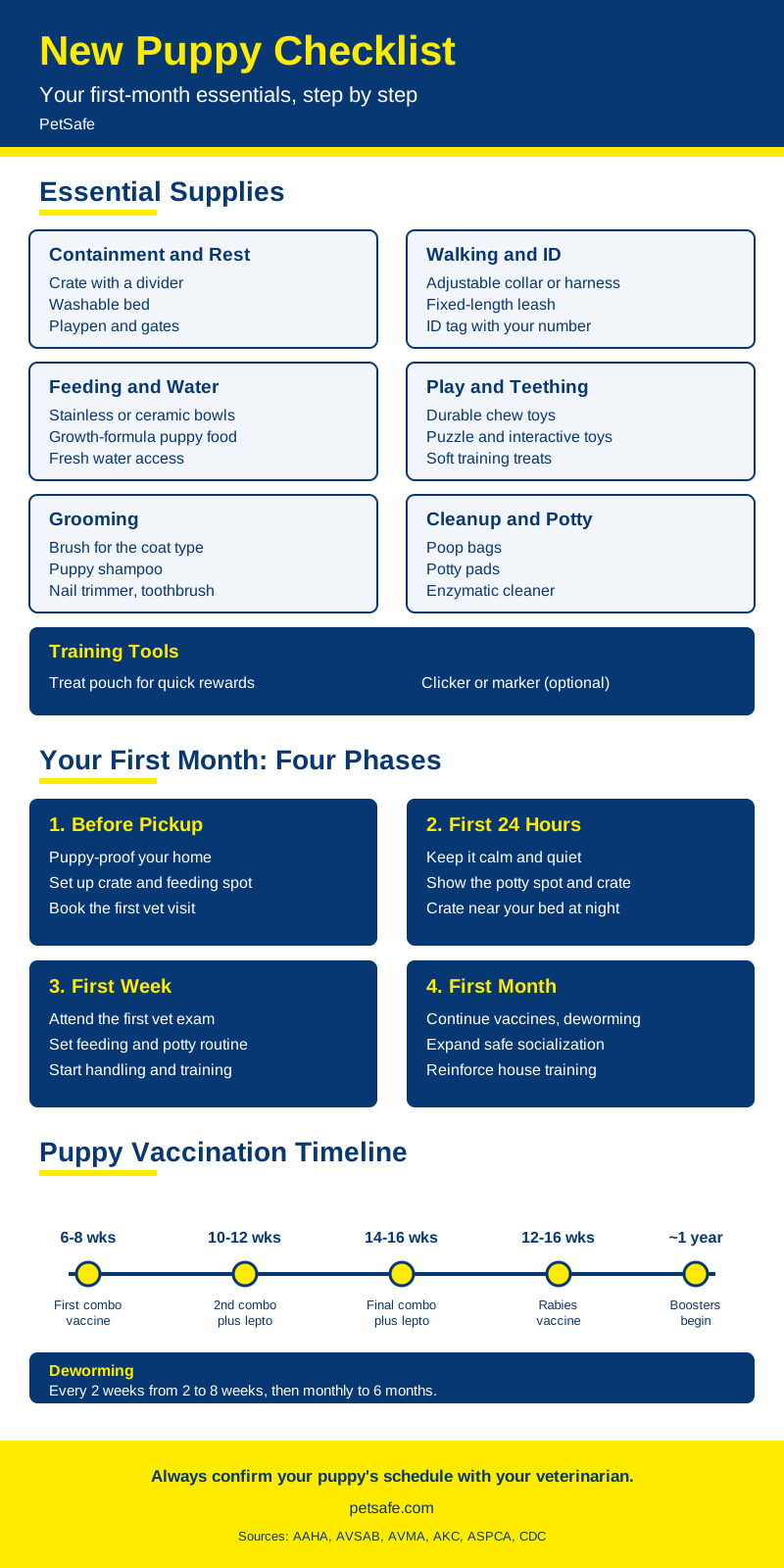
The complete new puppy supplies checklist
Here are the essentials every new puppy owner should have on hand, grouped by category so nothing gets missed [10]. If you would rather shop the basics in one place, PetSafe® gathers puppy essentials in the New Puppy Shop.
Containment and rest
- Crate: Sized so your puppy can stand, turn around, and lie down, ideally with a divider so it grows with them.
- Bed: A soft, washable bed for the crate and a second spot in your main living area.
- Playpen and gates: To create a safe, confined space and block off stairs or off-limits rooms.
Walking and identification
- Collar or harness: Adjustable and correctly fitted, with room to grow.
- Leash: A standard fixed-length leash for training and walks.
- ID tag: With your phone number, added the day your puppy comes home.
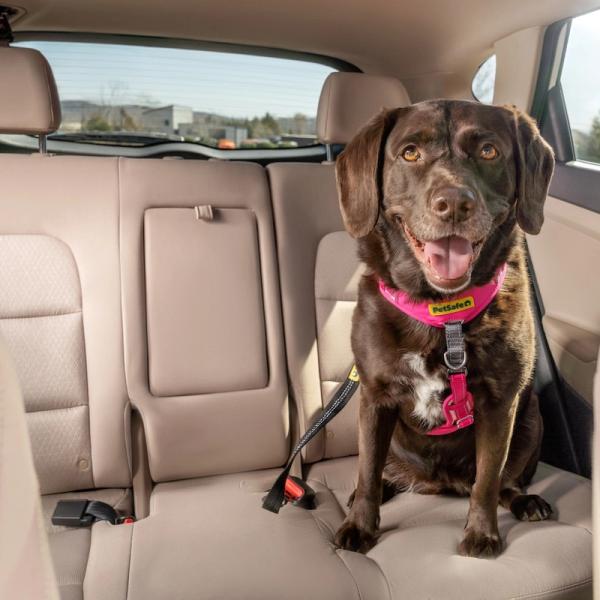
You can find puppy-appropriate harnesses, collars, and leashes in adjustable sizes so the gear keeps fitting as your puppy grows.
Feeding and water
- Food and water bowls: Stainless steel or ceramic are easy to clean.
- Puppy food: A complete and balanced food formulated for growth. Keep your puppy on whatever they were already eating at first to avoid stomach upset, then transition gradually if you switch [7].
- Treats: Small, soft training treats for rewards.
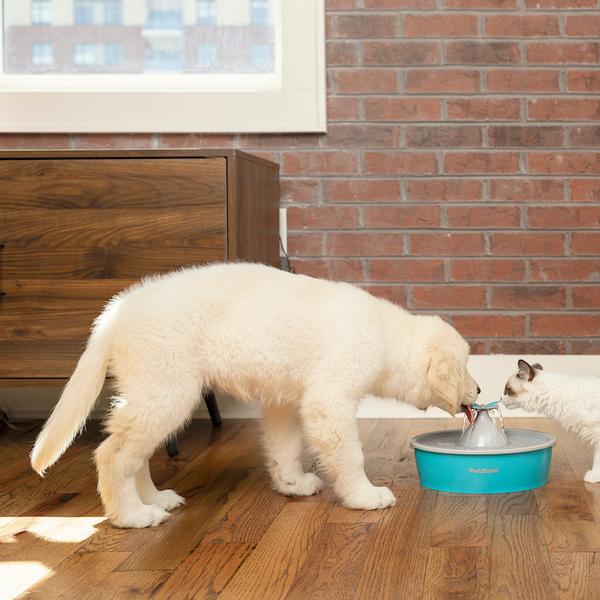
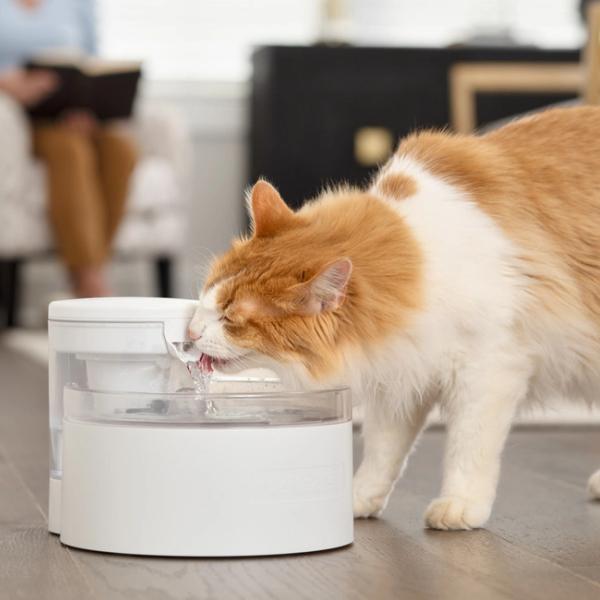
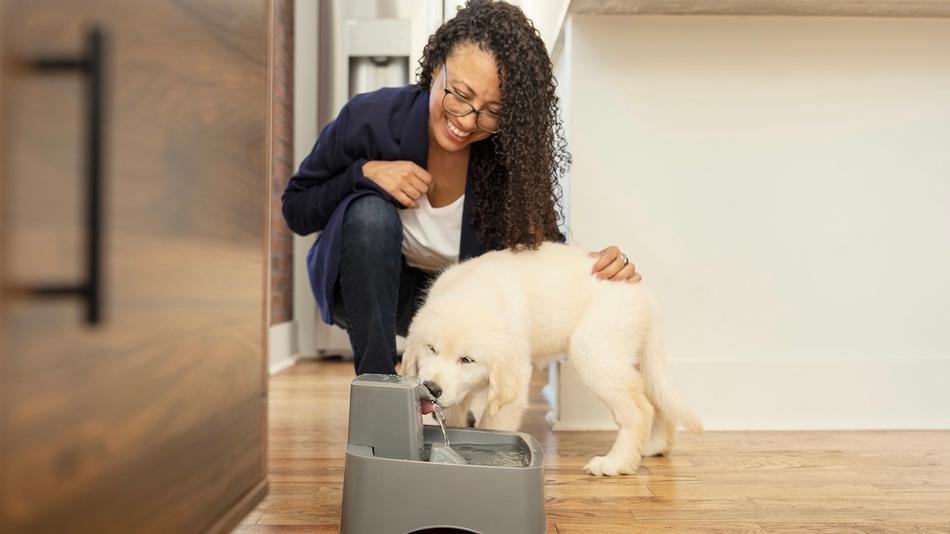
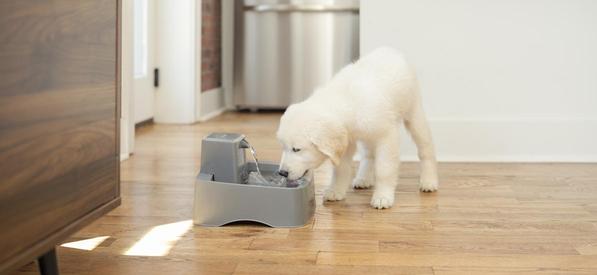
Keeping fresh water available at all times matters for a growing puppy, and options like the fountains and feeders range can help with steady access to clean water and consistent meal timing.
Play and teething
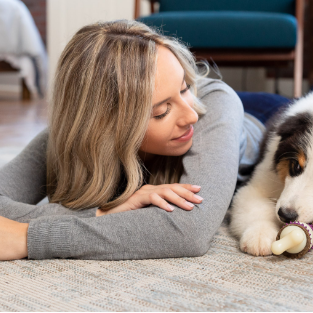
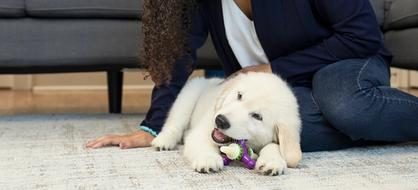
- Chew toys: Durable, size-appropriate chews to soothe teething and protect your furniture.
- Interactive and puzzle toys: To keep a busy mind occupied and build good habits.
A rotation of safe dog toys gives your puppy healthy outlets for chewing and energy, which is one of the simplest ways to prevent boredom-driven mischief.
Grooming
- Brush: Suited to your puppy's coat type.
- Puppy shampoo: Gentle and formulated for puppies.
- Nail trimmer: And a styptic option in case of a short nick.
- Toothbrush and pet toothpaste: To start a dental routine early.
Cleanup and potty
- Poop bags: For walks and yard cleanup.
- Potty pads: Useful for the early weeks and overnight.
- Enzymatic cleaner: To fully remove accident odors so your puppy is not drawn back to the same spot.
Training tools
- Treat pouch: To keep rewards handy during training.
- Clicker (optional): A simple marker tool for reward-based training.
Your puppy's first day and first night at home
Keep the first day calm. Bring your puppy straight to the potty area, then let them explore one puppy-proofed room while people stay quiet and low-key. Resist the urge to invite the whole neighborhood over. Your puppy has just left the only home, littermates, and smells they have ever known, and a slow, gentle introduction helps them feel secure.
Start your routine immediately. Offer meals at set times, take your puppy to the same potty spot after every meal, nap, and play session, and reward them for going in the right place. Show them their crate and bed as calm, comfortable spaces rather than places of punishment.
The first night is often the hardest. Place the crate near your bed so your puppy can hear and smell you, which reduces stress and makes overnight potty trips easier. A warm, soft bed and a quiet routine help your puppy settle. Expect some whining at first. Take your puppy out for a bathroom break if needed, then return them calmly to the crate.
Scheduling your puppy's first vet visit
Book your puppy's first veterinary exam within the first week of bringing them home. Many breeders and rescues even ask you to schedule a checkup within the first few days as a condition of adoption [2]. The Centers for Disease Control and Prevention also recommends seeing a veterinarian within a few days to a week after you bring a new dog home [8].
Bring any paperwork your puppy came with, including vaccination and deworming records and information about the food they have been eating. At the first visit, your veterinarian will typically perform a full physical exam, check for parasites, discuss the vaccination and deworming schedule, talk through nutrition, and answer your questions about training and behavior. This visit sets your puppy's health baseline and starts a relationship with a vet you can call as questions come up.
Puppy vaccination and deworming schedule
Puppies need a series of vaccines during their first months to build protection as the immunity they got from their mother fades. Core vaccines protect against distemper, adenovirus (hepatitis), and parvovirus, usually combined in a single shot, along with rabies. As of the 2024 update to the leading canine vaccination guidelines, leptospirosis is now recommended as a core vaccine for dogs, generally starting at 12 weeks of age [3]. Your veterinarian will confirm the exact schedule for your puppy and region, since recommendations are general rather than one-size-fits-all.
A typical core vaccine series looks like this [3] [5] [6]:
- 6 to 8 weeks: First combination vaccine (distemper, adenovirus, parvovirus, often with parainfluenza).
- 10 to 12 weeks: Second combination vaccine, plus leptospirosis where recommended.
- 14 to 16 weeks: Final puppy combination vaccine and leptospirosis booster.
- 12 to 16 weeks: Rabies vaccine, timed to your local requirements.
- Around one year: Booster shots, then interval boosters on the schedule your vet sets.
Deworming runs on a separate track, because puppies are commonly born with or pick up intestinal parasites that can also pose a risk to people [8]. A common approach is [6]:
- 2 to 8 weeks: Deworming every two weeks.
- 8 weeks to 6 months: Monthly deworming.
- Ongoing: A year-round parasite prevention plan, including heartworm, flea, and tick protection as advised by your vet.
Feeding your puppy
Feed a complete and balanced food formulated for growth, and match the number of daily meals to your puppy's age. A common guideline is to feed younger puppies more often and reduce meals as they mature [7]:
- About 8 to 12 weeks: Four meals a day.
- About 3 to 6 months: Three meals a day.
- About 6 to 12 months: Two meals a day.
Use the feeding guide on your food's label as a starting point, then adjust with your veterinarian's help based on your puppy's body condition, breed, and size. Keep fresh water available at all times, and if you change foods, transition slowly over several days by mixing increasing amounts of the new food with the old to protect your puppy's stomach.
House training and crate training
Consistency is the heart of house training. Take your puppy to the same outdoor spot on a predictable schedule: after waking, after meals, after play, and before bed, plus every couple of hours in between. Reward success immediately with praise and a small treat so your puppy connects going in the right place with good things. Accidents will happen. When they do, clean thoroughly with an enzymatic cleaner and simply increase supervision and trips outside rather than scolding.
Crate training gives your puppy a den of their own and supports house training, since most puppies avoid soiling where they sleep. Make the crate positive by feeding meals inside it, adding a comfortable bed, and offering a safe chew. Keep early crate sessions short and build up gradually. A properly sized crate, large enough to stand and turn around but not so large that a corner becomes a bathroom, works best.
How old is my puppy? Puppy developmental stages
Puppies grow through distinct developmental stages, and knowing where your puppy is helps you set the right expectations. Because puppies develop so quickly, the puppy you bring home changes noticeably from week to week.
- Birth to about 2 weeks (neonatal): The puppy relies on smell, taste, and touch, and spends nearly all its time eating and sleeping close to its mother and littermates.
- About 2 to 3 weeks (transitional): Eyes and ears open, the puppy starts to walk, and it becomes aware of its littermates and surroundings.
- About 3 to 14 weeks (socialization): The most important period for learning. Senses and motor skills sharpen, and experiences during this window shape lifelong behavior [1] [4].
- About 3 to 6 months (juvenile): Behavior patterns mature, adult teeth come in, and puppies begin testing boundaries.
Most puppies are ready to join a new home at about 8 weeks of age, and roughly 8 to 10 weeks is widely considered an ideal window [1]. Time spent with the mother and littermates during those early weeks teaches important social skills, so there is no benefit to bringing a puppy home too early. Puppies also pass through sensitive fear periods during early development, so keep new experiences positive and low pressure rather than overwhelming.
Socializing your puppy safely
Socialization means giving your puppy positive, controlled experiences with new people, animals, places, sounds, and surfaces. The primary window for socialization is the first three months of life, and experiences during this time have a lasting effect on your dog's temperament [4]. Because this window closes before the vaccine series is finished, waiting until your puppy is fully vaccinated to begin socializing can mean missing the most valuable period.
The safe approach is to socialize thoughtfully rather than to avoid it. Well-run puppy classes are a good option, and puppies can typically start as early as 7 to 8 weeks of age after receiving at least one set of vaccines about a week beforehand and an initial deworming [4]. In the meantime, introduce your puppy to new experiences in low-risk settings: carry them to see the world, host calm visitors, invite friends' healthy and vaccinated adult dogs over, and expose your puppy to everyday sounds and handling. Keep every introduction upbeat and let your puppy set the pace.
Until your puppy has completed the core vaccine series, generally around 16 weeks or later, be cautious about places where many unknown dogs gather, such as public dog parks. A good rule is to wait roughly two weeks after the final round of core puppy vaccines before visiting those higher-risk spaces, and to confirm the timing with your veterinarian.
Basic training and first commands
You can start training the day your puppy comes home. Short, positive sessions of a few minutes, several times a day, work far better than long ones. Use reward-based training: mark and reward the behavior you want with a treat, praise, or play, and your puppy will offer it more often.
Begin with the fundamentals: your puppy's name, sit, come when called, and settling calmly. Keep sessions fun and end on a win. Consistency across everyone in the household matters, so agree on the same cues and rules. For a step-by-step approach to those first lessons, see our guide on how to start training your puppy.
Grooming, exercise, and microchipping
Start grooming early so your puppy learns to accept handling. Brush regularly, introduce nail trims a little at a time, and begin a gentle tooth-brushing routine with pet-safe toothpaste. Handle your puppy's paws, ears, and mouth often so vet visits and grooming are stress free later.
Give your puppy age-appropriate exercise and plenty of mental enrichment through play, sniffing, and training games. Puppies tire quickly and need lots of rest, so balance activity with downtime, and let your growing puppy's joints guide how much hard running is appropriate.
Microchip your puppy and register the chip with your current contact information. A microchip is a permanent form of identification, not a GPS tracker, and it dramatically improves the odds of being reunited if your puppy is ever lost [9]. A microchip works alongside, not instead of, a collar and ID tag, so use both. Keep your registration details up to date whenever you move or change your phone number.
Your first week vs. your first month: a puppy timeline
It helps to know what to focus on and when. Here is a simple roadmap for the early days.
Before pickup: Puppy-proof your home, set up the crate, bed, and feeding station, and buy your core supplies. Book the first vet visit.
First 24 hours: Keep things calm, introduce the potty spot and crate, start your routine, and get through the first night with the crate near your bed.
First week: Attend the first vet exam, settle into a feeding and potty schedule, begin gentle handling and short training sessions, and start positive introductions at home.
First month: Continue the vaccine and deworming series, expand safe socialization, reinforce house training and crate training, build on basic commands, and consider a puppy class.
What it costs to prepare for a puppy
Budgeting is easier when you think in categories rather than a single number. Plan for these ongoing and one-time costs:
- One-time supplies: Crate, bed, playpen or gates, bowls, collar or harness, leash, and grooming tools.
- Food and treats: A recurring cost that changes as your puppy grows.
- Veterinary and preventive care: The initial exam, the vaccine series, deworming, and year-round parasite prevention, plus spay or neuter when your vet advises.
- Training: Puppy classes or training resources.
- Identification: Microchipping and an ID tag.
- Pet insurance (optional): Worth considering early, before any conditions arise.
Spreading these categories across your first month keeps the early days manageable and makes sure nothing important gets skipped.
New puppy checklist FAQ
What do I need before bringing a puppy home?
Have the core essentials ready: a crate and bed, a playpen or gates, a collar or harness, a leash, an ID tag, food and water bowls, a complete and balanced puppy food, toys and chews, grooming tools, and cleanup supplies including poop bags and an enzymatic cleaner. Also book your puppy's first vet visit.
What should I do first when I get a new puppy?
Puppy-proof your home, set up a safe confined space with a crate and bed, and take your puppy to the potty spot as soon as you arrive. Then start a consistent routine for meals, potty breaks, sleep, and play, and keep the first day calm and low-key.
When should a puppy's first vet visit be?
Schedule the first veterinary exam within the first week of bringing your puppy home. Some breeders and rescues ask for a checkup within the first few days [2]. Bring any vaccination and deworming records your puppy came with.
What vaccines does a puppy need and when?
Puppies receive a core vaccine series protecting against distemper, adenovirus, and parvovirus, usually starting at 6 to 8 weeks with boosters every 3 to 4 weeks until about 16 weeks, plus rabies and, per current guidelines, leptospirosis [3] [5]. Your veterinarian sets the exact schedule.
When can a puppy go outside safely?
Your puppy can use your own yard right away. For public spaces where unknown dogs gather, such as dog parks, it is safest to wait until roughly two weeks after the final round of core puppy vaccines, generally around 16 weeks or later. You can still socialize safely before then in low-risk settings [4].
How do I puppy-proof my home?
Go room by room at floor level. Hide electrical cords, move houseplants and household chemicals out of reach, latch low cabinets, pick up small objects, and cover trash cans. Use gates or a playpen to limit access to a smaller, safer space while your puppy is unsupervised.
How often and how much should I feed a puppy?
Feed a growth-formulated puppy food, using more frequent meals when young: about four meals a day at 8 to 12 weeks, three at 3 to 6 months, and two after about 6 months [7]. Use the label as a starting point and adjust portions with your veterinarian.
How do I potty train a puppy?
Take your puppy out on a consistent schedule, after waking, meals, and play, and to the same spot each time. Reward success immediately. Clean any accidents with an enzymatic cleaner and increase supervision rather than scolding. Crate training supports house training because puppies avoid soiling where they sleep.
When can I start socializing my puppy?
Start right away in safe, positive settings. The most important socialization window is the first three months of life. Well-run puppy classes can begin as early as 7 to 8 weeks after at least one set of vaccines and an initial deworming [4].
Should I microchip my puppy?
Yes. A microchip is a permanent ID that greatly improves the chance of being reunited if your puppy is lost [9]. It is not a GPS tracker and works alongside a collar and ID tag, not instead of them. Register the chip and keep your contact details current.
How do I survive the first night with a puppy?
Place the crate near your bed so your puppy can hear and smell you, offer a warm bed, and take a calm bathroom break if your puppy wakes. Some whining is normal. Keep the routine quiet and return your puppy calmly to the crate after each break.
When should a puppy be spayed or neutered?
Timing depends on your puppy's breed, size, and health, so discuss it with your veterinarian. Many dogs are spayed or neutered around 6 months of age, but the best timing varies, and your vet can recommend what is right for your puppy [7].
Citations and sources
- American Veterinary Medical Association, Selecting a pet dog. avma.org
- American Kennel Club, Puppy's First Vet Visit: What to Expect. akc.org
- American Animal Hospital Association, 2022 AAHA Canine Vaccination Guidelines (2024 update). aaha.org
- American Veterinary Society of Animal Behavior, Position Statement on Puppy Socialization. avsab.org
- VCA Animal Hospitals, Puppy: Recommendations for New Owners. vcahospitals.com
- American Kennel Club, Puppy Shots: A Complete Guide to Puppy Vaccinations. akc.org
- ASPCA, General Dog Care. aspca.org
- Centers for Disease Control and Prevention, Healthy Pets, Healthy People: Dogs. cdc.gov
- American Veterinary Medical Association, Microchipping: FAQs for pet owners. avma.org
- American Kennel Club, New Puppy Checklist. akc.org
Author
Written by PetSafe® Guest
PetSafe® Guest contributors are pet experts, trainers, veterinarians, and brand partners who share their knowledge with the PetSafe® community. Articles published under this byline are reviewed by the PetSafe® editorial team before publication.
Last Modified: August 26, 2026


Get Email Updates
Subscribe to the latest news, promotions, & more from PetSafe® brand.
Sign up today for the latest news, promotions, and more from PetSafe® brand.