
PetSafe® Expert
PetSafe® Guest
Dogs 101: Understanding Dog Behavior
Dog behavior is the way a dog communicates, learns, and responds to the world around it. Most of what dogs do, from tail wagging and barking to chewing and digging, is normal and instinctive. A behavior only becomes a problem when it does not fit the human home, puts the dog or someone else at risk, or signals that the dog is stressed, bored, or unwell.
That single idea reframes almost every training question. A dog who chews the couch, barks at the window, or digs up the garden is rarely being stubborn or spiteful. It is usually a healthy animal meeting a real need in the only way it knows how. Once you understand what your dog is telling you and why, you can redirect that need toward something you both can live with.
This guide covers how dogs communicate, what normal behavior looks like, how dogs learn, and how to solve the most common behavior problems using kind, reward-based methods. It is the canine companion to our guide to basic cat behavior.
Key points
- Read the whole dog, not one signal. A wagging tail means arousal, not always happiness, so posture, ears, eyes, and mouth all matter together. [6][7]
- Most behavior problems are normal dog behaviors that need a better outlet, not punishment. Chewing, digging, barking, and chasing all trace back to instinct or unmet needs. [4][5]
- Reward-based training works, and the evidence favors it. Leading veterinary behavior experts recommend reward-based methods for all training, including behavior problems. [1]
- A sudden change in behavior can be a medical warning sign. Pain and illness are behind a large share of behavior cases seen by veterinary behaviorists, so rule out health issues first. [8]
- Never punish a growl. Growling is valuable communication that warns you a dog is uncomfortable before a bite happens. [5][6]
- Socialization and enrichment prevent most problems. Early, positive experiences and enough physical and mental activity keep behavior on track. [1][3]
Table of contents
- How dogs communicate
- Normal behavior versus behavior problems
- How dogs learn
- Common dog behavior problems and how to solve them
- Socialization and play
- Dog bites and safety
- When behavior change signals a health problem
- When to call a professional
- Frequently asked questions
- Citations and sources
How dogs communicate
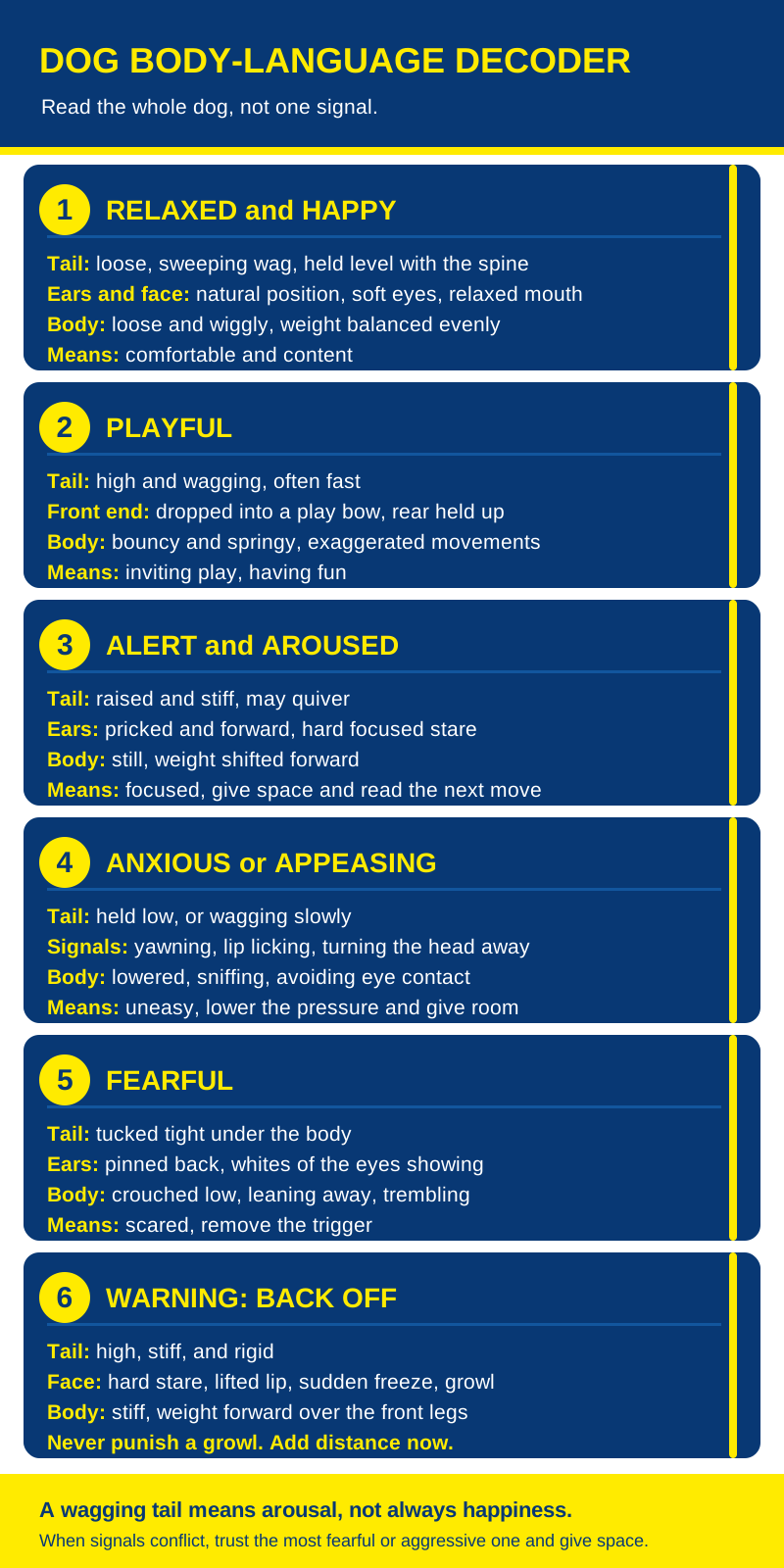
Dogs communicate mainly through body language, backed up by a smaller set of sounds. They use their tail, ears, eyes, mouth, posture, and movement to signal how they feel and what they are likely to do next. Reading these signals is the single most useful skill a dog owner can build, because it lets you spot a stressed or fearful dog before trouble starts. [6]
Read the whole dog, not one signal
The most common mistake people make is reading one body part in isolation. A wagging tail is the classic example. Tail wagging does not mean a dog is friendly. It means the dog is emotionally aroused, and that arousal can be happy, excited, nervous, or on the edge of aggression. To know which, you have to look at the rest of the dog at the same time. Loose, wiggly, and relaxed points to a comfortable dog. Stiff, still, and hard-eyed points to a dog who needs space. [6]
What the tail is really saying
Tail position and motion carry a lot of information. A tail held in a neutral, natural position usually signals a calm dog. A high, stiff tail with fast, tight wagging often signals arousal or a warning, while a low or tucked tail signals fear or appeasement. Researchers have even found that dogs wag more to the right side of the body when they see something they want to approach, such as their owner, and more to the left when they see something they would rather avoid. The lesson is the same either way. Watch how the tail moves and where it sits, not just whether it moves. [7]
Ears, eyes, and face
Ears held in their natural position suggest a relaxed dog, while ears pinned back or held rigidly forward suggest fear or intense focus. Soft eyes with a smooth brow read as calm. Hard, staring eyes, or a wide-eyed look that shows the whites in a half-moon shape often called whale eye, read as stressed or threatened. Around the mouth, a loose open pant is relaxed, while a tightly closed mouth, lifted lips, or a sudden freeze can be early warnings. A dog who yawns, licks his lips, or turns his head away when he is not tired or eating is often telling you he feels uneasy. [6]
Calming signals
Dogs use a set of gentle behaviors to defuse tension and tell others they mean no harm. These calming or appeasement signals include yawning, lip licking, turning the head or body away, sniffing the ground, slowing down, and sitting or lying down. When you learn to notice them, you can lower the pressure on your dog by giving space, softening your own body language, or removing whatever is worrying him. Punishing a dog who is showing these signals only teaches him that his polite warnings do not work, which can lead to bigger reactions later. [9]
Vocalizations
Barks, growls, whines, and howls all serve a purpose. Barking alerts, demands attention, greets, or expresses anxiety. Whining signals excitement, stress, or a request. Howling is a long-distance call and a social behavior. Growling is a warning, and it is one of the most important sounds a dog makes. A growl says the dog is uncomfortable and wants distance. Never punish it. A dog who learns that growling gets him in trouble may simply skip the growl next time and go straight to snapping, which removes your early warning system. Listen to the growl, identify what is worrying the dog, and change the situation. [5][6]
Normal behavior versus behavior problems
Barking, chewing, digging, jump
ing, mouthing, and chasing are all normal parts of being a dog. The reason they show up on lists of behavior problems is not that they are abnormal, but that they clash with living in a human home. A dog who chews is doing something every healthy dog does. A dog who chews the sofa has simply chosen the wrong object. [4]
This distinction matters because it changes the goal. You are almost never trying to stop a behavior entirely. You are redirecting a natural drive toward an acceptable outlet and, where possible, meeting the underlying need so the drive is satisfied. A behavior crosses into genuine problem territory when it is dangerous, when it is driven by fear or anxiety rather than simple instinct, or when it appears or worsens suddenly, which can point to a health issue. Those cases deserve closer attention and, often, professional help. [4][8]
How dogs learn
Dogs learn by consequences. Behaviors that earn something good, such as food, praise, play, or access to what the dog wants, tend to happen more often. Behaviors that earn nothing tend to fade. This simple principle is the foundation of reward-based, or positive reinforcement, training, and it is the approach most veterinary behavior experts recommend for all dogs, including those with behavior problems. Current evid
ence indicates that reward-based methods are effective and that harsh or aversive methods can damage a dog's welfare and harm the bond between dog and owner without working any better. [1]
It also helps to retire the old idea that behavior problems come from a dog trying to be dominant or the pack leader. Modern behavior science does not support the dominance model for pet dogs, and training built on confrontation or intimidation tends to increase fear and aggression rather than reduce it. Instead of asking how to show a dog who is boss, ask what the dog is getting out of a behavior and how to make the behavior you want more rewarding than the behavior you do not. Reward the good, manage the environment so mistakes are hard to make, and stay consistent. If you want to build these skills, a well-stocked dog training collection and a little daily practice go a long way. [1]
Common dog behavior problems and how to solve them

Below are the behavior problems dog owners ask about most. Each follows the same pattern: why dogs do it, what to do about it using reward-based methods, and when to seek help. Notice how often the fix comes back to meeting a need, whether that is exercise, mental stimulation, or clearer communication.
Excessive barking
Why they do it: Barking is normal communication. Dogs bark to alert, to guard territory, to greet, to demand attention, out of boredom, or out of anxiety. Some breeds were developed specifically to be vocal. Barking becomes a problem when it is frequent, prolonged, or triggered by things that do not warrant it.
What to do: Start by identifying the cause, because the fix depends on it. For alert barking at windows, manage the view with film or by moving furniture, and reward quiet. For attention barking, make sure the dog is not being rewarded with attention, even negative attention, and reward calm behavior instead. For boredom barking, add exercise and enrichment. Teach a positive interrupter and reward your dog for settling quietly. A tired, mentally satisfied dog barks far less.
When to get help: If barking is paired with panic when left alone, or with signs of fear, a certified trainer or veterinary behaviorist can help you build a plan.
Destructive chewing
Why they do it: Chewing is a natural, healthy canine behavior. Puppies chew to explore and to relieve teething discomfort, and adult dogs chew to keep busy, relieve stress, and satisfy a basic urge. Destructive chewing usually means the dog has energy or anxiety with no acceptable outlet.
What to do: Do not try to eliminate chewing. Redirect it. Provide a rotation of safe, appealing chew toys and reward your dog for using them. Puppy-proof the home so valuable items are out of reach while your dog learns the rules. Add exercise and mental work to burn energy. If the chewing happens only when your dog is alone and looks frantic, treat it as possible separation distress rather than simple boredom.
When to get help: Chewing that draws blood, breaks teeth, or targets the dog's own body needs a veterinary visit to rule out pain, anxiety, or a compulsive condition.
Digging
Why they do it: Dogs dig for many reasons: instinct, boredom, to cool off in hot weather, to chase burrowing animals, to bury or find something, or to escape the yard. Certain breeds are especially driven to dig.
What to do: Give the behavior a legal home. Create a designated digging spot, such as a sandbox, and make it rewarding by burying toys there. Meet the underlying need with more exercise and enrichment, and provide shade and water so a hot dog does not dig to cool down. If your dog is digging along the fence line to get out, that is an escape and containment issue as much as a digging one, and reliable containment options paired with more activity can help.
When to get help: Frantic, obsessive digging, especially indoors, can signal anxiety and is worth discussing with a professional.

Jumping up on people
Why they do it: Jumping up is a friendly greeting. Dogs do it to get close to our faces and because it usually earns attention, even if that attention is us pushing them off or telling them no.
What to do: Remove the reward and teach an alternative. When your dog jumps, turn away and give no attention. The moment four paws are on the floor, or your dog sits, reward warmly. Ask visitors to do the same, and set your dog up to succeed by keeping greetings calm. Teaching a solid sit as the default greeting gives your dog a clear, rewarding way to say hello.
When to get help: Jumping that knocks people over, or that comes with mouthing and overarousal you cannot interrupt, may benefit from a trainer's guidance.
Nipping, mouthing, and bite inhibition
Why they do it: Puppies explore the world with their mouths and play by wrestling and mouthing. It is normal, but it needs to be shaped so the adult dog is gentle and does not use teeth on people.
What to do: Teach bite inhibition, which is a soft mouth. During play, if your puppy mouths too hard, let out a short yelp or calmly end the game for a moment, then resume. This teaches that hard mouths stop the fun. Redirect teeth onto toys rather than hands, reward gentle behavior, and make sure your puppy has plenty of appropriate chew outlets and rest, since an overtired puppy nips more. Puppy classes are a great place to practice, and stocking up early from a new puppy collection makes this stage easier.
When to get help: Mouthing that is stiff, growly, or aimed at controlling people, rather than loose and playful, should be assessed by a professional.
Begging for food
Why they do it: Dogs are natural scavengers, and begging is a learned behavior that pays off. Every scrap handed over from the table teaches your dog that begging works.
What to do: Stop rewarding it and give your dog something better to do. Never feed from the table. Feed your dog his own meal at the same time you eat, or send him to a mat or bed with a food-stuffed toy so he has a rewarding job during your meals. Reward calm settling. Be prepared for the behavior to briefly get worse before it fades, since your dog will try harder before he gives up on a habit that used to work. Consistency from every family member is essential. A long-lasting food puzzle or treat toy keeps a hopeful dog happily occupied elsewhere.
When to get help: Sudden, intense food seeking or a big change in appetite can have medical causes and is worth a vet visit.
Chasing and prey drive
Why they do it: Chasing moving things is deep instinct. Dogs are hardwired to notice and pursue fast movement, whether that is squirrels, cats, cars, or joggers. Herding and hunting breeds tend to have especially strong drive.
What to do: Manage the environment first, because a dog in full chase is hard to reach. Keep your dog leashed or safely contained where chasing could be dangerous, and use secure containment at home. Build a strong recall and reward it generously, and give the chase drive a healthy outlet through fetch, flirt-pole play, or dog sports. Practicing impulse-control games teaches your dog to check in with you instead of launching after every moving target.
When to get help: Chasing that targets other animals or people with intent to harm is a serious safety matter and needs professional support right away.
Separation-related behavior
Why they do it: Dogs are social animals, and some struggle to cope when left alone. Separation anxiety is a genuine distress response, not misbehavior or spite. Signs include barking or howling soon after you leave, destructive behavior focused on exits, pacing, drooling, house soiling in a house-trained dog, and frantic greetings.
What to do: Build up alone time gradually and keep departures and arrivals low key. Give your dog a safe, comfortable space and a rewarding activity, such as a food toy, tied to your leaving. Make sure exercise and enrichment needs are met. Because true separation anxiety is a welfare issue that can be hard to resolve alone, this is one problem where early professional help pays off.
When to get help: If your dog panics when alone, works with a veterinarian or a veterinary behaviorist. Severe cases sometimes need a structured behavior plan and, on a veterinarian's advice, medication as part of treatment.
Boredom and under-stimulation
Why they do it: Many so-called behavior problems are really boredom in disguise. A dog without enough physical exercise and mental stimulation will invent his own entertainment, and that often means chewing, digging, barking, or general mischief.
What to do: Enrich your dog's daily life. Add walks, sniffing time, training games, and food puzzles. Rotate toys to keep them novel, and let your dog use his nose, which is deeply satisfying for dogs. Mental work tires a dog as effectively as a run. A well-exercised, mentally engaged dog is a calmer dog.
When to get help: If enrichment and exercise do not reduce the behavior, or the dog seems driven and unable to settle, ask a professional to look for anxiety or a compulsive pattern.
Pulling on the leash
Why they do it: Dogs naturally move faster than we walk and are eager to reach the next interesting smell. Pulling is self-rewarding, because it gets the dog where he wants to go.
What to do: Reward your dog for walking with a loose leash and stop moving forward when he pulls, so pulling no longer works. Reward check-ins and position at your side. Well-fitted walking equipment such as a front-clip harness can reduce pulling while you train, and the right harness or leash setup makes practice easier. For persistent pulling, dedicated no-pull training gear can support the process. Keep sessions short and upbeat.
When to get help: Pulling combined with lunging, barking, or reacting to other dogs or people is leash reactivity, which is a fear or arousal issue best addressed with a qualified trainer.
Socialization and play
Early experience shapes adult behavior. The sensitive period for socialization falls in the first few months of life, and puppies who have safe, positive exposure to a wide range of people, dogs, places, sounds, and handling before roughly fourteen weeks of age are far more likely to grow into confident, well-adjusted adults. Because this window closes early, veterinary behavior experts recommend starting positive socialization right away, alongside your veterinarian's guidance on health and vaccination. Well-run puppy classes are one of the best places to do this. [1][3]
Play is both a joy and a language. Healthy dog play is loose, bouncy, and full of pauses, and dogs signal their friendly intent with the play bow, front end down and rear up. Good play includes role reversals, where dogs take turns chasing and being chased, and self-handicapping, where a bigger dog holds back. Watch for balance. If one dog is always on the bottom, hiding, or trying to leave, or if the play turns stiff and silent, it is time to calmly interrupt and give both dogs a break. Learning to read these signals lets you keep playtime fun and safe.
Dog bites and safety
Understanding behavior is also about safety. Millions of people are bitten by dogs each year, and about half of bite victims are children. Many bites to children come from a dog the child already knows, often in the family's own home, which is why supervision and education matter so much. Any dog can bite given the wrong circumstances, regardless of breed, and leading veterinary and animal organizations oppose judging dogs by breed alone. [2]
Most bites are preventable. Never leave young children and dogs together unsupervised, even with a gentle family dog. Teach children to leave a dog alone while it eats, sleeps, or chews, and to ask before greeting an unfamiliar dog. Above all, learn to read the early warning signs covered earlier, such as a stiff body, hard stare, lifted lip, freezing, or a growl, and give the dog space when you see them. A dog who bites has almost always been signaling discomfort first. Listening to those signals, and never punishing the growl that warns you, is the best bite prevention there is. [2][5]
When behavior change signals a health problem
One of the most important lessons in dog behavior is that a sudden change can be a medical warning sign. Pain and illness frequently show up first as behavior. A dog in pain may become irritable, reluctant to be touched, restless, house soil, or stop doing things he used to enjoy. Research on cases seen by veterinary behaviorists has found that a large share, by conservative estimates around a third and in some caseloads much higher, involve an underlying painful condition. [8]
The practical rule is simple. Before you treat any new or worsening behavior as a training issue, rule out a health cause with your veterinarian. This is especially true for sudden aggression, a house-trained dog who starts soiling, new anxiety, changes in appetite or sleep, or any abrupt shift in personality. Behavior and health are deeply connected, and the kindest, most effective first step is often a checkup. [4][8]
When to call a professional
Plenty of everyday behavior can be shaped at home with patience and rewards, but some situations call for expert help, and reaching out early is a sign of a responsible owner, not a failure. Here is how the main types of help differ:
- Certified dog trainers teach skills and manners and help with common behaviors using reward-based methods. Look for trainers who use positive reinforcement and hold recognized, humane-focused credentials.
- Certified applied animal behaviorists have advanced training in animal behavior and take on more complex cases, often working alongside your veterinarian.
- Veterinary behaviorists are veterinarians with board certification in behavior. They can diagnose behavioral conditions, address the medical side, and prescribe medication when it is appropriate as part of a treatment plan.
Seek professional help promptly for aggression toward people or animals, intense fear or anxiety, separation distress, or any behavior that puts someone at risk. Start with your veterinarian, who can rule out medical causes and refer you to the right specialist. [10]

Frequently asked questions
What is normal dog behavior?
Normal dog behavior includes barking, chewing, digging, jumping, mouthing, sniffing, and chasing, along with a rich set of body-language signals. These behaviors are instinctive and healthy. They are only considered problems when they do not fit the home, become dangerous, or are driven by fear, anxiety, or illness. [4]
How do I read my dog's body language?
Read the whole dog at once rather than one signal. Look at the tail, ears, eyes, mouth, and overall posture together. Loose, wiggly, and soft usually means relaxed, while stiff, still, and hard-eyed means the dog needs space. Watch for calming signals such as yawning, lip licking, and turning away, which show a dog feels uneasy. [6][9]
Does a wagging tail always mean a happy dog?
No. A wagging tail means the dog is emotionally aroused, which can be happy, excited, nervous, or agitated. Tail height, stiffness, and speed, along with the rest of the body, tell you which. A high, stiff, fast wag can be a warning, while a loose, sweeping wag on a relaxed body is friendly. [6][7]
Why does my dog bark so much?
Dogs bark to alert, guard, greet, demand attention, or express boredom or anxiety. The fix depends on the cause. Manage triggers such as window views, avoid rewarding attention barking, add exercise and enrichment for boredom, and reward quiet. Excessive barking tied to being left alone may signal separation distress. [5]
How do I stop my dog from chewing everything?
You redirect chewing rather than stopping it, since it is a normal, healthy behavior. Provide appealing chew toys, reward your dog for using them, puppy-proof the home, and add exercise and mental stimulation. Chewing that happens only when your dog is alone and looks frantic may be separation distress. [5]
Why does my dog dig?
Dogs dig from instinct, boredom, to cool off, to chase animals, or to escape. Give the behavior an outlet with a designated digging area, meet the underlying need with more activity and enrichment, provide shade and water, and address any escape attempts along the fence line with secure containment. [5]
How do I stop my dog jumping on people?
Remove the reward and teach an alternative. Turn away and ignore jumping, then reward your dog the instant all four paws are on the floor or he sits. Teach a sit as the default greeting and ask visitors to follow the same rule so your dog learns that calm greetings earn attention. [5]
Why does my puppy bite so much?
Puppies explore and play with their mouths, so mouthing and nipping are normal. Teach bite inhibition by ending play briefly when teeth are too hard, redirect onto toys, reward gentle mouths, and ensure enough rest, since tired puppies nip more. Puppy classes help. Stiff or growly biting should be assessed by a professional. [5]
What are the signs of separation anxiety in dogs?
Common signs include barking or howling soon after you leave, destructive behavior aimed at doors or windows, pacing, drooling, house soiling in a house-trained dog, and frantic greetings. True separation anxiety is a genuine distress response. Because it can be hard to resolve alone, early help from a veterinarian or veterinary behaviorist is valuable. [11]
When should I see a vet or behaviorist about my dog's behavior?
See your veterinarian promptly for any sudden or worsening behavior change, since pain and illness often show up as behavior first. Also seek help for aggression, intense fear or anxiety, or separation distress. Your veterinarian can rule out medical causes and refer you to a qualified trainer, applied animal behaviorist, or veterinary behaviorist. [8][10]
Citations and sources
- American Veterinary Society of Animal Behavior, Position Statement on Humane Dog Training. avsab.org
- American Veterinary Medical Association, Preventing dog bites. avma.org
- Merck Veterinary Manual, Behavior of Dogs. merckvetmanual.com
- VCA Animal Hospitals, Dog Behavior: Normal and Problem Behaviors. vcahospitals.com
- ASPCA, Common Dog Behavior Issues. aspca.org
- American Kennel Club, How to Read Dog Body Language. akc.org
- Quaranta A, Siniscalchi M, Vallortigara G. Asymmetric tail-wagging responses by dogs to different emotive stimuli. Current Biology, 2007. cell.com
- Mills DS, Demontigny-Bedard I, Gruen M, et al. Pain and Problem Behavior in Cats and Dogs. Animals, 2020. mdpi.com
- Rugaas T. On Talking Terms With Dogs: Calming Signals. dogwise.com
- American College of Veterinary Behaviorists. dacvb.org
- American Animal Hospital Association, Separation anxiety guidance. aaha.org
- Fear Free Pets, Reducing fear, anxiety, and stress in pets. fearfreepets.com
This article is educational and is not a substitute for individualized advice from your veterinarian or a qualified behavior professional.


Get Email Updates
Subscribe to the latest news, promotions, & more from PetSafe® brand.
Sign up today for the latest news, promotions, and more from PetSafe® brand.