November 3, 2026
PetSafe® Expert
PetSafe® Guest
Senior Pet Care: A Complete Guide for Older Dogs and Cats
Senior pet care is the extra veterinary attention, nutrition, comfort, and home support that dogs and cats need in the later stage of life. Most dogs become seniors somewhere between 6 and 11 years old depending on their size, and cats are considered seniors after age 10. Senior pets should see a veterinarian at least twice a year so problems are caught early, while they are easier to manage [1][2].
Each November, veterinary groups observe Senior Pet Health Month and shelters promote Adopt a Senior Pet Month, which makes it a natural time to book a senior checkup or welcome an older pet home [3]. The habits in this guide matter all year, though, from the first gray whisker to the final goodbye.
Key Points
- Age is not a disease. Many senior pets stay active and happy for years with the right care [2].
- When a dog becomes a senior depends on size. Giant breeds can be seniors at 6, while small breeds may not get there until 8 to 11 [2].
- Cats are seniors after age 10, and they are very good at hiding illness [4][5].
- Plan on a veterinary exam every six months, with bloodwork and urine testing every 6 to 12 months [1].
- Never give a pet ibuprofen, acetaminophen, or other human pain relievers unless your veterinarian prescribes them [6].
- Simple home changes such as non-slip rugs, ramps, low-entry litter boxes, and night lights make daily life easier for older pets [1].
In This Guide
- When Is a Dog or Cat Considered a Senior?
- Signs Your Pet Is Getting Older
- Senior Vet Visits: What to Expect
- Common Health Problems in Senior Dogs and Cats
- Pain in Senior Pets
- Nutrition and Weight for Senior Pets
- Exercise and Mental Enrichment
- How to Make Your Home Senior-Friendly
- Quality of Life and End-of-Life Care
- Why Adopt a Senior Pet?
- Senior Pet Health Month and Adopt a Senior Pet Month
- Senior Pet Care Checklist
- Frequently Asked Questions

When Is a Dog or Cat Considered a Senior?
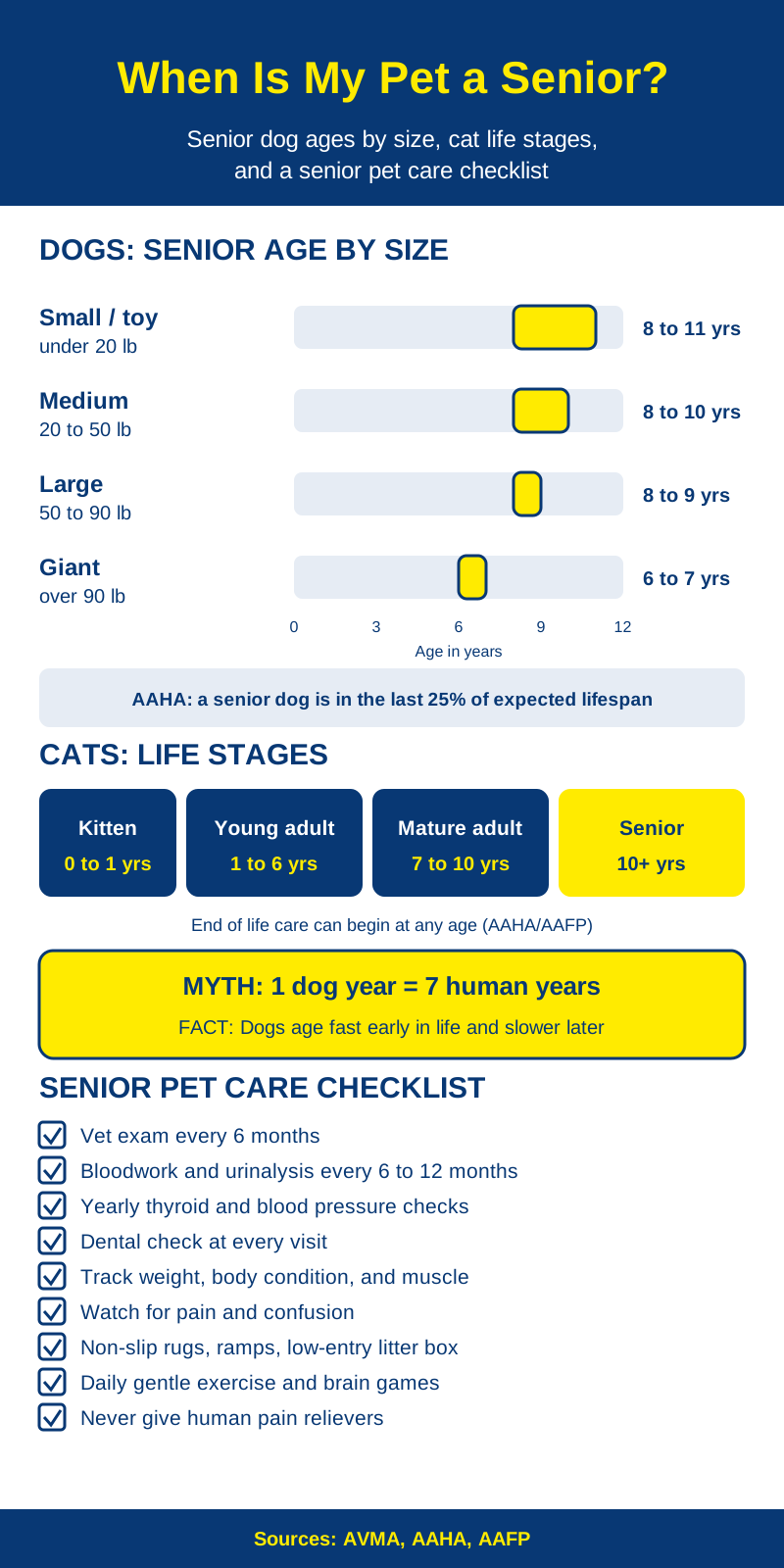
No single birthday turns a pet into a senior. Veterinarians define the senior stage by species and expected lifespan. The American Animal Hospital Association (AAHA) defines a senior dog as one in the last 25 percent of its estimated lifespan, and a senior cat as one older than 10 years [1].
Senior Dog Age by Size
Large dogs generally have shorter lifespans than small dogs, so they reach their senior years sooner. The American Veterinary Medical Association (AVMA) uses these ranges [2]:
- Small or toy breeds (under 20 pounds): senior at 8 to 11 years
- Medium breeds (20 to 50 pounds): senior at 8 to 10 years
- Large breeds (50 to 90 pounds): senior at 8 to 9 years
- Giant breeds (over 90 pounds): senior at 6 to 7 years
Other organizations publish slightly different ranges, so treat these as a guide rather than a rule. Your veterinarian can estimate where your dog falls based on breed, size, and health history.
Cat Life Stages
The 2021 AAHA and American Association of Feline Practitioners (AAFP) guidelines divide a cat's life into four stages, plus end of life [4]:
- Kitten: birth to 1 year
- Young adult: 1 to 6 years
- Mature adult: 7 to 10 years
- Senior: older than 10 years
- End of life: any age
Older advice often called cats seniors at 7. Under current guidelines, ages 7 to 10 are the mature adult years, which is a good time to start watching closely for early changes.
Senior vs. Geriatric
"Senior" is a life stage. "Geriatric" is an informal term many veterinarians use for the oldest seniors, or for pets whose bodies have less reserve to bounce back from illness. AAHA calls that loss of reserve frailty [1]. There is no official age cutoff between the two, so ask your veterinarian how they classify your pet.
Why "One Dog Year Equals Seven Human Years" Is a Myth
The seven-year rule is a myth [2]. A 2020 study from the University of California San Diego tracked age-related DNA changes in Labrador retrievers and found that dogs age very quickly early in life and more slowly later. By that measure, a 1-year-old dog is roughly comparable to a 31-year-old person [7]. The study looked at a single breed, so size and breed still matter for any individual dog.
Signs Your Pet Is Getting Older
Some changes are a normal part of aging, and others are early warning signs that deserve a veterinary visit. The tricky part is that many medical problems look like "just getting old" [1].
Normal Aging Changes
- Graying fur around the muzzle and eyes
- Sleeping more and playing a little less
- Some gradual loss of hearing or vision [2]
- Taking a bit longer to get moving after a nap
Changes to Report to Your Veterinarian
- Drinking or urinating more than usual
- Weight loss or gain without a change in diet
- Stiffness, limping, or avoiding stairs, jumps, or car rides
- Bad breath, drooling, or trouble chewing
- New lumps, sores that do not heal, or persistent vomiting or diarrhea [2]
- Confusion, nighttime restlessness, or new accidents in the house
- Any change in litter box habits in cats
Cats deserve extra attention here. The Cornell Feline Health Center notes that cats are experts at hiding illness, and a cat can have a serious medical problem without showing signs until it is advanced [5]. A simple log of your pet's eating, drinking, bathroom habits, energy, and sleep gives your veterinarian useful details at every visit.
Senior Vet Visits: What to Expect
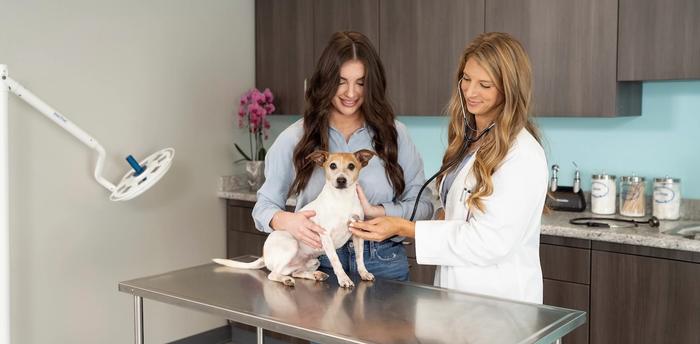
Senior pets should see a veterinarian at least twice a year [2]. The AAHA and AAFP feline guidelines increase exams to every six months once a cat reaches the senior stage [4]. Pets age faster than people, so six months can bring real change. Our guide to pet wellness exams walks through what happens at each visit.
Screening Tests for Senior Dogs and Cats
AAHA's 2023 Senior Care Guidelines recommend this screening schedule for healthy seniors [1]:
- Bloodwork and urinalysis: complete blood count, chemistry panel, and urinalysis every 6 to 12 months
- Thyroid test (T4): recommended annually for dogs and strongly recommended annually for cats
- Blood pressure: annually, and every 6 to 12 months for healthy geriatric cats
- Fecal testing: one to four times a year for dogs and one to two times a year for cats
- Heartworm and tick-borne disease testing: annually for dogs
- Cardiac blood test (NT-proBNP): annually and before anesthesia
Your veterinarian may add tests based on breed, symptoms, or an upcoming procedure.
Dental Care and Anesthesia
Periodontal disease becomes more common as dogs age, especially in smaller breeds, and AAHA recommends an oral exam at every visit [1]. Many pet parents worry that an older pet is too old for a dental cleaning under anesthesia. According to AAHA, advanced age alone is not a reason to avoid anesthesia, and senior pets can safely undergo it when needed [1]. Pre-anesthetic bloodwork helps your veterinarian plan a safe procedure.
Vaccines and Parasite Prevention
Senior pets still need vaccines. AAHA's canine vaccination guidelines do not set an age to stop core vaccines. Core boosters are typically given every three years, rabies follows local law, and lifestyle vaccines depend on your dog's risk [8]. For cats, the AAHA and AAFP vaccination guidelines say standard protocols should continue in seniors, with vaccines given neither less nor more often than usual [9].
Parasite prevention matters too. Older pets have weaker immune systems and may not fight off parasites or heal as quickly [2]. Keep up flea, tick, and heartworm prevention as your veterinarian recommends.
Common Health Problems in Senior Dogs and Cats
Aging raises the risk of several conditions. Catching them early usually means more treatment options and more comfortable years.
Arthritis
Osteoarthritis is one of the most common problems in older pets. AAHA's pain management guidelines put reported prevalence close to 40 percent in dogs and above 50 percent in cats [10]. Cats rarely limp. Instead, an arthritic cat may stop jumping onto favorite perches, groom less, or have trouble climbing into the litter box [1].
Dental Disease
Painful teeth and gums can make an older pet eat less, drop food, or chew on one side. Regular oral exams and professional cleanings keep dental disease from quietly affecting appetite and comfort [1].
Kidney Disease
Chronic kidney disease affects up to 40 percent of cats over age 10 and 80 percent of cats over age 15, according to the Cornell Feline Health Center [11]. Standard bloodwork values may not rise until roughly 75 percent of kidney function is lost, while a newer test called SDMA can flag a problem earlier [11]. Increased thirst and urination are classic early signs, and good daily water intake matters. Our tips on how to keep your pet hydrated can help.
Hyperthyroidism and High Blood Pressure in Cats
Hyperthyroidism is the most common hormone disorder in cats, affecting up to 11.4 percent of cats over 9 years old [12]. Common signs include weight loss despite a big appetite, increased thirst, and vomiting. High blood pressure often travels with kidney disease and hyperthyroidism. At least 60 percent of cats diagnosed with hypertension also show signs of chronic kidney disease [13], which is why AAHA strongly recommends annual blood pressure checks for senior cats [1].
Diabetes, Heart, and Liver Disease
AVMA lists diabetes, heart disease, and liver disease among the problems that become more common in aging pets [2]. Increased thirst, increased urination, and weight changes can point to several of these conditions, which is one reason routine bloodwork matters. Your veterinarian also listens for heart murmurs and rhythm changes at every exam [1].
Cancer
AVMA reports that cancer is the cause of death in almost half of dogs and about a third of cats over 10 years old [2]. Warning signs include lumps, abdominal swelling, bleeding, sores that do not heal, weight loss, persistent vomiting or diarrhea, difficulty eating, swallowing, or breathing, and unexplained lameness [2]. Feel for new lumps whenever you brush or pet your senior, and have any new or changing lump checked.
Vision and Hearing Loss
Some loss of sight and hearing is normal with age [2]. Most pets adapt well, especially when their surroundings stay predictable. For practical help, see our guides to living with a blind dog and keeping a deaf dog safe.
Cognitive Dysfunction
Cognitive dysfunction syndrome is an age-related decline in brain function, similar in some ways to dementia in people. AAHA estimates that 14 to 22.5 percent of dogs older than 8 are affected [1]. One study found that 14.2 percent of older dogs showed signs, but only 1.9 percent had been diagnosed by a veterinarian [14]. Veterinarians use the acronym DISHAA to describe the signs [1]:
- Disorientation: seeming lost or confused in familiar places
- Interactions: changes in how your pet relates to family members or other pets
- Sleep-wake cycles: sleeping more during the day and restless at night
- House-soiling: accidents in a previously house-trained pet
- Activity: less purposeful activity, or more pacing and wandering
- Anxiety: new fears, clinginess, or restlessness
Cats with cognitive changes often become more vocal [1]. Treatment tends to work best when it starts early, so mention any of these signs at your next visit.
Pain in Senior Pets
Do Dogs and Cats Hide Pain?
Yes, often. AAHA notes that pet parents frequently mistake signs of chronic pain for normal aging [1]. Dogs and cats cannot tell us they hurt, and cats in particular tend to mask discomfort [5].
Signs of Pain in Older Pets
- Dogs: favoring a leg, stiffness, trouble sitting or standing, sleeping more, not wanting to be touched, playing less, unusual grumpiness, and avoiding stairs, jumps, or car rides [2]
- Cats: jumping less or choosing lower perches, grooming less, accidents near the litter box, hiding more, and irritability when handled [1]
A short video of your pet moving around the house can help your veterinarian see what you see at home [1].
Vet-Guided Pain Relief
The most effective plans combine several approaches, an approach veterinarians call multimodal pain management [10]:
- Weight management: less body weight means less load on sore joints
- Omega-3 fatty acids: shown to have anti-inflammatory effects in arthritic joints [1]
- Prescription medication: anti-inflammatory and other pain medications prescribed and monitored by your veterinarian. No NSAID is approved for long-term use in cats in the United States, so cats need a tailored plan [10]
- Monthly injections: a newer class of FDA-approved antibody injections helps control osteoarthritis pain in both dogs and cats [15][16]
- Physical rehabilitation: exercise therapy, hydrotherapy, acupuncture, and manual therapy [1]
- Home support: non-slip rugs, ramps, and a well-fitted, padded dog harness to steady wobbly steps [1]
Can Dogs Take Ibuprofen?
No. Never give a dog or cat ibuprofen, naproxen, aspirin, or acetaminophen unless your veterinarian directs it. The Merck Veterinary Manual warns that ibuprofen has a narrow margin of safety in pets and can cause stomach ulcers and kidney damage, and cats are even more sensitive than dogs [6]. Cornell University's veterinary pharmacy lists acetaminophen as unsafe for cats at any dose [17]. If your pet swallows a human medication, call your veterinarian or the ASPCA Animal Poison Control Center at (888) 426-4435 right away [18].
Nutrition and Weight for Senior Pets
Senior dogs and cats often face opposite weight problems. AVMA notes that weight gain is the bigger risk for senior dogs, while weight loss is the bigger concern for senior cats [2].
Senior Dogs: Watch for Weight Gain
Most dogs need fewer calories as they age and slow down [1]. Staying lean pays off. In a landmark study of Labrador retrievers, dogs fed 25 percent less than their littermates lived a median of 1.8 years longer and developed arthritis later [19]. Our guide on how much your dog should weigh explains body condition scoring step by step. A consistent mealtime routine also helps, and programmable automatic dog feeders make measured portions easy to keep on schedule.
Senior Cats: Protect Weight and Muscle
A cat's energy needs tend to decrease until about age 10 and then start to increase [1]. Many older cats also digest protein and fat less efficiently, and AAHA notes that senior pets, particularly cats, may need up to 50 percent more protein [1]. Unexplained weight loss in an older cat is always a reason to see your veterinarian, because it can signal hyperthyroidism, kidney disease, diabetes, or cancer [2]. Our guide on how much your cat should weigh shows how to check body condition at home.
Do Senior Pets Need Senior Food?
Not automatically. There are no official AAFCO nutrient standards for senior diets, so "senior" formulas vary widely from one food to the next [1]. Healthy seniors generally do not need protein restriction, and kidney diets are typically reserved for pets diagnosed with kidney disease [1]. Ask your veterinarian to score your pet's body and muscle condition before you switch foods.
Hydration
Good hydration supports aging kidneys, and AAHA calls maintaining hydration imperative for pets with kidney disease [1]. Adding moisture to food can help, and AAHA notes it improved nutrient digestibility in senior dogs [1]. Many cats drink more from moving water, so cat water fountains placed in easy-to-reach spots are a simple way to encourage drinking.
Exercise and Mental Enrichment
Regular, gentle exercise helps senior pets keep muscle and strength, manage weight, and ease joint pain. Start slowly and focus on consistency rather than intensity [20].
Low-Impact Exercise Ideas
- Shorter, more frequent walks: two or three easy outings often work better than one long one
- Sniff walks: let your dog set a slower pace and explore scents, which tires the brain as well as the body
- Swimming or hydrotherapy: water supports body weight while muscles work [1]
- Floor-level play for cats: wand toys dragged along the floor keep older cats moving without big jumps
For age-appropriate activity targets, see our guide on how much exercise a dog needs.
Brain Games and Training
Mental exercise matters as much as physical exercise. AAHA reports that diets for cognitive dysfunction worked best when combined with enrichment such as exercise, new toys, cognitive games, and training [1]. Food puzzles, short training sessions, and rotating dog toys or cat toys keep an older mind engaged. Yes, an old dog can learn new tricks.
Sleep Changes
Senior pets sleep more, and that is normal. Being awake and restless at night while sleeping through the day, however, can signal cognitive decline [1]. Daytime activity, access to sunlight, a predictable bedtime routine, night lights, and sound machines can all help [1].

How to Make Your Home Senior-Friendly
Small changes at home can add up to big gains in comfort and confidence. Our senior dog essentials and senior cat essentials collections gather many helpful options in one place.
Mobility and Comfort
- Non-slip footing: rugs or yoga mats over hardwood and tile give paws better grip [1]
- Ramps and steps: help pets reach couches, beds, and cars without jarring jumps [2]. Pets with shorter legs often do better with ramps, while steps fit narrow spaces where a ramp would be too steep. Browse dog mobility aids for options.
- Supportive beds: orthopedic beds placed where your pet does not have to climb stairs to reach them [2]
- Traction help: regular nail trims, plus toe grips, boots, or socks for pets who slip [1][20]
- Safety gates: barriers at stairs and pools prevent falls [1]
Litter Boxes and Feeding Stations
- Low-entry litter boxes: lower sides are easier for stiff joints to step over [1]. See our cat litter boxes for options.
- One-floor living: keep food, water, litter, and bedding on the main floor where your pet spends most of the day [20]
- Raised bowls: elevated food and water bowls can make mealtime easier for dogs with stiff necks or joints [1][2]
Vision and Hearing Loss Adaptations
- Keep the layout the same: moving furniture can confuse a pet who navigates by memory
- Use scent and texture cues: different rugs or a light scent near doorways and stairs help a pet with low vision find their way
- Announce yourself: speak softly or let your pet sniff your hand before touching, so you never startle them
- Teach hand signals early: visual cues make communication easier if hearing fades [2]
- Add night lights and quiet the doorbell: AAHA suggests night lights and front door signs asking guests not to ring the bell [1]
Temperature and Comfort
Older pets often struggle more with heat and cold. AAHA lists temperature control and access to sunlight among helpful home changes [1]. Offer a warm, draft-free bed in winter and a cool, shaded spot in summer.
Grooming
Arthritis can make it hard for older pets, especially cats, to groom themselves, which can lead to matted or greasy fur. Regular, gentle brushing and nail care help, and brushing time doubles as a chance to check for lumps [1]. If grooming trips cause stress, AAHA suggests considering a mobile groomer who comes to your home [1]. When you choose a groomer, ask about their experience with senior pets, how they handle stiff joints, and whether they allow breaks during the appointment.
Quality of Life and End-of-Life Care
Every senior pet's story eventually turns toward end-of-life decisions. Planning ahead, while your pet is still comfortable, makes the hardest choices a little clearer.
Track Good Days and Bad Days
AAHA suggests keeping a calendar or journal and marking each day as good or bad [1]. Many veterinarians also use the HHHHHMM quality-of-life scale, developed by veterinary oncologist Dr. Alice Villalobos. It scores Hurt, Hunger, Hydration, Hygiene, Happiness, Mobility, and More good days than bad, each on a scale of 0 to 10. AAHA notes that most quality-of-life scales found online have not been scientifically validated [1], so use the scale as a conversation starter with your veterinarian rather than a final answer.
Palliative and Hospice Care
Palliative care focuses on comfort and can be provided alongside treatment. Hospice is the final stage of palliative care, when the goal shifts fully to comfort [1]. Some veterinarians offer in-home hospice visits and in-home euthanasia, which many families find more peaceful for their pet.
Is It Too Early to Say Goodbye?
AVMA describes euthanasia as one of the most difficult and kindest decisions a pet parent can make, and notes that the timing is a personal decision your veterinarian can help guide [2]. AAHA notes that open, compassionate conversations about serious illness may reduce the likelihood of premature or difficult euthanasia [1]. Many veterinarians tell families that choosing a peaceful goodbye a little early is kinder than waiting for a crisis. Feeling guilt or doubt is normal, and it reflects how much you love your pet.

Why Adopt a Senior Pet?
Older shelter pets often wait longer for homes. According to the ASPCA, senior dogs have a 25 percent adoption rate, compared with 60 percent for younger dogs and puppies [21]. That is a missed opportunity, because senior pets offer a lot:
- Known personality: what you see at the shelter is what you bring home
- Known size: no guessing how big a puppy will grow
- Often house-trained: many seniors already know household routines
- Calmer energy: a great match for quieter homes and first-time pet parents
Plan for twice-yearly veterinary visits and ask the shelter about any known health conditions. Our guide on how to adopt a pet walks through the full process.
Senior Pet Health Month and Adopt a Senior Pet Month
November does double duty for older pets. Senior Pet Health Month grew out of a veterinary campaign led by the group Senior Pet Advocates to dedicate November to the health needs of aging dogs and cats [22]. AVMA now lists both Senior Pet Health Month and Adopt a Senior Pet Month on its November awareness calendar [3]. Adopt a Senior Pet Month, often credited to animal welfare and adoption organizations, puts older shelter pets in the spotlight during the same month.
Ways to mark the month:
- Book a senior wellness exam and ask about screening bloodwork
- Start a good-day and bad-day calendar for your pet
- Walk through your home and add one comfort upgrade, such as a ramp or non-slip rug
- Adopt, foster, or donate to a shelter that cares for senior pets
Senior Pet Care Checklist
Use this quick checklist to keep your senior pet's care on track:
- Schedule a veterinary exam every six months
- Ask about bloodwork and urinalysis every 6 to 12 months
- Check thyroid levels and blood pressure yearly, especially in cats
- Have teeth and gums checked at every visit
- Track weight, body condition, and muscle at home
- Watch for pain, confusion, and changes in thirst or bathroom habits
- Add non-slip rugs, ramps or steps, and a low-entry litter box
- Offer daily gentle exercise and brain games
- Never give human pain relievers without your veterinarian's direction
- Keep a good-day and bad-day calendar as your pet ages
Frequently Asked Questions
What age is a dog considered a senior?
It depends on size. AVMA considers small dogs under 20 pounds seniors at 8 to 11 years, medium dogs at 8 to 10, large dogs from 50 to 90 pounds at 8 to 9, and giant dogs over 90 pounds at 6 to 7. AAHA defines a senior dog as one in the last 25 percent of its expected lifespan.
At what age is a cat considered a senior?
The 2021 AAHA and AAFP Feline Life Stage Guidelines classify cats older than 10 years as seniors, with ages 7 to 10 considered mature adults. Senior cats should have a veterinary exam every six months, because cats often hide illness until it is advanced.
How often should a senior pet see the vet?
At least twice a year. AVMA recommends twice-yearly visits or more for senior pets, and AAHA recommends bloodwork and urinalysis every 6 to 12 months, plus yearly thyroid and blood pressure checks. Your veterinarian may suggest more frequent visits if your pet has a chronic condition.
Do senior dogs and cats still need vaccines?
Yes. AAHA's canine guidelines do not set an age to stop core vaccines, which are typically boosted every three years, with rabies given as required by law. For cats, AAHA and AAFP guidelines say standard vaccination should continue in seniors. Your veterinarian will tailor lifestyle vaccines to your pet's risk.
Can I give my dog ibuprofen for pain?
No. The Merck Veterinary Manual advises against giving pets ibuprofen, naproxen, aspirin, or acetaminophen unless a veterinarian directs it. Ibuprofen can cause stomach ulcers and kidney damage, and acetaminophen is unsafe for cats at any dose. If your pet swallows a human medication, call your veterinarian or a pet poison control line right away.
Do dogs and cats hide pain?
Often, yes. AAHA notes that pet parents frequently mistake chronic pain for normal aging. Watch for stiffness, reluctance to jump or climb stairs, sleeping more, irritability, grooming less, and litter box changes in cats. Osteoarthritis affects close to 40 percent of dogs and more than 50 percent of cats.
Is one dog year equal to seven human years?
No. AVMA calls the seven-year rule a myth. A 2020 University of California San Diego study of Labrador retriever DNA found that dogs age quickly early in life and more slowly later, so a 1-year-old dog is roughly comparable to a 31-year-old person. Size and breed also affect aging.
What are the signs of dementia in older dogs and cats?
Veterinarians use the acronym DISHAA: disorientation, changes in social interactions, sleep-wake changes such as nighttime restlessness, house-soiling, activity changes, and anxiety. Cats often become more vocal. One study found 14.2 percent of older dogs showed signs of cognitive dysfunction, but only 1.9 percent had been diagnosed.
How do I know when it is time to say goodbye to my senior pet?
It is a personal decision your veterinarian can help guide. Tracking good and bad days on a calendar and using a quality-of-life scale such as HHHHHMM, which scores hurt, hunger, hydration, hygiene, happiness, mobility, and more good days than bad, can help you see patterns over time. Palliative or hospice care can support comfort along the way.
Should senior pets eat senior food?
Not automatically. There are no official AAFCO nutrient standards for senior diets, so senior formulas vary widely. Senior dogs often need fewer calories, while many senior cats need more digestible, higher-protein food to prevent muscle loss. Ask your veterinarian to check body and muscle condition before switching.
Citations and Sources
- American Animal Hospital Association, "2023 AAHA Senior Care Guidelines for Dogs and Cats," Journal of the American Animal Hospital Association. aaha.org
- American Veterinary Medical Association, "Caring for senior cats and dogs." avma.org
- American Veterinary Medical Association, "Pet health and veterinary awareness events." avma.org
- American Animal Hospital Association and American Association of Feline Practitioners, "2021 AAHA/AAFP Feline Life Stage Guidelines: Feline Life Stage Definitions." aaha.org
- Cornell Feline Health Center, "The Special Needs of the Senior Cat." vet.cornell.edu
- Merck Veterinary Manual, "Poisoning from Human Over-the-Counter Drugs." merckvetmanual.com
- Wang T, et al., "Quantitative Translation of Dog-to-Human Aging by Conserved Remodeling of the DNA Methylome," Cell Systems, 2020. idekerlab.ucsd.edu
- American Animal Hospital Association, "2022 AAHA Canine Vaccination Guidelines: Recommendations for Core and Noncore Canine Vaccines." aaha.org
- American Animal Hospital Association and American Association of Feline Practitioners, "2020 AAHA/AAFP Feline Vaccination Guidelines: Frequently Asked Questions." aaha.org
- American Animal Hospital Association, "2022 AAHA Pain Management Guidelines for Dogs and Cats," Journal of the American Animal Hospital Association, 2022. jaaha.kglmeridian.com
- Cornell Feline Health Center, "Chronic Kidney Disease." vet.cornell.edu
- Geddes R, Aguiar J, "Feline Comorbidities: Balancing Hyperthyroidism and Concurrent Chronic Kidney Disease," Journal of Feline Medicine and Surgery, 2022. doi.org
- Cornell Feline Health Center, "Hypertension." vet.cornell.edu
- Salvin HE, et al., "Under Diagnosis of Canine Cognitive Dysfunction: A Cross-Sectional Survey of Older Companion Dogs," The Veterinary Journal, 2010. sciencedirect.com
- U.S. Food and Drug Administration, "FDA Approves First Monoclonal Antibody for Dogs with Osteoarthritis Pain." fda.gov
- U.S. Food and Drug Administration, "FDA Approves Novel Treatment to Control Pain in Cats with Osteoarthritis." fda.gov
- Cornell University Hospital for Animals Pharmacy, "Small Animal Toxins." vet.cornell.edu
- ASPCA, "Animal Poison Control Center." aspca.org
- Kealy RD, et al., "Effects of Diet Restriction on Life Span and Age-Related Changes in Dogs," Journal of the American Veterinary Medical Association, 2002. doi.org
- ASPCA, "5 Expert Tips for Caring for Senior Pets." aspca.org
- ASPCA, "Four Reasons to Open Your Mind to Older Pets." aspca.org
- AVMA News, "Push to Make November Official Senior Pet Health Month." avma.org
Last modified: November 3, 2026


Get Email Updates
Subscribe to the latest news, promotions, & more from PetSafe® brand.
Sign up today for the latest news, promotions, and more from PetSafe® brand.