PetSafe® Expert
PetSafe® Guest
How Much Exercise Does My Dog Need?
Key Points
- Most healthy adult dogs need 30 minutes to 2 hours of activity a day. Where your dog falls depends on breed, age, and health.
- Most dogs do best with at least two walks a day, and many benefit from three, plus daily mental stimulation.
- Puppies need short, frequent play rather than long forced walks, and large-breed puppies should avoid high-impact exercise while their joints develop.
- Exercise supports a healthy weight, calmer behavior, and a stronger bond, and it is good for you too.
- Heat is a real risk. In dogs, most heatstroke follows exercise rather than hot cars, so walk during the cool parts of the day and check the pavement first.
Table of Contents
- Quick answer: how much exercise does a dog need?
- How often should I walk my dog?
- Dog exercise needs by breed group
- Exercise needs by life stage
- Why exercise matters
- Physical exercise vs. mental stimulation
- Signs your dog needs more, or too much, exercise
- Exercising safely in hot and cold weather
- Indoor exercise ideas for bad-weather days
- Gear that makes daily walks easier
- Frequently asked questions
- Citations and sources
Quick Answer: How Much Exercise Does a Dog Need?
Most healthy adult dogs need between 30 minutes and 2 hours of physical activity every day. The right amount depends on breed, age, and health. High-energy sporting, herding, and working breeds sit at the top of that range, while toy breeds, seniors, and flat-faced breeds usually need less. It helps to split activity into two or more sessions across the day, and to add daily mental stimulation on top of physical exercise. [1][2]
How Often Should I Walk My Dog?
Aim for at least two walks a day for most adult dogs, and consider three, adding up to roughly 30 to 60 or more minutes of walking. Walks do more than burn energy. They give your dog a chance to sniff, explore, and take in the world, which is mentally tiring in a good way. Puppies need shorter, more frequent outings, and seniors do best with gentle, shorter walks. Veterinary guidance from PDSA suggests most dogs need at least one to two walks daily, with some active breeds needing considerably more. [2][3]
Is One Walk a Day Enough?
For some low-energy or senior dogs, one longer walk plus a little play at home can be enough. Most adult dogs, though, do better with at least two outings, which spreads their activity out and breaks up the day. If a single daily walk leaves your dog restless, pacing, or looking for trouble by evening, that is a sign to add a second session.
How Long and How Far Should a Walk Be?
Length matters more than distance, and it depends on your dog's fitness. Many dogs in good body condition handle a 20 to 30 minute walk comfortably, and fitter dogs go much longer. [3] Build up gradually if your dog is out of shape, and let some walks be slow "sniff walks" where your dog sets the pace and explores. A leisurely sniffing walk can be just as satisfying as a brisk one, and often more so.
Dog Exercise Needs by Breed Group
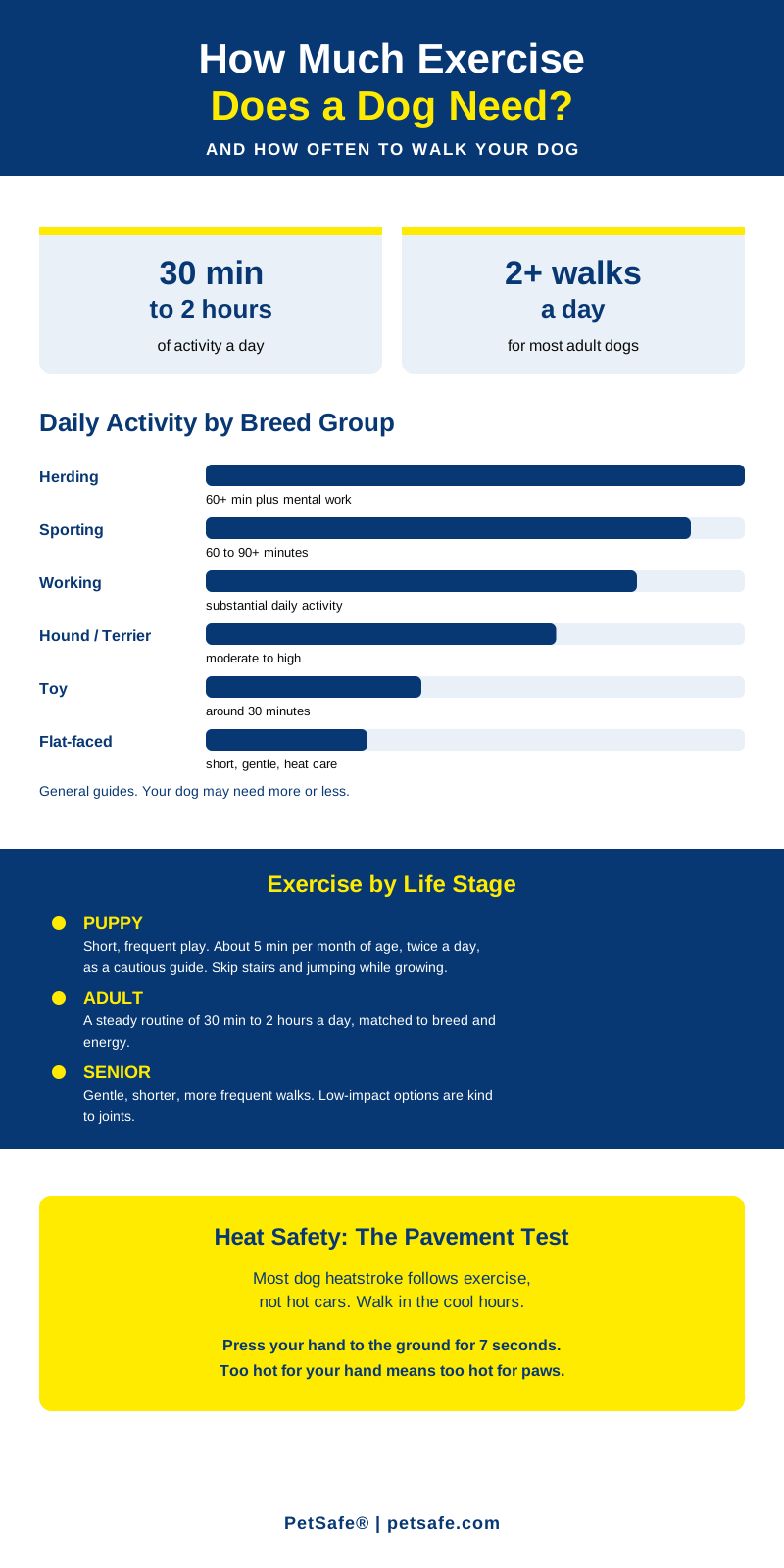
Breed is one of the biggest factors in how much exercise a dog needs. The ranges below are general guides; your individual dog may need more or less.
- Sporting breeds (Labrador Retriever, Golden Retriever, Pointer): high energy, often 60 to 90 or more minutes a day, and they love retrieving and swimming.
- Herding breeds (Border Collie, Australian Shepherd): among the most active dogs, frequently 60 or more minutes of physical exercise plus mental work like training games and scent puzzles.
- Working breeds (Boxer, Siberian Husky, Rottweiler): substantial daily activity, with a job or a challenge to focus their energy.
- Hounds (Beagle, Basset Hound): moderate to high needs, and scent-based games suit their instincts well.
- Terriers: energetic in bursts and often up for a good game of chase or fetch.
- Toy breeds (Chihuahua, Pomeranian): less overall, often around 30 minutes, but they still need daily activity and enrichment.
- Non-sporting and mixed breeds: needs vary widely, so use your dog's energy level and body condition as your guide.
- Flat-faced, or brachycephalic, breeds (Bulldog, Pug): shorter, gentler sessions, with extra care in the heat because their breathing makes cooling harder.
Exercise Needs by Life Stage
Puppies: The "5 Minutes Per Month" Rule
A popular rule of thumb suggests about 5 minutes of structured exercise per month of age, once or twice a day, so a 4-month-old puppy might do around 20 minutes. It is a reasonable, cautious starting point, but it is worth knowing that it is a general guideline rather than something proven by a specific study. Puppies naturally exercise in short bursts with lots of rest, so several short walks and play sessions suit them far better than one long outing. Let your puppy's energy and interest guide you, and keep it fun.
Growth and High-Impact Exercise
While a puppy is growing, its joints and growth plates are still developing, so high-impact activity should wait. A prospective study of large and giant breed puppies found that regularly using stairs in the first three months of life was linked to a higher risk of hip dysplasia, while off-leash play on soft, natural ground was linked to a lower risk. [4] The practical takeaways for large-breed puppies: skip repeated stair climbing and hard jumping early on, favor soft surfaces like grass, and hold off on running or jogging until your dog is physically mature, which can be a year or more for big breeds. Your veterinarian can advise on timing for your dog.
Adult Dogs
Once your dog reaches physical maturity, you can build a consistent routine around its breed group and energy level, generally landing somewhere in that 30 minutes to 2 hours a day range. Mix it up with walks, fetch, training games, and the occasional new environment to keep both body and mind engaged.
Senior Dogs
Older dogs still need daily activity, just gentler and often in smaller doses. Two or three short, easy walks tend to work better than one long one, and low-impact options like swimming can be kind to aging joints. Watch for stiffness, slowing down, or reluctance, and adjust accordingly. If your senior dog is struggling with mobility, our range of mobility support products can help keep them comfortable and moving.
Why Exercise Matters
Exercise and a Healthy Weight
Regular activity is one of the best things you can do for your dog's long-term health, starting with weight. A UK study of more than 11,000 dogs found that dogs who were walked more often and for longer were less likely to be overweight. [10] Exercise works best alongside measured meals, so if weight is a concern, pair a daily routine with portion control and check your dog's body condition. Our guide to how much your dog should weigh walks through the 9-point body condition score step by step.
Exercise and Behavior
Many everyday behavior issues, from chewing to restlessness, trace back to a dog with unspent energy and too little to do. Research also links activity levels to emotional wellbeing. In one large survey of dogs, those that received less daily exercise were more likely to show signs of noise sensitivity and separation-related behavior. [6] Another large study found that dogs exercised for less than an hour a day were more likely to be fearful of other dogs than dogs exercised for more than three hours. [7] These are survey findings that show a link rather than proof that exercise alone prevents anxiety, and calmer dogs may simply get walked more. Still, the pattern is consistent: an active dog is often a more settled dog. Pair activity with reward-based training, the approach veterinary behavior experts recommend, to build confidence and good habits. [9]
Walking Is Good for You, Too
The benefits run both ways. A UK community study found that dog parents had about four times the odds of meeting recommended weekly physical activity levels compared with people without a dog. [8] Your daily walk is one of the easiest, most reliable forms of exercise you will get, and your dog is a very persuasive personal trainer.
Physical Exercise vs. Mental Stimulation
Physical exercise tires the body, but mental stimulation tires the brain, and a truly satisfied dog usually needs both. Sniffing, problem-solving, training, and foraging all count. Mental work is not a full substitute for movement, but it is a powerful complement, and it is a lifesaver on days when a long walk is not possible. Simple ideas include scatter-feeding part of a meal in the grass, teaching a new trick in short sessions, rotating toys so they feel novel, and using puzzle and treat-dispensing dog toys that make your dog work for a reward. A short, focused enrichment session can take the edge off a high-energy dog surprisingly quickly.
Signs Your Dog Needs More, or Too Much, Exercise
Dogs are not shy about telling you when the balance is off. Watch for these cues.
Signs your dog may need more exercise:
- Destructive chewing or digging
- Restlessness or attention-seeking, especially in the evening
- Excessive barking or pent-up energy
- Weight gain or a rising body condition score
- Pulling hard on the leash from sheer excitement
Signs your dog may be getting too much, or overheating:
- Lagging behind or lying down partway through a walk
- Heavy panting, bright red gums, or drooling, which can signal overheating
- Limping or stiffness after rest
- Worn or torn paw pads
- Reluctance to go out for walks the dog used to enjoy
When you build up activity, do it gradually, warm up with an easy start, and stop if your dog shows any of the warning signs above.
Exercising Safely in Hot and Cold Weather
Heatstroke Happens on Walks, Not Just in Hot Cars
Most people know not to leave a dog in a parked car, but the bigger everyday risk is exercise in warm weather. A large UK study found that the great majority of heat-related illness in dogs, more than seven in ten cases, followed exertion such as walking or playing, and that these cases could occur on days that felt only moderately warm. [5] Flat-faced breeds, overweight dogs, very young and very old dogs, and thick-coated breeds are at higher risk. When in doubt, do less.
The Pavement Test and Timing
On warm days, walk in the early morning or later in the evening when it is cooler, keep sessions shorter, and always bring water. Use the pavement test: press the back of your hand to the ground for about seven seconds. If it is too hot for your hand, it is too hot for your dog's paws. After a walk in the heat, offer fresh water and a cool, shaded spot to recover. A fountain or feeder at home keeps cool water available for the rest of the day.
Cold-Weather Tips
Cold has its own considerations. Small, thin-coated, young, and senior dogs feel the cold quickly, so keep winter walks shorter and consider a coat for dogs that need one. Wipe paws after walks to remove ice-melt chemicals, and watch for shivering or reluctance as signs to head home. On the coldest or wettest days, move the activity indoors.
Indoor Exercise Ideas for Bad-Weather Days
When the weather does not cooperate, you can still burn energy and engage your dog's mind at home:
- Play indoor fetch or tug down a hallway or in a cleared room.
- Set up a mini obstacle course with cushions and boxes to weave through.
- Run a few short training sessions to practice cues and teach new tricks, using rewards.
- Hide treats or a portion of a meal around a room for a "find it" game.
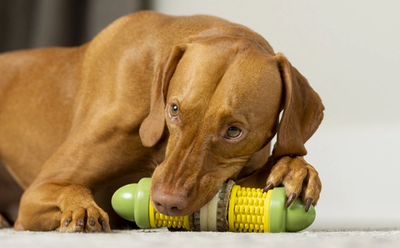
- Use puzzle and treat-dispensing toys to turn mealtime into mental work.
- Practice stairs at a calm walk for a healthy adult dog, skipping this for young puppies and dogs with joint issues.
Gear That Makes Daily Walks Easier
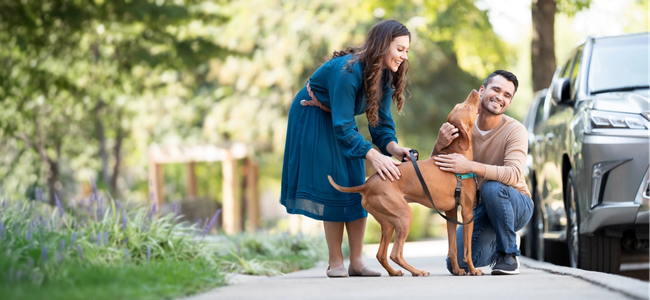
The right equipment makes walks safer and more enjoyable for both of you. A well-fitted harness spreads pressure across the chest instead of the neck, which is especially helpful for flat-faced breeds and dogs that pull. Pair it with a comfortable leash length that allows for relaxed sniffing. If your dog pulls, reward-based practice combined with the right no-pull training tools can turn a stressful walk into a pleasant one. For a new puppy just learning the ropes, our new puppy essentials are a good starting point, and senior dog essentials can help keep an older dog comfortable on gentler outings.
Frequently Asked Questions
How much exercise does a dog need per day?
Most healthy adult dogs need between 30 minutes and 2 hours of activity a day. The right amount depends on breed, age, and health. High-energy sporting, herding, and working breeds need the most, while toy breeds, seniors, and flat-faced breeds need less. Split activity into two or more sessions and add daily mental stimulation.
How often should I walk my dog?
Most adult dogs do best with at least two walks a day, and many benefit from three, totaling roughly 30 to 60 or more minutes. Puppies need shorter, more frequent outings, and seniors do best with gentle, shorter walks.
Is one walk a day enough for a dog?
For some low-energy or senior dogs, one longer walk plus a little play can be enough. Most adult dogs, though, do better with at least two outings. If a single walk leaves your dog restless or looking for trouble by evening, add a second session.
Should you walk your dog every day?
Daily activity is ideal for most dogs. Skipping the occasional day for extreme weather or illness is fine, as long as you replace it with some indoor play and mental enrichment so your dog still gets an outlet.
Is it okay to walk a dog once a week?
No, walking once a week is not enough for most dogs. Dogs need daily activity for their physical and mental health, so aim for something every day, even a short walk or indoor play on busy days.
How do I know if my dog has had enough exercise?
A well-exercised dog settles and rests contentedly afterward and sleeps well, without destructive or restless behavior. Signs your dog is getting too much include lagging on walks, limping or stiffness after rest, and excessive panting.
How much exercise does a puppy need?
A common guideline is about 5 minutes of structured exercise per month of age, once or twice a day, so a 4-month-old puppy might do around 20 minutes. Treat this as a cautious starting point, favor short and frequent play, and avoid high-impact exercise like repeated stairs and jumping while your puppy grows.
How long should I walk my dog?
Many dogs in good condition handle a 20 to 30 minute walk comfortably, and fitter dogs go longer. Build up gradually if your dog is out of shape, and let some walks be slow, sniff-led outings rather than brisk marches.
What is the 7-7-7 rule for dogs?
The 7-7-7 rule is a socialization guideline for puppies, not an exercise rule. A common version suggests exposing a young puppy to a variety of new surfaces, people, places, sounds, and objects early on, in a positive, reward-based way. Definitions vary, so treat it as a reminder to socialize gently rather than a strict formula.
What is the 3-3-3 rule for dogs?
The 3-3-3 rule describes how a newly adopted dog tends to settle in: roughly 3 days to decompress, 3 weeks to learn the routine, and 3 months to feel at home. During the first few days, keep walks short and calm while your new dog adjusts.
Is mental stimulation as good as exercise?
Mental stimulation is not a full substitute for physical exercise, but it is an important complement and can tire a dog surprisingly well. Sniffing games, training, and puzzle toys all help, and they are especially useful on days when a long walk is not possible.
Can I walk my dog in hot weather?
Yes, with care. Walk in the cooler early morning or evening, keep it short, bring water, and use the pavement test: if the ground is too hot for the back of your hand for about seven seconds, it is too hot for your dog's paws. Flat-faced and overweight dogs need extra caution in heat.
Citations and Sources
- American Kennel Club. How Much Exercise Does a Dog Need Every Day? akc.org
- PDSA. Exercise for dogs: our ultimate guide. pdsa.org.uk
- PetMD. How Often Should You Walk Your Dog? petmd.com
- Krontveit RI, Nodtvedt A, Saevik BK, Ropstad E, Trangerud C. Housing- and exercise-related risk factors associated with the development of hip dysplasia. American Journal of Veterinary Research, 2012. pubmed.ncbi.nlm.nih.gov
- Hall EJ, Carter AJ, O'Neill DG. Dogs Don't Die Just in Hot Cars: Exertional Heat-Related Illness Is a Greater Threat to UK Dogs. Animals, 2020. mdpi.com
- Tiira K, Lohi H. Early Life Experiences and Exercise Associate with Canine Anxieties. PLoS ONE, 2015. journals.plos.org
- Puurunen J, Hakanen E, Salonen MK, et al. Inadequate socialisation, inactivity, and urban living environment are associated with social fearfulness in pet dogs. Scientific Reports, 2020. nature.com
- Westgarth C, Christley RM, Jewell C, et al. Dog owners are more likely to meet physical activity guidelines than people without a dog. Scientific Reports, 2019. nature.com
- American Veterinary Society of Animal Behavior. Position statement on reward-based dog training. avsab.org
- German AJ, et al. Overweight dogs exercise less frequently and for shorter periods. Journal of Nutritional Science, 2017. ncbi.nlm.nih.gov
Last modified: October 12, 2026


Get Email Updates
Subscribe to the latest news, promotions, & more from PetSafe® brand.
Sign up today for the latest news, promotions, and more from PetSafe® brand.