September 21, 2026
PetSafe® Expert
PetSafe® Guest
Holiday Safety Tips for Pets: A Year-Round Guide for Dogs and Cats
The holidays bring people and pets together, and they also fill the house with new temptations and hazards, from rich food and toxic plants to glittering decorations and a steady stream of guests. The good news is that a few simple habits prevent almost every holiday emergency. This guide gathers the holiday pet safety advice that matters most, so you can keep dogs and cats safe through the winter holidays, Thanksgiving, Easter, Valentine's Day, and every celebration in between.
Key points
- Keep human holiday food away from pets, especially chocolate, xylitol (also labeled birch sugar), grapes and raisins, onions and garlic, alcohol, and cooked bones. [3][5]
- Lilies are a life-threatening emergency for cats. Every part of the plant is toxic and can cause kidney failure, so keep them out of the home entirely. [3][6]
- Tinsel, ribbon, and string are especially dangerous for cats and often require surgery. If you see a strand hanging from either end of your pet, do not pull it. [3]
- Secure the tree, cover the water reservoir, and unplug lights when you are away to prevent tip-overs, chewed cords, and stomach upset. [1][2]
- Watch the exits when guests arrive and leave, since many pets slip out open doors. Keep identification tags and microchip details current. [2]
- Poinsettias are only mildly toxic, and their danger is widely overstated. [3][7]
- Save these numbers now: ASPCA Animal Poison Control Center at (888) 426-4435 and Pet Poison Helpline at (855) 764-7661.
In this article
- Holiday pet safety at a glance
- Toxic holiday foods to keep away from pets
- Poisonous holiday plants (and the poinsettia myth)
- Decoration and home hazards
- Guests, stress, and escape risk
- Winter weather hazards that overlap the holidays
- Holiday-by-holiday safety
- Cats, small pets, and other animals
- What to do if your pet is poisoned
- Frequently asked questions
Holiday pet safety at a glance
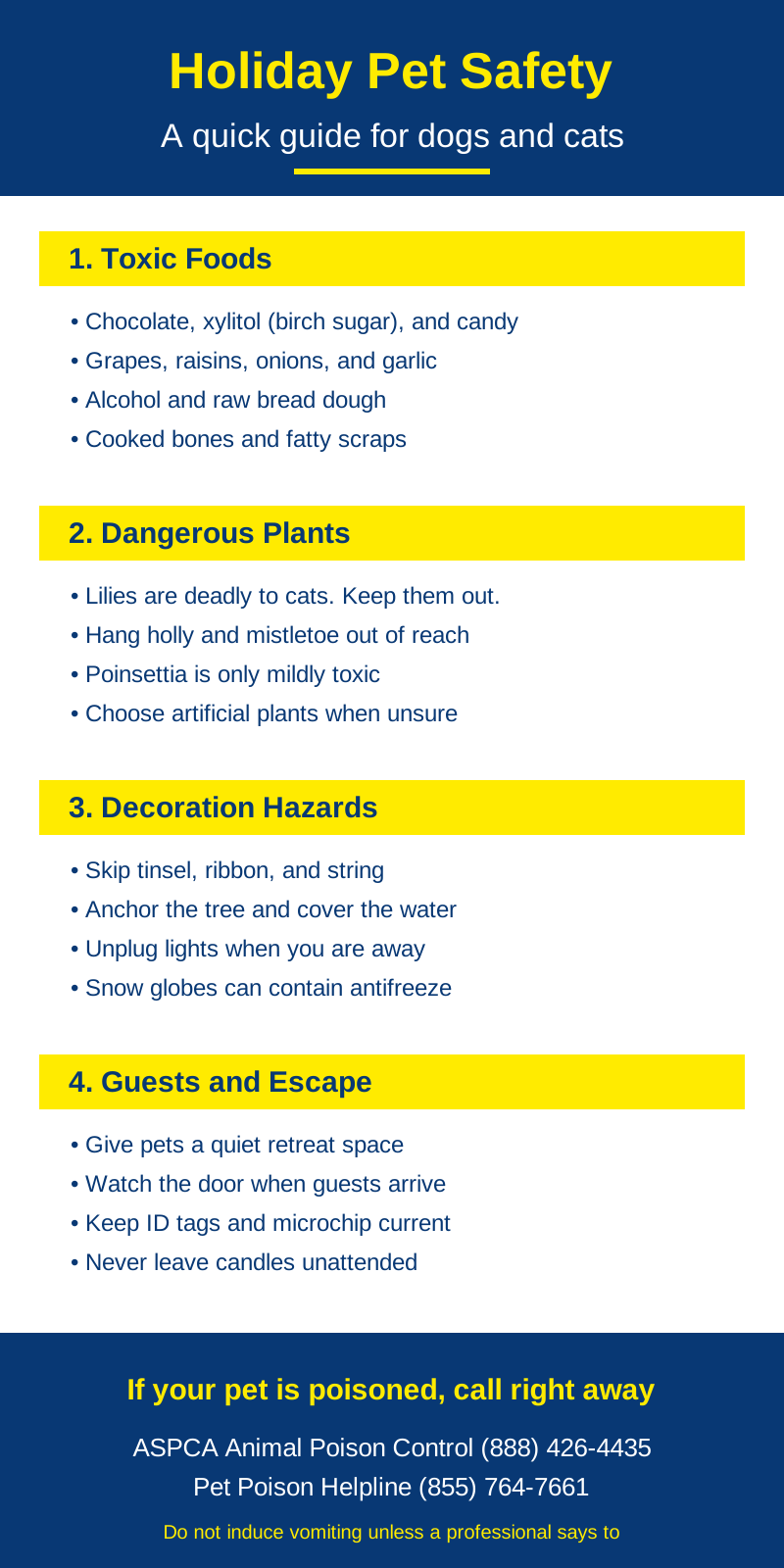
Most holiday hazards fall into four groups: food, plants, decorations, and the disruption that comes with parties and travel. Keeping pets safe means managing all four at once. Before the season kicks off, do a quick sweep of your home from your pet's eye level, decide where each pet can retreat when the house gets busy, and put the two pet poison numbers somewhere everyone can find them. The sections below walk through each hazard in turn, with clear steps for both dogs and cats.
If you think your pet has eaten something toxic, act quickly and call for help. Contact your veterinarian, the ASPCA Animal Poison Control Center at (888) 426-4435, or the Pet Poison Helpline at (855) 764-7661. Do not try to make your pet vomit unless a veterinary professional tells you to, because with some substances that does more harm than good.
Toxic holiday foods to keep away from pets
Holiday tables are loaded with foods that are fine for people but dangerous for pets. The safest approach is to keep your pet on its normal diet, skip the table scraps, and ask guests not to share their plates. Take the trash out often and keep the lid secured, since a determined dog or cat will happily dig for bones, wrappers, and fatty leftovers.
Chocolate
Chocolate contains methylxanthines, mainly theobromine along with some caffeine, which pets cannot process the way people do. The darker and more bitter the chocolate, the more dangerous it is, so baking chocolate and cocoa powder are the worst offenders and white chocolate has very little. Signs can include vomiting, a racing heart, restlessness, tremors, and seizures. Keep wrapped chocolates off the tree and out of stockings, where curious pets can sniff them out. [3][5]
Xylitol and birch sugar
Xylitol is a sugar substitute found in sugar-free gum, candy, baked goods, and some peanut and nut butters, and it may be listed as birch sugar or wood sugar. In dogs it triggers a rapid drop in blood sugar that can become life threatening, and larger amounts can cause liver failure. According to the U.S. Food and Drug Administration, this drop in blood sugar can occur within 10 to 60 minutes of eating xylitol and, left untreated, can quickly be life threatening. Always check the label before sharing anything sweet, and check peanut butter before you stuff a toy with it. [4][5]
Grapes, raisins, and currants
Grapes, raisins, and currants can cause sudden kidney injury in dogs, and the amount that causes harm is unpredictable, so any amount should be treated as a concern. That includes the currants and raisins baked into fruitcake, stuffing, and holiday breads. Researchers now point to tartaric acid as the likely toxic ingredient, though it is still described as the proposed cause. Because the risk to cats is not well understood, keep these away from every pet. [12]
Onions, garlic, chives, and leeks
Every member of the onion family, including garlic, chives, and leeks, damages red blood cells and can cause anemia in both dogs and cats. Per the Merck Veterinary Manual, garlic is several times more toxic than onion, and raw, cooked, and powdered forms are all dangerous. That matters at the holidays because these ingredients hide in stuffing, gravy, casseroles, and seasoned meat. Cats are especially sensitive. [5]
Macadamia nuts and other rich nuts
Macadamia nuts are toxic to dogs and can cause weakness, an unsteady walk, vomiting, tremors, and a raised body temperature, often within about 12 hours. Many holiday nut mixes, cookies, and candies contain them, so keep bowls of nuts and baked goods well out of reach. [5]
Alcohol and raw bread dough
Alcohol is quickly absorbed and even a small amount can cause vomiting, loss of coordination, and dangerous depression of the nervous system, so keep cocktails, eggnog, and unattended glasses away from pets. Raw yeast bread dough is a double hazard: it expands in the warm stomach and can cause a painful, dangerous bloat, while the fermenting yeast produces alcohol. Keep rising dough on a high counter far from reach. [3]
Cooked bones, fatty scraps, and pancreatitis
Cooked bones from turkey, ham, or chicken can splinter, cause choking, get lodged in the digestive tract, or fracture a tooth, and round marrow bones can become stuck around a dog's lower jaw. Rich, fatty foods like gravy, drippings, skin, and buttery sides are hard for pets to digest and can trigger pancreatitis, a painful inflammation of the pancreas. Scrape plates straight into a secured trash can. [2][8]
Can dogs eat turkey?
A little plain, fully cooked, boneless turkey is generally fine as an occasional treat for most healthy dogs. The danger is in the extras: bones, skin, fatty drippings, gravy, and any seasoning that contains onion or garlic. Skip raw or undercooked turkey, which can carry Salmonella, and check with your veterinarian first if your pet has a sensitive stomach or a health condition. [1]
Toxic holiday foods at a glance:
- Chocolate: theobromine and caffeine; dark and baking chocolate are worst. Dogs and cats.
- Xylitol and birch sugar: dangerous blood sugar crash and possible liver failure. Mainly a dog hazard, but keep away from all pets.
- Grapes, raisins, currants: sudden kidney injury; any amount is a concern. Dogs; unknown risk to cats.
- Onions, garlic, chives, leeks: red blood cell damage and anemia, even cooked or powdered. Dogs and cats, cats especially.
- Macadamia nuts: weakness, tremors, raised temperature. Dogs.
- Alcohol and raw bread dough: nervous system depression; dough causes bloat and alcohol. Dogs and cats.
- Cooked bones and fatty scraps: obstruction, choking, and pancreatitis. Dogs and cats.
Poisonous holiday plants (and the poinsettia myth)
Festive greenery brightens a home, but several holiday favorites are toxic to pets. Set arrangements where pets cannot reach them, sweep up dropped leaves and berries, and when in doubt, choose an artificial version instead.
Lilies are a deadly emergency for cats
True lilies and daylilies are among the most dangerous plants a cat can encounter. Every part of the plant is toxic, including the petals, leaves, stem, pollen, and even the water in the vase, and a cat can be poisoned simply by brushing against the pollen and grooming it off later. Kidney failure can develop within a few days and there is no antidote, so treatment must start fast. Dogs that nibble a lily may get an upset stomach but do not develop the same kidney emergency. Because holiday bouquets so often include lilies, the safest choice is to keep them out of any home with a cat. [3][6]
Holly, mistletoe, and amaryllis
Holly and mistletoe commonly cause vomiting and diarrhea, and larger amounts of mistletoe can affect the heart, so hang them high and out of reach or use a faux version. Amaryllis and the bulbs of paperwhites and other forced flowers can cause vomiting and more serious signs if eaten. Christmas cactus, by contrast, is considered relatively low in toxicity and is often confused with more dangerous plants. [3][8]
Are poinsettias actually poisonous?
The poinsettia's reputation is far worse than the plant deserves. Poinsettias are only mildly toxic to dogs and cats, and the danger is greatly exaggerated. A pet that bites a leaf may drool or have mild stomach upset from the milky sap, and the sap can irritate skin and eyes, but serious poisoning is rare. It is still sensible to keep a poinsettia out of reach, but there is no need to banish it from your home. [3][7]
Safer plant choices
If you love fresh greenery, a few swaps keep the season festive without the worry. Here is how the most common holiday plants sort out for cats and dogs.
- Keep out of the home entirely: lilies and daylilies, which cause fatal kidney failure in cats.
- Keep well out of reach: holly, mistletoe, amaryllis, and spring bulbs such as daffodils and tulips, which cause vomiting and, in some cases, more serious signs in both species.
- Low risk but still tidy up after: poinsettia and Christmas cactus, which usually cause only mild irritation.
- Safest of all: artificial plants and pet-friendly arrangements, so there is nothing to worry about at all.
Decoration and home hazards
Decorations turn an ordinary room into a wonderland of things to bat, chew, and climb. A little planning keeps the sparkle without the trip to the emergency clinic.
Tinsel, ribbon, and string
Shiny, dangly tinsel, ribbon, and string are irresistible to cats and are one of the most serious holiday hazards there is. When a pet swallows a strand, it can become what veterinarians call a linear foreign body: one end catches, often under the tongue or in the stomach, while the rest travels on and the intestines bunch and saw against it, which frequently means emergency surgery. If you ever see a thread hanging from your pet's mouth or rear, do not pull it, since that can cause more internal damage. Call your veterinarian instead. The simplest fix is to skip tinsel and secure ribbon and gift string well out of reach. [3]
Ornaments, lights, and cords
Hang fragile and glass ornaments high on the tree, out of reach of wagging tails and curious paws, since broken pieces can cut a mouth or a paw or cause an obstruction if swallowed. Homemade salt dough ornaments are surprisingly risky, because the salt can be toxic if eaten. Tape down or cover electrical cords and light strings, which can cause a nasty mouth burn or shock when chewed, and unplug decorations whenever you leave the house or go to bed. [2]
Christmas tree water, needles, and tip-overs
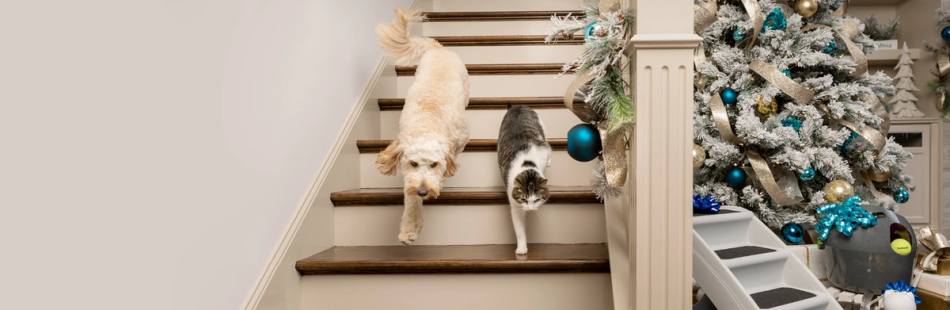
Anchor the tree so it cannot topple if a cat decides to climb it or a big dog brushes past, for example by securing the top to the ceiling or a wall with fishing line. Cover the water reservoir with a tree skirt or towel, since the water can hold fertilizers, preservatives, and bacteria that upset a pet's stomach, and skip any water additives. Sweep up fallen needles, which can irritate the mouth and stomach if swallowed. [1][2]
Snow globes, candles, and potpourri
Many snow globes contain ethylene glycol, the same sweet-tasting chemical found in antifreeze, and only a tiny amount can be deadly, so display them where they cannot be knocked down or choose a design that does not use the liquid. Never leave lit candles, a menorah, or a diya unattended around pets, since a swishing tail or a curious nose can start a fire or get burned, and consider flameless candles instead. Keep simmering liquid potpourri out of reach, because the essential oils and detergents in it can seriously injure a pet's mouth and skin, and cats are especially sensitive. [2][11]
How to keep your cat out of the Christmas tree
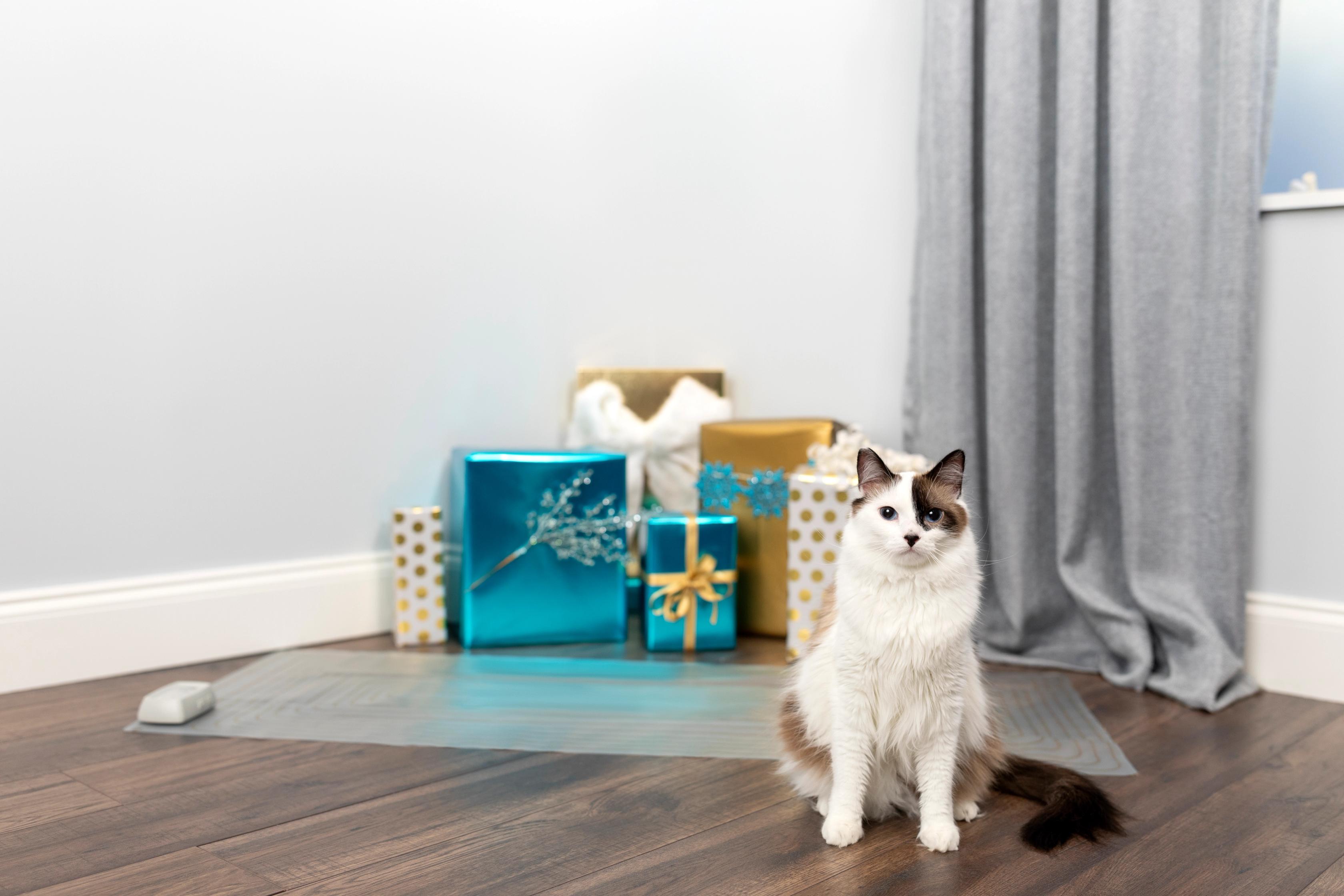
To a cat, a Christmas tree is a tall new toy that begs to be climbed. Set the tree up in stages, leaving it bare for a day or two so your cat loses interest before the ornaments go on. Anchor it firmly, wrap the lowest branches loosely, and keep tempting tinsel and low ornaments off entirely. Place a few pet-safe deterrents your cat dislikes near the base, such as citrus peels or a textured mat, and give your cat better options nearby, like a tall cat tree or a sunny perch, so the tree is not the most interesting thing in the room.
Guests, stress, and escape risk
The part of the holidays that pets find hardest is not always the food or the tree. It is the noise, the crowd, and the front door swinging open again and again. Planning for the social side of the season prevents lost pets and keeps anxious animals calm.
Create a safe retreat space
Before guests arrive, set up a quiet room or a cozy crate away from the commotion where your pet can settle, with fresh water, a comfortable bed, and a favorite toy, plus a litter box for cats. Let your pet choose to use it rather than forcing the issue, and let guests know the space is off limits. A little background noise, like a television or soft music, can help mask door knocks and party sounds. Reward calm, relaxed behavior with a treat or gentle praise so your pet learns the busy days are nothing to fear.
Preventing door-darting when guests arrive
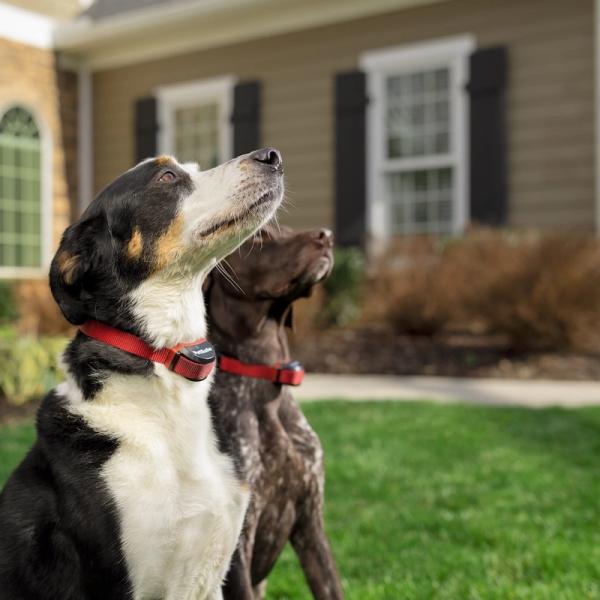
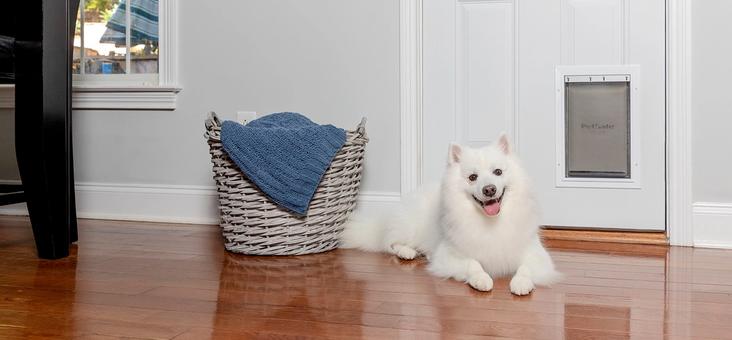
More pets go missing around the holidays than at almost any other time, simply because the door keeps opening. A scared dog or cat can slip out behind a guest and be gone before anyone notices. Give arriving visitors a heads up to watch the door, and consider a two-door approach where you greet guests in an entryway or behind a baby gate so there is a buffer before the outside. For dogs that bolt toward the road, a secure pet fence adds a reliable outer layer of protection, and a lockable pet door can be closed during parties so a frightened pet cannot let itself outside unnoticed. Make sure every pet wears an identification tag and that the microchip registration lists your current phone number, because those two things reunite far more lost pets than anything else.
Keeping routines and reducing anxiety
Pets thrive on routine, and the holidays throw routine out the window. Try to keep feeding times, walks, and bedtime as consistent as you can, even when the schedule is packed, and pick one person to be responsible for the pet's daily care so nothing gets missed in the shuffle. For pets that are nervous around visitors, use gentle, reward-based encouragement rather than pushing them into the crowd, and give them a calm space and a favorite chew or puzzle toy to settle with. If your pet struggles badly with holiday noise or with New Year's fireworks, talk with your veterinarian ahead of time about a plan.
Winter weather hazards that overlap the holidays
For much of the country the winter holidays arrive with cold, ice, and the chemicals people use to fight them. These seasonal hazards deserve a place on your holiday safety list.
How cold is too cold for dogs and cats?
The answer depends on the animal, but veterinary guidance offers useful thresholds for dogs. Cold weather is generally not a problem for most dogs until the temperature falls below about 45 degrees Fahrenheit. Once it drops below freezing at 32 degrees, small dogs, thin-coated breeds, and pets that are very young, old, or unwell can start to feel it. Below about 20 degrees, any dog can be at risk of hypothermia and frostbite, so keep outdoor time short and watch for shivering, whining, or lifting paws off the ground. Wind and wet fur make cold feel colder still. Cats and small pets should stay indoors in cold weather. [10]
Antifreeze, ice melt, and rock salt
Antifreeze is one of winter's deadliest hazards, because ethylene glycol tastes sweet and pets will lap up even a small spill, so clean up leaks immediately and store containers sealed and out of reach. Ice melt and rock salt can irritate and crack paw pads and cause stomach upset if a pet licks its feet, so wipe your pet's paws and belly after every walk, consider protective booties or a paw balm, and use a pet-friendly de-icer at home. [2]
Holiday travel and boarding
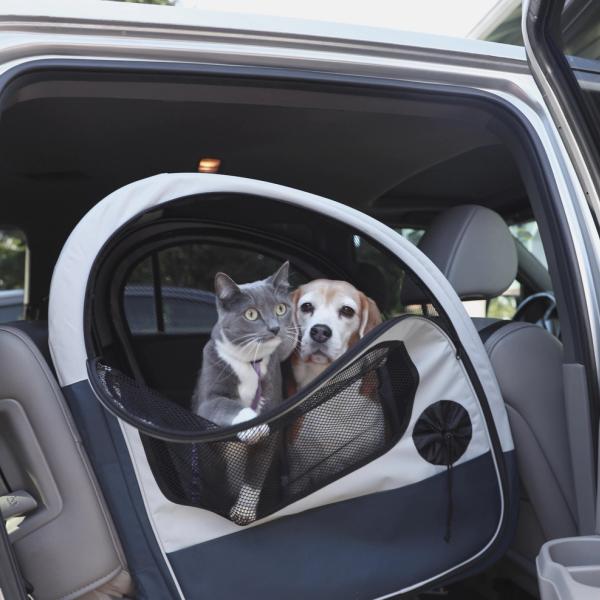
If your celebrations involve travel, plan ahead for your pet. Secure dogs and cats in the car with a crash-tested harness or a carrier rather than letting them roam, and never leave a pet alone in a parked vehicle in cold or hot weather. Interstate and international trips often require a health certificate from your veterinarian, so start early. If your pet is staying behind, line up a trusted pet sitter or a reputable boarding facility well in advance, since holiday dates fill up fast. Our guide to pet travel safety covers packing, restraint, and long trips in more detail.

Holiday-by-holiday safety
Every celebration has its own quirks. Here is what to watch for through the year, so the pillar hazards above translate into each specific holiday.
Winter holidays: Christmas, Hanukkah, and New Year's
The winter holidays combine nearly every hazard at once: chocolate and rich food, toxic plants, a decorated tree, open flames on a menorah, and a packed social calendar. Work through the food, plant, decoration, and guest sections above, secure the tree, keep candles supervised, and give your pet a quiet retreat. New Year's often ends in fireworks, which terrify many pets, so bring animals indoors, close the curtains, turn on some background noise, and double check tags and microchips before the noise starts. For a full plan, see our advice on helping pets through fireworks and loud noises.
Thanksgiving
Thanksgiving, on the fourth Thursday in November, is mostly about food. Keep the turkey bones, fatty skin, gravy, and onion or garlic seasoned dishes away from pets, offer only a little plain cooked turkey if you share at all, and empty the trash often so no one raids it for scraps. With the kitchen busy and the door opening for guests, give your pet a calm space away from the action.
Easter
Easter brings its own mix of hazards. Chocolate eggs and bunnies, along with candy sweetened with xylitol, need to stay out of reach, and the plastic grass in Easter baskets is a classic linear foreign body that can require surgery if a pet swallows it. Lilies, a signature spring flower, are deadly to cats, so keep them out of the home. Watch that plastic eggs and small toys do not become choking hazards.
Valentine's Day
Valentine's Day pairs two of the biggest pet toxins, chocolate and lilies, with candy that may contain xylitol and bouquets that often hide lilies among the roses. Keep boxes of chocolates and candy well out of reach, check any bouquet for lilies before bringing it inside a home with a cat, and clear away ribbon, cellophane, and wrapping that a pet might swallow.
Halloween and other celebrations
Halloween adds candy, especially chocolate and xylitol, along with costumes and a doorbell that never stops. Keep the candy bowl out of reach, make sure any pet costume fits loosely and does not restrict movement or breathing, and give door-shy pets a quiet room away from trick-or-treaters. The same principles carry over to any gathering: manage the food, the decorations, and the door, and give your pet somewhere calm to be.
Cats, small pets, and other animals
Cats face a few outsized risks at the holidays, because they climb, they groom chemicals off their fur, and they are the animals most likely to tangle with tinsel or a lily. Keep string, ribbon, and lilies entirely out of a home with cats, and give a nervous cat a high, quiet perch to watch the festivities from a safe distance. Birds are very sensitive to fumes, so keep them away from scented candles, potpourri, and cooking smoke. Rabbits, guinea pigs, and other small pets need their quiet routine protected, safe chew options, and a calm spot away from the noise and the reach of visiting dogs and children. When in doubt about any species, a quick call to your veterinarian is the safest move.
What to do if your pet is poisoned
Even in a careful home, accidents happen, and knowing what to do saves precious time. If you think your pet has eaten something toxic, stay calm and act quickly.
- Remove your pet from whatever it got into, and take note of what and roughly how much was eaten and when.
- Call your veterinarian, the ASPCA Animal Poison Control Center at (888) 426-4435, or the Pet Poison Helpline at (855) 764-7661 right away. These hotlines are available at all hours.
- Do not try to make your pet vomit unless a veterinary professional specifically tells you to, since for some poisons that causes more harm.
- If you have the packaging or a piece of the plant, keep it to show your veterinary team.
- Watch for signs like vomiting, diarrhea, drooling, tremors, weakness, or a change in behavior, and get to a clinic without delay if they appear.
Save both hotline numbers in your phone before the season starts, so you are ready if you ever need them.
Frequently asked questions
How do you keep your pet safe at Christmas?
Keep chocolate, sweets, and rich or bone-in foods out of reach, secure and skirt the tree, skip tinsel, and unplug lights when you are away. Keep lilies and other toxic plants out of the home, give your pet a quiet retreat from guests, and watch the door so no one slips outside.
What are the most dangerous holiday foods for dogs and cats?
The biggest risks are chocolate, xylitol (also called birch sugar), grapes and raisins, onions and garlic, alcohol, macadamia nuts, cooked bones, and fatty scraps. Keep pets on their regular diet, take the trash out often, and ask guests not to share food from their plates. [3][5][9]
Are poinsettias poisonous to cats and dogs?
Only mildly, and their danger is widely overstated. A pet that chews a poinsettia leaf may drool or have a mild stomach upset from the sap, but serious poisoning is rare. It is still smart to keep the plant out of reach, but you do not need to remove it from your home. [3][7]
Why is tinsel so dangerous for cats?
Cats love to swallow shiny, stringy things, and tinsel can become a linear foreign body: one end catches while the rest moves through the gut, which can saw through the intestines and require surgery. Skip tinsel in a home with cats, and never pull a strand you can see hanging from your pet. [3]
Are lilies poisonous to cats?
Yes, dangerously so. Every part of a true lily or daylily is toxic to cats, including the pollen and the vase water, and even a small exposure can cause fatal kidney failure with no antidote. Keep lilies out of any home with a cat, and call for help immediately if your cat is exposed. [3][6]
Can dogs eat turkey?
A little plain, fully cooked, boneless turkey is usually fine as an occasional treat for a healthy dog. Avoid bones, skin, fatty drippings, gravy, and any onion or garlic seasoning, and never feed raw or undercooked turkey. Check with your veterinarian first if your dog has a sensitive stomach. [1]
How do I keep my cat out of the Christmas tree?
Anchor the tree so it cannot tip, set it up bare for a day or two so your cat loses interest, and keep tinsel and low ornaments off. Use a deterrent your cat dislikes near the base, such as citrus peel or a textured mat, and offer a tall cat tree or perch nearby as a better option.
What temperature is unsafe for dogs in winter?
As a general guide, cold becomes a concern for many dogs below about 45 degrees Fahrenheit, riskier for small or thin-coated dogs below freezing, and potentially dangerous for any dog below about 20 degrees, when hypothermia and frostbite are possible. Keep outdoor time short and watch for shivering. Wind and wet fur make it worse. [10]
How do I keep my pet from running out the door when guests arrive?
Give guests a heads up to watch the door, greet them behind a baby gate or in an entryway for a buffer, and keep nervous pets in a quiet room during the busiest arrivals. A secure fence and a lockable pet door add backup, and current tags and microchip details help reunite you fast if a pet does slip out. [2]
Can a dog be left alone for 5 days over the holidays?
No. Dogs need daily food, water, exercise, bathroom breaks, and company, and adult dogs should not be left alone much longer than a normal workday. For a multi-day trip, arrange a trusted pet sitter, a friend or family member, or a reputable boarding facility, and book early since holiday dates fill quickly.
What should I do if my pet eats something toxic?
Act fast. Remove your pet from the source, note what and how much was eaten, and call your veterinarian, the ASPCA Animal Poison Control Center at (888) 426-4435, or the Pet Poison Helpline at (855) 764-7661. Do not induce vomiting unless a professional tells you to, and keep any packaging to show your veterinary team.
Citations and sources
- ASPCA. Holiday Safety Tips. aspca.org
- American Veterinary Medical Association. Winter Holiday Pet Safety. avma.org
- Pet Poison Helpline. Poison List and Pet Safety Tips. petpoisonhelpline.com
- U.S. Food and Drug Administration. Paws Off Xylitol; It's Dangerous for Dogs. fda.gov
- Merck Veterinary Manual. Food Hazards: Chocolate, Allium, Macadamia Nut, and Xylitol Toxicosis. merckvetmanual.com
- U.S. Food and Drug Administration. Lovely Lilies and Curious Cats: A Dangerous Combination. fda.gov
- American Kennel Club. Are Poinsettias Poisonous to Dogs and Cats? akc.org
- VCA Animal Hospitals. Holiday Safety Tips for Dog Owners. vcahospitals.com
- Humane World for Animals. Holiday Safety Tips for Pets. humaneworld.org
- PetMD. How Cold Is Too Cold for Your Dog? petmd.com
- Virginia Tech News. The 12 Tips of Pet Safety: A Holiday Guide. news.vt.edu
- Wegenast C, et al. Acute Kidney Injury and the Proposed Role of Tartaric Acid in Grape and Raisin Toxicity. Journal of Veterinary Emergency and Critical Care, 2022. onlinelibrary.wiley.com


Get Email Updates
Subscribe to the latest news, promotions, & more from PetSafe® brand.
Sign up today for the latest news, promotions, and more from PetSafe® brand.