October 2, 2026
PetSafe® Expert
PetSafe® Guest
Halloween Pet Safety: Tips for Dogs and Cats
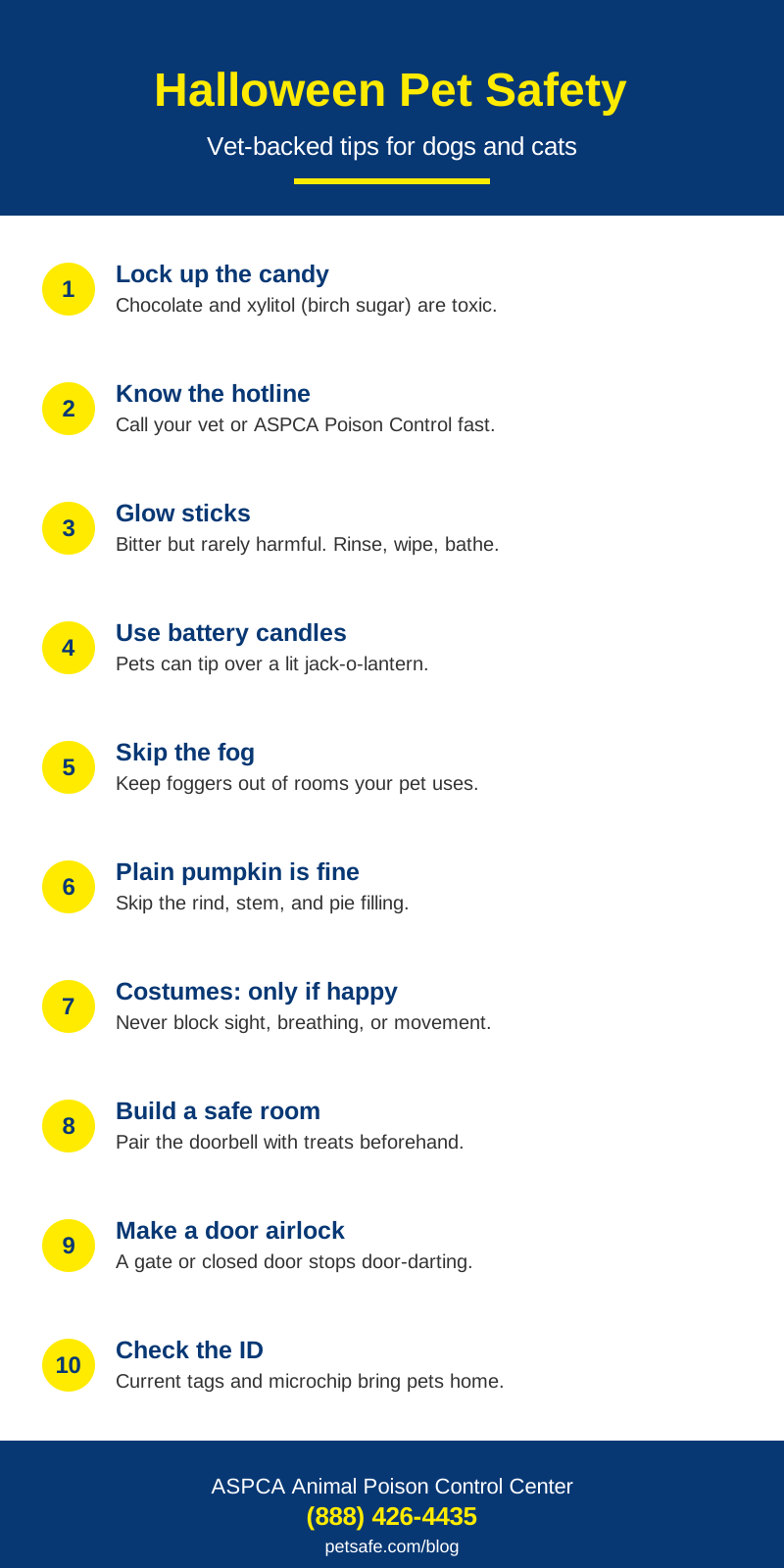
Halloween is one of the most exciting nights of the year, and with a little planning your dog or cat can enjoy it right alongside you. Most of the risks are simple for any pet parent to manage once you know them: candy that is toxic to pets, costumes that do not fit well, a front door that keeps opening, and decorations that look a lot like toys. This guide walks through each one, with vet-backed advice on what to watch for and exactly what to do if something goes wrong. It builds on our holiday safety guide for pets with everything specific to October 31.
Key points
- Keep all candy out of reach. Chocolate and any sugar-free candy or gum made with xylitol, sometimes labeled birch sugar, are the most dangerous.[2][3]
- If your pet eats something questionable, call your veterinarian or the ASPCA Animal Poison Control Center at (888) 426-4435, staffed every day of the year.[1]
- Only dress up a pet who clearly enjoys it, and never let a costume limit movement, sight, breathing, barking, or meowing.[7][10]
- Set up a quiet room before trick-or-treating starts, and pair the doorbell with treats in the days beforehand so it predicts good things.[17]
- Confirm ID tags and microchip details are current in case a startled pet slips out the door.[7]
Table of contents
- What Halloween candy is toxic to dogs and cats?
- What to do if your pet eats something on Halloween
- Are glow sticks toxic to cats and dogs?
- Dangerous Halloween decorations, candles, and cords
- Are fog machines safe for pets?
- Is pumpkin safe for dogs and cats?
- Pet costumes: should you dress up your dog or cat?
- How to keep your dog calm on Halloween
- How to stop your dog from bolting out the door
- Halloween safety for cats, and the truth about black cats
- Halloween fireworks and noise
- Your Halloween pet safety checklist
- Frequently asked questions
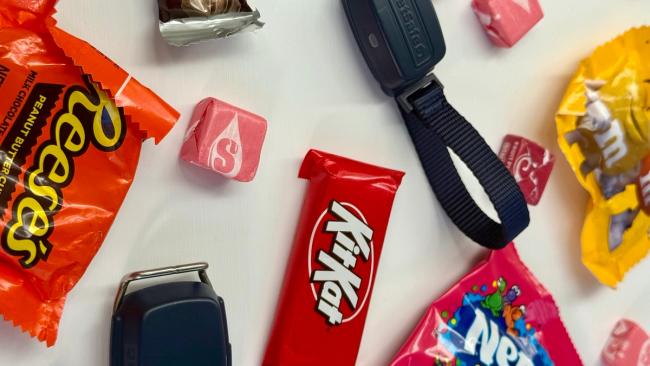
What Halloween candy is toxic to dogs and cats?
The main offenders are chocolate, sugar-free candy and gum made with xylitol, and raisins. Wrappers, lollipop sticks, and foil can cause problems too, even after the treat itself is gone. The simplest rule is to keep the whole candy bowl on a high shelf and out of reach.
Chocolate
Chocolate contains two stimulants, theobromine and caffeine, that dogs and cats clear from their bodies far more slowly than people do. The darker and more bitter the chocolate, the more of these compounds it carries, so a small piece of baking chocolate is much riskier than the same weight of milk chocolate. As a rough comparison of methylxanthine content by the ounce:
- White chocolate: negligible, around 1 mg per ounce.[2]
- Milk chocolate: around 64 mg per ounce.[2]
- Semisweet and dark chocolate: roughly 150 to 160 mg per ounce.[2]
- Baking (unsweetened) chocolate: around 440 mg per ounce.[2]
- Cocoa powder: around 807 mg per ounce.[2]
According to the Merck Veterinary Manual, mild signs such as vomiting, diarrhea, and increased thirst can appear in dogs at around 20 mg/kg of these compounds, heart effects around 40 to 50 mg/kg, and seizures at 60 mg/kg or more. For milk chocolate, roughly one ounce per pound of body weight can be life-threatening.[2] Because sensitivity varies from pet to pet, the safest approach is to treat any real chocolate as a reason to call your veterinarian or poison control rather than trying to work out a safe amount at home.[1][2]
Xylitol and birch sugar
Xylitol is a sugar substitute found in many sugar-free candies, mints, and chewing gums, and the FDA notes it may also appear on labels as birch sugar or wood sugar.[3] In dogs it can cause a rapid, dangerous drop in blood sugar. The Merck Veterinary Manual reports that doses above roughly 100 mg/kg are associated with low blood sugar, and higher doses can injure the liver.[4] Signs can begin within 30 minutes to a few hours of eating it.[5] Xylitol is most dangerous for dogs, and sources differ on the level of risk to cats, so the safe move is to keep it away from every pet. Read labels on anything sugar-free, and keep gum and mints, which often ride around in coat pockets and bags near the door, well out of reach.
Raisins, grapes, and nut mixes
Raisins and grapes can cause kidney failure in dogs, and the amount that triggers harm is unpredictable.[6][7] Snack mixes, chocolate-covered raisins, and baked goods are easy for a pet to grab, so treat them with the same caution you give chocolate. Macadamia nuts and heavily salted snacks are also worth keeping off the floor.
Wrappers, sticks, and foil
Sometimes the hazard is the packaging rather than the candy. Foil, cellophane wrappers, lollipop sticks, and whole snack bags can cause a stomach or intestinal blockage if swallowed, which can become a surgical emergency. Empty the trash often and pick up wrappers before a curious nose finds them.
What to do if your pet eats something on Halloween
Act quickly and stay calm. The faster you reach a professional, the more options they have to help.
- Take away whatever is left so your pet cannot eat more.
- Note what it was, roughly how much, and when. Save the wrapper or packaging.
- Call your veterinarian, a local emergency clinic, or the ASPCA Animal Poison Control Center at (888) 426-4435, which is staffed every day of the year. A consultation fee may apply.[1]
- Do not try to make your pet vomit unless a veterinary professional tells you to, since the wrong approach can make things worse.[4]
- Watch for vomiting, diarrhea, restlessness, tremors, weakness, or a racing heart, and report anything you notice to the clinic.
Are glow sticks toxic to cats and dogs?
Glow sticks and glow jewelry are a common Halloween call to poison control, especially for cats, who love to bite and puncture them. The liquid inside, dibutyl phthalate, tastes intensely bitter but is rarely dangerous.[8] A pet who bites one usually drools, foams, or dashes around from the awful taste rather than from true poisoning.[8][9]
My cat bit a glow stick, what now?
- Offer a little water, a treat, milk, or tuna water to rinse away the taste. Do not force it.[8][9]
- Wipe the mouth and any liquid off the fur with a damp cloth, then bathe off residue so your pet does not swallow more while grooming.[9]
- Turn off the lights and check for any glowing spots you missed.
- Call your veterinarian if you see eye redness, squinting, heavy drooling that does not settle, or a refusal to eat.[8]
Dangerous Halloween decorations, candles, and cords
Festive decor can look a lot like a toy to a pet, so a quick walk through the room from their eye level pays off.
- Lit candles and jack-o-lanterns: a wagging tail or a curious kitten can knock over a lit pumpkin and start a fire, and cats are easily singed by an open flame. Battery-powered candles remove the risk entirely.[10][15]
- Cords and light strands: loose wires and string lights are tempting to chew and can cause burns or shocks, especially for puppies and kittens. Keep them bundled and out of reach.[11]
- Fake cobwebs, plastic spiders, and small props: stretchy webbing and small plastic parts can choke a pet or cause a blockage if swallowed, and the plastic itself can be harmful.[10][15]
- Rotting pumpkins: a carved pumpkin that has started to mold can make a pet sick, so do not let them nibble the leftovers.[11]
Are fog machines safe for pets?
There is no veterinary guideline that clears fog machines for homes with pets, so the cautious answer is to keep pets out of any room while a fogger is running and until the air clears. Most party foggers heat a glycol or glycerin fluid into a mist. In people, studies of theatrical fog link it to coughing and airway irritation, and pets have more sensitive airways than we do.[13][14] Birds are especially vulnerable to anything airborne, and cats with asthma can be set off by smoke, aerosols, and strong scents.[14] Veterinary guidance for Halloween specifically notes that scented candles, diffusers, and fog machines can irritate a pet's sensitive nose.[13] If you use a dry-ice fog, remember the heavier gas settles low to the ground, right where a curious pet breathes. When in doubt, skip the fog in any room your pet uses.
Is pumpkin safe for dogs and cats?
Good news for the one Halloween staple pets can share: plain pumpkin is fine in small amounts. Fresh cooked or plain canned pumpkin is mostly water and is a common, gentle addition to many pets' meals.[12] A few cautions apply. Skip the rind and stem, which are hard to digest and can lodge in the throat, avoid pie filling and anything spiced or sweetened, and check canned pumpkin labels for xylitol before sharing.[12][3] And never let a pet eat a jack-o-lantern that has been sitting out, since mold can make them ill.[11]
Pet costumes: should you dress up your dog or cat?
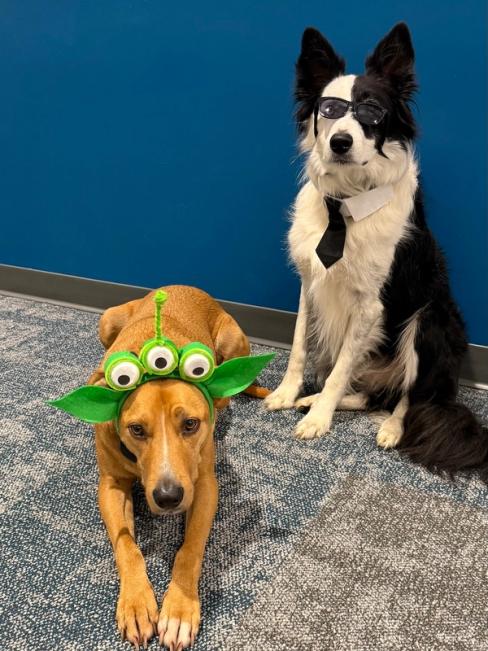
Only if your pet clearly enjoys it. A costume should be a fun photo, never a source of stress.
Costume safety checklist
When you do dress up a willing pet, both the ASPCA and the AVMA advise that a costume must not limit movement, sight, hearing, breathing, or the ability to bark or meow.[7][10] A few more rules of thumb:
- Try the costume on several days early, for short spells, so it is familiar by the big night.
- Check for small, dangling, or easily chewed pieces that could choke a pet or cause a blockage.[10]
- Skip anything that covers the face or ears, and consider a simple festive bandana as an easy alternative.[10]
- Never leave a costumed pet alone, since an outfit can snag or twist.[7]
How to introduce a costume with rewards
Build a good association before you ever fasten anything. Let your pet sniff the costume, lay it near their bed, and give a treat and calm praise each time they investigate it. Then progress to draping it on for a second or two, rewarding, and taking it off, slowly building up the time. If your pet leans away, freezes, or tries to leave, you have moved too fast, so ease back a step and go slower.
Signs your pet is not enjoying it
Watch the body language. Flattened ears, a tucked tail, lip licking, yawning, whale eye where the whites show, freezing in place, or trying to back out of the outfit all say no. Respect that, and let them celebrate in their birthday suit.
Can cats wear costumes?
Most cats would rather not. If your cat is one of the rare few who tolerates it, choose a minimal, headpiece-free option and keep it to a short, supervised photo.[15]
How to keep your dog calm on Halloween
A steady stream of doorbells and strangers in costumes is a lot for any pet. The most effective plan is set up in advance and built on rewards, never punishment.
- Build a safe room. Well before dusk, set up a comfortable room away from the front door with water, a familiar bed, and background sound like a television or radio to soften the doorbell.
- Practice the doorbell. In the days before, have someone knock or ring, then immediately give your dog a treat. Repeated often, this teaches the doorbell to predict something good instead of something scary.[17]
- Offer long-lasting enrichment. A stuffed food puzzle toy or a long-lasting chew gives an anxious dog something absorbing to do during the busiest hours.
- Ask your vet early. If your pet has severe noise or crowd fear, talk with your veterinarian ahead of time about a plan. Do not wait until the night itself.[7]
How to stop your dog from bolting out the door
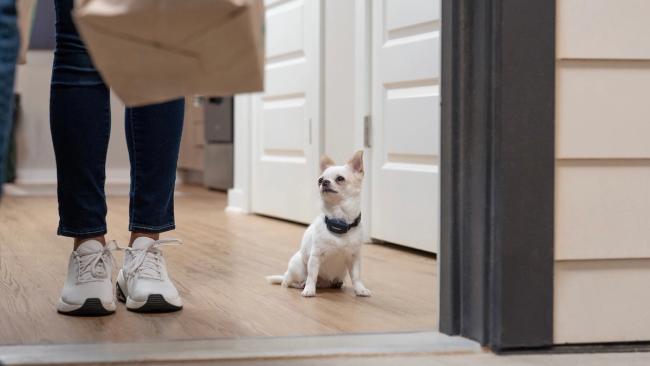
An open door and a ringing bell are a perfect recipe for an escape, so plan for it.
- Put a barrier between your pet and the front door. A closed interior door or a baby gate creates a simple airlock so no one slips out when you greet trick-or-treaters.
- Keep a nervous or bolt-prone dog leashed or settled in the safe room during peak hours.
- Double-check identification now. A collar with current ID tags plus an up-to-date microchip registration is the fastest way to get a lost pet home.[7][10]
- If you walk your dog after dark, use a well-fitted harness and leash and add reflective or light-up gear so you are both visible to drivers and to costumed crowds.[10]
Halloween safety for cats, and the truth about black cats
Cats do best indoors on Halloween, away from the noise, the open door, and the foot traffic.[15] Settle your cat in the safe room with a litter box, water, and a favorite interactive toy.
You may have heard that black cats are in special danger on Halloween. Animal welfare groups say the widespread fear is largely a myth, with no good evidence of organized harm.[15] The sensible precaution is the same one that applies to every cat: keep them safely indoors. Black cats do enjoy a happier kind of spotlight this time of year. In the UK, National Black Cat Day falls on October 27, created by a welfare charity to celebrate cats that historically waited longer than others to find a home.[16] In the US, National Cat Day on October 29 and National Black Dog Day on October 1 offer the same chance to show overlooked pets some love.
Halloween fireworks and noise
In some places, Halloween comes with fireworks, and the bangs and flashes frighten many animals into bolting. If that describes your area, the same calming plan applies: a safe room, background noise, enrichment, and an early conversation with your vet. For a complete approach to loud nights, see our guide to helping pets through fireworks and loud noises.
Your Halloween pet safety checklist
In the week before
- Buy or test any costume and start short, rewarded practice sessions.
- Practice the doorbell-to-treat routine.
- Confirm ID tags and microchip registration are current.
- Choose and set up the safe room.
On Halloween night
- Move candy, wrappers, and decorations out of reach.
- Settle your pet in the safe room with water, enrichment, and background sound.
- Use a closed door or gate as a buffer at the entrance.
- Keep glow sticks, lit candles, and cords away from pets.
If something goes wrong
- Call your veterinarian or the ASPCA Animal Poison Control Center at (888) 426-4435.[1]
- Save any wrapper or packaging to show what was eaten.
- Do not induce vomiting unless a professional tells you to.[4]
Frequently asked questions
What Halloween candy is toxic to dogs and cats?
Chocolate, sugar-free candy and gum made with xylitol, and raisins are the main dangers, and darker chocolate is the most concerning.[2][3][6] Wrappers and lollipop sticks can also cause blockages. Keep the whole candy bowl well out of reach and pick up packaging promptly.
How much chocolate is dangerous for a dog?
It depends on the type of chocolate and the size of the dog. The Merck Veterinary Manual reports mild signs around 20 mg/kg of methylxanthines, heart effects around 40 to 50 mg/kg, and seizures at 60 mg/kg or more, and baking chocolate has far more of these compounds than milk chocolate.[2] Treat any real chocolate as a reason to call your vet.[1]
Is birch sugar the same as xylitol, and is it dangerous?
Yes. The FDA notes that xylitol may be labeled as birch sugar or wood sugar.[3] In dogs it can cause a rapid, dangerous drop in blood sugar and, at higher doses, liver injury.[4] It is most dangerous for dogs, but keep it away from all pets and check sugar-free labels.
What should I do if my pet eats a glow stick?
Offer a little water, a treat, milk, or tuna water to rinse the bitter taste, wipe the mouth, and bathe off any residue so your pet does not swallow more while grooming.[8][9] Most cases settle at home, but call your vet if you see eye redness, squinting, heavy drooling, or a refusal to eat.[8]
Are fog machines safe for pets?
No veterinary body has cleared them, so keep pets out of any room while a fogger runs and until the air clears. Party foggers heat a glycol or glycerin fluid that can irritate sensitive airways, and birds and asthmatic cats are most at risk.[13][14] Dry-ice fog also pools low to the ground where a pet breathes.
How do I keep my dog calm on Halloween?
Set up a quiet safe room before trick-or-treating begins, pair the doorbell with treats in the days beforehand so it predicts good things, and offer a long-lasting chew or food puzzle during peak hours.[17] For severe fear, talk with your veterinarian well ahead of the night.[7]
Should I put my dog or cat in a costume?
Only if your pet clearly enjoys it. Any costume must not limit movement, sight, hearing, breathing, or the ability to bark or meow, and it should have no small chewable parts.[7][10] A festive bandana is a low-stress alternative, and most cats are happier without a costume at all.
How do I stop my dog from running out the door on Halloween?
Keep a closed interior door or a baby gate between your pet and the front door as an airlock, keep a bolt-prone dog leashed or in the safe room, and confirm ID tags and microchip details are current.[7][10] For after-dark walks, add reflective or light-up gear so you are both easy to see.
Is pumpkin safe for dogs and cats?
Plain cooked or canned pumpkin is fine in small amounts and is mostly water.[12] Skip the rind and stem, avoid spiced pie filling, and check canned pumpkin labels for xylitol.[3][12] Do not let a pet eat a jack-o-lantern that has been sitting out, since mold can make them sick.[11]
Are black cats really in danger on Halloween?
Animal welfare groups consider the widespread fear largely a myth, with no good evidence of organized harm.[15] The reasonable precaution is the same for every cat: keep them safely indoors on a busy night. Black cats and dogs get their own celebrations in October, including National Black Cat Day and National Black Dog Day.[16]
Citations and sources
- ASPCA. Animal Poison Control Center. aspca.org
- Merck Veterinary Manual. Chocolate Toxicosis in Animals. merckvetmanual.com
- U.S. Food and Drug Administration. Xylitol and Your Dog. fda.gov
- Merck Veterinary Manual. Xylitol Toxicosis in Dogs. merckvetmanual.com
- VCA Animal Hospitals. Xylitol Poisoning in Dogs. vcahospitals.com
- VCA Animal Hospitals. Grape, Raisin, and Currant Poisoning in Dogs. vcahospitals.com
- American Veterinary Medical Association. Halloween Pet Safety. avma.org
- Pet Poison Helpline. Five Common Feline Toxins. petpoisonhelpline.com
- VCA Animal Hospitals. Are Glow Sticks Poisonous to Pets? vcahospitals.com
- ASPCA. Your Guide to a Pet-Safe Halloween. aspca.org
- Oregon Veterinary Medical Association. Halloween Safety Tips. oregonvma.org
- Texas A&M School of Veterinary Medicine. Pumpkin Safety for a Pet-Friendly Halloween. tamu.edu
- Virginia-Maryland College of Veterinary Medicine. Halloween Safety Tips. vt.edu
- VCA Animal Hospitals. Household Hazards and Dangers to Birds. vcahospitals.com
- Alley Cat Allies. Halloween Safety Tips for Cats. alleycat.org
- Cats Protection. National Black Cat Day. cats.org.uk
- Animal Humane Society. Five Halloween Safety Tips for You and Your Pet. animalhumanesociety.org
Last modified: October 2, 2026


Get Email Updates
Subscribe to the latest news, promotions, & more from PetSafe® brand.
Sign up today for the latest news, promotions, and more from PetSafe® brand.